
At the beginning of summer, my husband, our two basset hounds, the cat and I moved into a little white rental house with a backyard. And once we had unpacked all our books, installed a makeshift closet in the back room (in the whole house, we have one tiny little 2×3 feet closet in the bedroom), and felt sufficiently settled to have company, we threw a housewarming party.
Naturally, ninety-percent of our guests were English grad students, and, as we were sitting around the fire-pit in our new backyard, someone suggested we play a literary version of the party classic “Never Have I Ever.” In the original game, the players take turns admitting to something they have never done (never have I ever been skiing–a sad truth!), and each person who has done the event loses a point until only one person is left with points, or something of the sort. In our version, we shamefully admitted works we had never read, and the other players were to put down a finger of the full ten with which they started. Of course, we awarded a slight handicap of negative five points to the only three non-bookish types (my husband the mathematician, a former history major, and a physicist) to make the game somewhat fair.
We were never quite clear on the goal of the game, since in our circle there seemed more pride in “losing” the game than surviving to the end with fingers still raised. In fact, one of our friends “lost” twice by the time we called the game. And we were all envious. But we went round and round, enjoying ourselves immensely.
“Never have I ever read Moby Dick.”
“Never have I ever read Huck Finn.”
“Never have I ever read Beloved.”
I have been studying for comprehensive exams for the past five months, and while I have read a significant number of the works on my lists in past graduate seminars, I feel like the whole process is a long game of “Never have I ever read…”
At the University of Kansas, where I am in my third year of doctoral studies, you compose three lists with your committee–two of which are time period lists (your area and an adjacent time period) and the third is a list of your own choosing (often an author, literary theory, a genre, etc). As a Romanticist with a fairly extensive background in Victorianism, I have chosen my period lists to form the full nineteenth century in British literature, and my final list is geared toward the Leigh Hunt Circle as I prepare for a dissertation focusing on Keats, the Cockney School, and how this context shaped his conception of “work.”
After reading criticism and biographies for the last two months as I try to whittle away at the dissertation list, I have switched to fiction for a much needed breather. I find it heartening to zip through a couple of novels in a week, when I have been slogging through nonfiction for what seems like a lifetime (and I will say I have read several “lifetimes” in that list, and highest praise must go to Nicholas Roe’s 2012 Keats biography. I have added it to the ever-growing list of books I wish I had written). In anticipation of the Halloween season, I scheduled myself several gothic novels in a row. And last week, I read Wuthering Heights for the first time.
Perhaps I just permanently altered your opinion of my clout as a nineteenth-century scholar. Well, so be it. I certainly admit the sad fact with a touch of shame. But now I have checked it off my list of never-have-I-ever-reads, and I have moved on to the next novel that somehow fell through the gaps in my long tenure as a literature student.
I feel this game “Never Have I Ever Read” haunts literature scholars. It certainly helps us flesh out syllabi–how else will we force ourselves to finally pick up Dombey and Son if we do not assign our students (and ourselves!) to read it?–and the game even fuels our research, it seems.
Three weeks ago, I had the pleasure of traveling to Portland and presenting on a Romanticism panel at the Rocky Mountain MLA. This conference has become a tradition for a couple colleagues and me, who would likely never travel and present together otherwise since our areas are so diverse. I presented on the connection between architectural structures and female bodies in Keats’s romances. I looked at the way in which the lived experience of female bodies, specifically in rape narratives, becomes abstracted into a symbol (the first step of which is the equation of the female body to the house or palace that protects her–i.e. Madeline is endangered because her house is penetrated in “The Eve of St. Agnes”). This cultural phenomenon is allegorical in so far as the female body comes to represent social bodies (structures) in various forms through literature and even political propaganda. The specific and material become crystallized into a generic trope that can be circulated, translated, and exchanged, depending upon the terms of its use, its ability to anger, inspire, manipulate.
In the Q&A portion of the panel, another presenter asked if I had read Cymbeline. I shook my head and shyly admitted I had not. Despite taking two courses in Shakespeare and Renaissance drama, never had I ever read, seen, or even heard a plot summary of the play. Nor is the classic John Middleton Murry volume Keats and Shakespeare listed among my secondary texts for comprehensive exams.
Nevertheless, I did my research that evening in my hotel room, and discovered much speculation on the play’s influence in Keats’s portrayal of Madeline’s boudoir. Indeed, Charles Cowden Clarke wrote, “I saw [Keats’s] eyes fill with tears, and his voice faltered,” as the poet read aloud from the play in summer 1816 (qtd. on page 56 of Walter Jackson Bate’s biography of Keats). In addition to speculation on the scenery, importantly, Imogen has been reading the story of Tereus and Philomela before falling asleep. According to Greek mythology, Tereus rapes Philomela and cuts out her tongue so that she cannot report the assault. Jove later transforms Philomela into a nightingale, and her song becomes an echo of sexual violence throughout literature, including T.S. Eliot’s “The Fire Sermon” in The Wasteland (a piece I have read many times since first crossing it off my never-have-I-ever list in high school).
Scholars speculate on what the literary greats have read (or not read) as an everyday practice. My fellow-scholar who asked if I had read Cymbeline was presenting truly stellar archival research that sought to uncover whether Keats had read various seventeenth-century ballads on nightingales. She lamented that we do not know to what volumes he had access while staying with Benjamin Bailey at Oxford in the summer of 1817. And as she had not yet read Roe’s recent Keats biography, she did not know the conflict between Bailey and Keats’s London friends, and why Charles Brown and other early biographers would not have contacted him to inquire about Keats’s reading that summer. Even in their lifetimes, Keats and Leigh Hunt gained the label “Cockney” as a class slur partially due to the fact that they never had ever read mythology in the original Greek, and instead got their knowledge of the classics through translations.
Next up on my reading schedule is Northanger Abbey, and I will be reading it for the first time. This will be my last novel for a while, and, as I want to preserve my reputation with you at least beyond my first blog post, I will not admit the Romantic poetry I will be reading next week–for the first time.
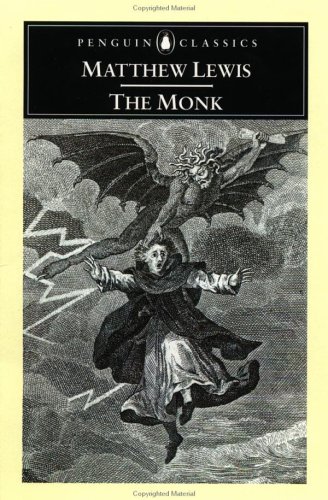 As I begin my dissertation chapter on Matthew Lewis, I try to think of not only what research I can contribute to the field but also what related teaching opportunities and activities could be useful in future classes. One possibility for teaching well-known literature is often to include a lesson on adaptation: how can a text change by portraying it through a different medium and all the different lenses that that involves? It helps me to reemphasize to my students the idea that the way a story is formed is a choice made by the author, director, artist, etc. This helps students to see literature as a crafted piece of art that invites multiple interpretations, not just a story that portrays objective, black-and-white facts. Particularly in the case of complex classic literature (or most literature, for that matter), the creator of an adaptation must make drastic sacrifices to reduce a 400-page text to an audience-friendly film under two hours. This is why we have so many different film versions of texts like Frankenstein, Pride and Prejudice, Oliver Twist, etc. (not to mention children’s books). Each one is different.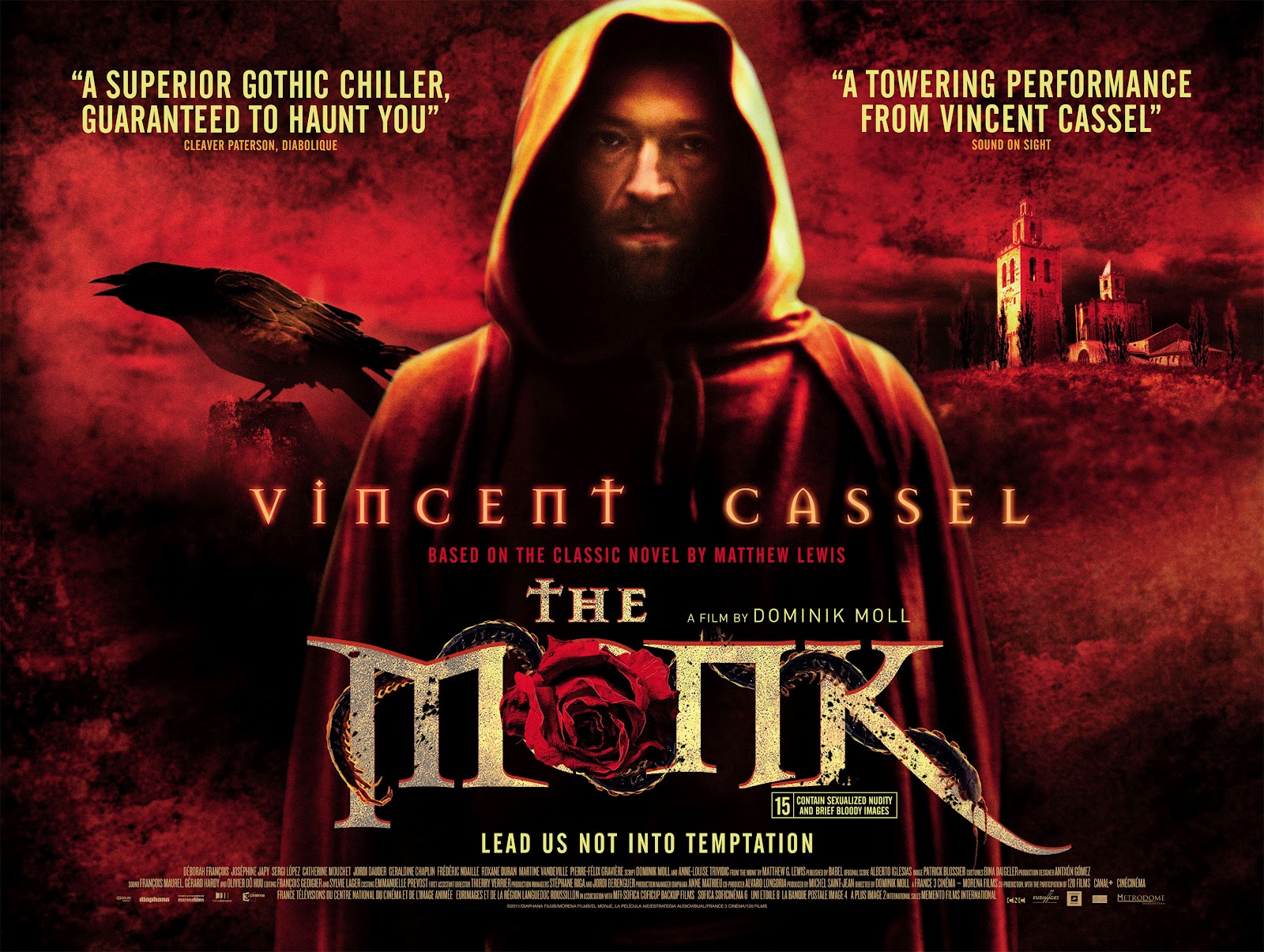
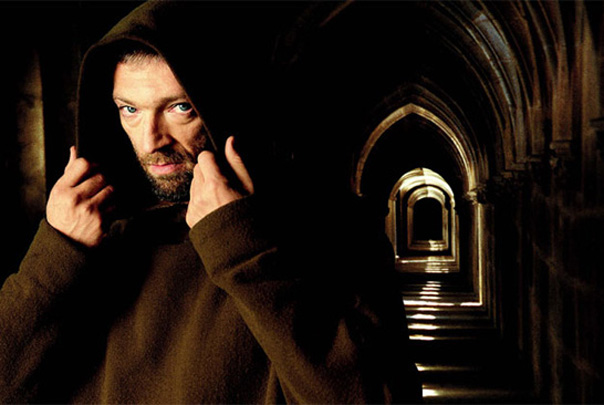 One of the things that I found most interesting in this adaptation, however, is the emphasis on punishment. When Ambrosio turns Agnes over to the Prioress, he tells her that she should want and welcome punishment for her crimes. Yet, Agnes is the only one punished in the film (and she quickly dies of starvation, cursing Ambrosio’s name until the end). Romantic Gothic literature is nothing if not surprisingly conservative: crazy, evil, and scandalous things happen, but the ending is almost always about punishing those involved in some of the cruelest ways possible. In this way, it acts very much like Bakhtin’s idea of the carnivalesque: controlled chaos turns peasants into princes and vice versa, but at the end of the day, order is restored and all goes back to normal.

 post is to share with you a recent discovery that’s trying to make such texts as they were intended: accessible again.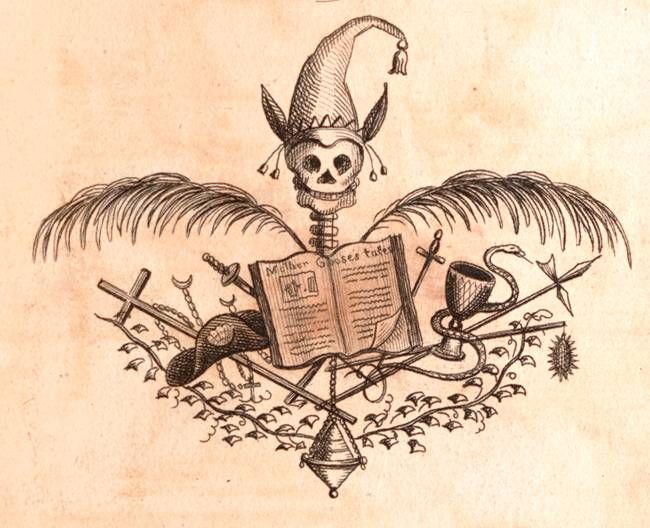


 It was a dark and stormy afternoon, and a small group of learned scholars gathered to whisper amongst themselves the secrets of haunted castles, monstrous creatures, and dark forbidden crimes. The rain pelted against the large windows as the wind howled through the trees… the palm trees? San Diego, CA had found its own way to welcome the First Annual Studies in Gothic Fiction Conference to its usually-sunny shores.