Thinking Ahead to NASSR 2014: "Romantic Organizations"

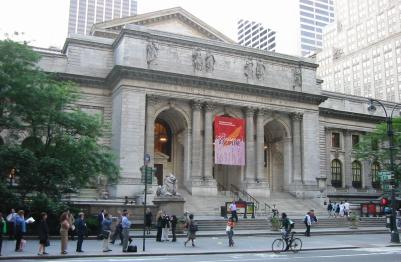
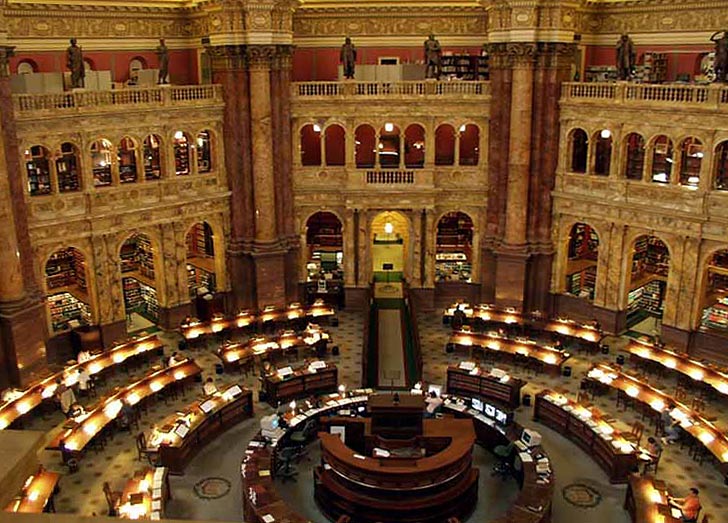
Library of Congress Reading Room

We’re nearing the end of Spring Semester 2013, which means NASSR 2013 is also near, in August, and NASSR 2014 organizers are already planning away.
The co-organizers of NASSR 2014, Professors Richard C. Sha and Patrick O’Malley, would like our input as to what topics graduate students would like to learn about at this wonderful annual conference for Romanticists. The NASSR 2014 theme is “Romantic Organizations” and it will be held 10-13 July 2014 in Washington, D.C.
Professor Sha tells us “Already, 25 special sessions have been planned with such speakers as Tim Morton, Marjorie Levinson, Tilottama Rajan, Robert Mitchell, Rei Terada, Nora Crook, Julie Carlson, Mark Lussier, Michael Macovski, Orrin Wang, Joel Faflak, Adrianna Craciun, Nick Halmi, Peter Otto, and others.  Co-organizers have invited the NEH to come speak about funding. In addition, The Library of Congress is opening its doors, and will prepare a special exhibit of Romantic items in its collections, including manuscripts of Beethoven, Blake, and from Napoleon’s Egyptian Campaign.”
Professor Sha’s generous email inquiry asks us to respond with a few ideas for the following questions. This is a wonderful opportunity to suggest our research questions and professionalization interests to conference planners.

  1. What topics, related to the conference theme of “Romantic Organizations,” would graduate students most like to see presentations on? In other words: what are we working on that might fit this theme?
  2. If we were to have a special session, what topic might it focus on?
  3. Do you have requests for our annual Caucus-sponsored roundtable event that focuses on professionalization?

Let’s get this conversation started so that we can give co-organizers our responses promptly. Thanks for your input!

On Starting the Dissertation: The Reading List that Keeps on Listing

A few weeks ago, The Chronicle of Higher Education posted a series of brief discussions about the third year of studying for a PhD. The title is what caught my attention: “A Common Time to Get Stuck,” by Julia Miller Vick and Jennifer S. Furlong. The observation seems to be that the leap from coursework to exams or from exams to dissertation (typically the third year) causes a significant jolt in the way we’re used to learning and producing work, and I whole-heartedly agree. The third year for my department means that students have just completed their exams and are now faced with the daunting task of formulating a dissertation proposal and finally starting the long, hard work of diving right in. I thought I’d add my own two cents on what makes this such a pivotal, exciting, and (in some ways) frustrating and terrifying year.
Furlong says, “The familiar rhythm of reading lists, paper submissions, and semester-long deadlines gives way to a more ambiguous challenge—developing an original research project that meets the standards for scholarship in an academic discipline.” Familiar is the perfect word for it: we’ve all been in school for decades… we know what how class works, we know how homework works, we know how writing papers works. I don’t know that I’d call it easy, but we at least know all the dance steps and that, somehow, it all gets done no matter how many all-nighters it takes.
Vick adds, “It is also a time when students have to start answering to themselves more than to their professors and mentors. After comprehensive exams are passed they need to become their own taskmasters and work without, in many cases, external deadlines and demands.” So, suddenly you go from having packed schedules, syllabi, and exam reading schedules to… anything and everything. Or, at least it feels that way. Suddenly, you have years of work ahead of you without a set structure, constructing an argument that could take on a life of its own at any moment. Anything could be useful, so you must read everything. All the books. This leads me to my next point.
A few days ago, I came across a second piece of online writing—this one a blog article on Book Riot— which seemed to speak directly to the title of the article in The Chronicle: “When You Realize You Can’t Read All the Things,” written by Jill Guccini. All the frustration of this title realization comes through as she describes the many situations in which you find yourself acquiring new books… but not actually reading them as they pile up into “mini cityscapes on your floor.” This is especially true for academics in the humanities, for whom reading is both work and play, and getting new books is both extremely pleasurable and sadly stressful. What a crime to leave them, unread, to get dusty and yellowed on the shelf… but I know I am guilty as charged.
Now, bear with me: these two articles are related. When you’re working short term on coursework or exams, you can find some solace in that you only have to keep it up until the deadline comes and goes. We would all study for exams forever if there weren’t a deadline to stop us, and thank god there is. I’m wondering if part of the “getting stuck” Vick and Furlong talk about has to do with the few years of dissertation work begun in the third year feeling like forever and a somewhat narrow field feeling like “all the things.” So, if I’m writing about body parts in Frankenstein, then I have to read the novel and all the critical books and articles on it. Then I should read all about Mary Shelley and the Shelley circle and anyone who influenced that circle and maybe all of Shelley’s other work…and also follow up on this, this, and this footnote. Then, okay, body parts: I should read all the medical discourse when Shelley was writing and maybe what people thought before she was writing and also after she was writing, and maybe some of the current medical discourse on amputation and organ donations, and, why not, maybe some stuff on bodysnatching and army doctors. Now, what about any kind of literary theory: Kristeva and Lacan and Deleuze and Freud and Bakhtin. And theory on the history of the period and of novel form and novel circulation and the two different editions and where it was sold and how much it cost and what kind of paper it was printed on and who bought the first copy. And each article or book as an extensive bibliography that should be gone through with a fine-tooth comb. I’m being a little ridiculous, but see what I mean?
Beginning the dissertation is the ultimate in you-can’t-read-everything frustration because not only do you have a million things you want to read, but there’s the added pressure that you feel you need to read them in order to create something worthwhile. And Vick is right: yes, we’re answerable to our advisors and our committees and to future job applications, but at this point in the game, when all your work is chosen by you and made extremely important because of that, there is an incredible sense of self-worth but also a lot of nervousness in regards to living up to your own expectations. Can you ever read enough to satisfy yourself? The answer (and the point to this whole academic game we play) is no. I think what I’m learning as I’m still in this dangerous third year is that, no, you really can’t read all the things. Somehow that makes me feel a little better.
I would have loved to give better advice in this post rather than just some observations, but I feel too close to the beginning still to assess what is working and what isn’t. I’d like to invite fellow bloggers and readers to respond, though!
What worked for you when you were starting your dissertation that kept you from trying to “read all the things”?

The best tips I can give about preparing for comps

This is going to be a short and relatively easy post, which are the two things studying for the comprehensive exam is not. It’s been a grueling couple of months, and I admit studying for the comprehensive exam is stressing me out. Really stressing me out. Perhaps that’s not a surprise. Grad school is stressful. There’s teaching, conferences, essays, professionalization, publishing, networking, and constant reading. There’s very little money. But, the reading year has been particularly stressful. It’s the impending pressure of having to sit in a room with five people who will quiz me about one hundred and twenty books. Five people will evaluate me at once. It’s also a discussion that will either allow me to advance in the program, or will result in a stalled few months.
The logical part of my brain knows the exam is a wonderful opportunity to discuss great texts and float ideas. Other people have written wonderful posts about how to prepare for the exam. They encourage having an organized note-taking system and talking about books to everyone. I’m going to focus on how to relax enough in order to accomplish any of that. Here are some tips that I wish someone had drilled into my head during my first few weeks:
 
Get off of Facebook. There are tons of studies coming out that suggest anyone on Facebook judges themselves based on what other people’s lives appear to be like. We, as English people, can understand that. People edit their lives on social media, and the story can seem more real than the editing. I’ve found Facebook stress becomes more amplified when you spend eight to ten hours a day in a chair and your arms hurt from holding large texts close to your face. Looking at pictures of someone else just being outside, where there is sun, trees, animals, and plants, is suddenly hurtful. You’re inside, you can’t go outside because you should be reading, but you’re not reading; you’re on Facebook, where it seems everyone else is outside or having fun or having fun outside.
Go outside. Go anywhere, really. One of my peers told me about a study that suggested changing physical location helps your brain see things in a new light and increases memory. Sit outside, when you can. Allow yourself to go to coffee shops or the library when the weather won’t let you be outside.
Exercise regularly. When I first started the PhD programs, one of my professors told me to exercise. I remember laughing and asking “When am I going to have time to do that?” He said I should do it anyway. He was right. Of course everyone knows exercise reduces stress. That knowledge didn’t make me do anything. But, scientific explanations about how much exercise reduces stress are motivating. According to studies published in Cell Stem Cell and Molecular Psychiatry, exercises help brain cells grow and that growth increases serotonin. Though these studies focus largely on depression, their conclusion, that Prozac and exercise have similar results on serotonin creation, is a strong endorsement to exercise. (http://healthland.time.com/2013/03/20/its-all-in-the-nerves-how-to-really-treat-depression/) Even short amounts of exercise have been shown to increase cognitive functions. (http://www.huffingtonpost.com/2013/03/20/regular-exercise-brain-functioning-mental-test-adult_n_2902243.html). So, exercising two or three times a week increases serotonin, stimulates brain cells, strengthens memory, and makes your brain function better. The results validate setting aside a bit of time to move around.
Sleep. I’ve saved the most important for last. Sleeping around eight hours allows you to function. It’s that simple. Even taking short naps will heighten your ability to concentrate. According to the Department of Veteran Affairs Medical Center, 8.4 minutes will heighten cognitive function. Sleep is what allows your brain to transfer short-term to long-term memory, and just one night of poor sleep can result in lower cognitive function. Have a ritual before bed; do the same things at the same time and your brain will shut itself down.
 
I’ve found doing all of these things makes me work efficiently. Beyond all the wonderful texts I’ve encountered and concerns I’ve crafted, I’ve come to know taking care of myself is not different than preparing for the exam.
To everyone out there preparing for their exam, best of luck! Remember, at some point it’s over.

New Collection: Libraries and Archives


New York Public Library

This post announces a new Collection of posts that we are building on the NGSC Blog on working in archives and libraries. The Collection strives to create a place where we continue to share our experiences and questions about applying for fellowships and conducting research in libraries or archives that have holdings of interest to Romanticists.
We are working on a way to redesign our front page to feature a few Collections of posts, but for now it’s best to use the Categories drop-down on the right side menu. Look for Libraries & Archives.
 
Here is what is in our blog’s Libraries and Archives Collection so far:

  1. Kelli Jasper has a great introductory post on the early Spring Semester (January through March) as the season for applying for research fellowships to libraries, including the Newberry, the Huntington, and the Beinecke.
  2. Michele Speitz wrote a post about her adviser’s recommendations and her time researching at The Huntington Library. The part about this post that sticks with me the most is how to get your writing done while on fellowship reading in an archive. What a great reminder that time does not stop while we’re basking in the aura of primary source material.
  3. I’ve written a couple of posts about working in CU Libraries Archives and Special Collections on the Women Poets of the Romantic Period Collection and a little introduction to the Stainforth manuscript. I’m intimately familiar with our collection here at CU, so please send any questions you have my way.
  4. Jacob Leveton–our resident Romanticist art historian–posted on how to use the Yale Center for British Art while working with a William Blake manuscript–the sole complete copy of Jerusalem, no less!
  5. Jacob also posted on how to use the Art Institute of Chicago Prints and Drawings Department. While it looks like he used his research trip to study George Stubbs’ piece “Horse Frightened by a Lion” (1777) and other works featuring horses, there’s a lot more there.
  6. Kelli wrote another post that I will be using to help me navigate researching at the British Library. I am planning to research and “dissertate” there this summer from late May through mid-June.

Forthcoming for this Collection: I am drafting one post on working in the Musées d’Art et D’Histoire and another one on the BGE (Bibliothèque de Génève) in Geneva, Switzerland. Each of those institutions/libraries had their own conveniences and challenges related to research.
Do you have plans to work in a library or archive soon? Maybe a summer research fellowship or a research trip abroad scheduled? Or have you worked in a library or archive that has particularly wonderful materials for Romanticism research that you would like to report on? I’m thinking that perhaps we should write about home institutions as well — they all have a lot to offer that tends to be less visible because right under our noses.

The First-Year Ph.D. Experience: Language Exams

This blog marks the first of a series Cesar Soto and I are collaborating on highlighting “The First-Year Ph.D. Experience.” In doing so, we’ll be honestly exploring what we have learned–and are in the process of learning–as beginning Ph.D. students in Romantic studies. In documenting our experiences, we hope to begin creating an archive for subsequent students to utilize in making the transition to the doctoral level as smooth and enjoyable as possible. In addition, since César and myself have entered with M.A. degrees, we would very much like to invite comments from those who gone directly from the B.A. to the Ph.D. While my next post in this series will deal with what’s been less and more successful for me in terms of time management, César will be looking at navigating his experience in experimenting with theoretical frameworks. For now, the wine-press that is language requirements.
Intro: While they vary greatly by department, language reading exams (or coursework) may seem like imposing milestones to many incoming and continuing doctoral students’ minds. In all cases, however, moving past these requirements as efficiently as possible marks a good point of departure for further work. As someone who began their graduate work not having yet studied either language required of them–but having since passed a French reading exam and begun work on German for reading knowledge–I thought it would be helpful to develop a post detailing how I’ve gone about fulfilling this requirement. Though, I’m equally interested in hearing how other romanticists have worked through language study–particularly those who work both on literature and art of the continent (or elsewhere!).
Don’t Wait / Study Early, Study Often: It goes without saying, but it is helpful to know at least prior to the summer before beginning a program what the language requirements are. In my experience, those few months before starting represent a good opportunity to drill the knowledge necessary to produce a strong working translation of a critical text, as required. Working through flashcards in between reading selected articles is to my mind the most effective way to go about language study. But who wants to do this when there’s compelling and more immediately rewarding coursework to be done?
Devise a Strategy & Stick to It: In June 2010 before starting at Oregon, I picked up a used copy of a standard French for Reading Knowledge textbook. From there, I distilled the salient rules of grammar, syntax, morphology, and basic vocabulary into flashcards–going through one chapter per day, five days per week. This made what seemed to be an insurmountable task much more manageable. I repeated this strategy again when I started at Northwestern this year, and it worked. I’ve also started studying German similarly over the fall and winter terms. However, this isn’t to be didactic. Just to detail what worked for me. Of course, there are myriad ways to go about structuring your own strategy. Experiment, find what works for you, and go from there (and share it in the comments!).
Lean on Previous Language Study: When I was an undergraduate I did Italian and Ancient Greek, knowing I wanted likely to do a Ph.D. at some point, but not knowing that in Art History my language requirements are set. Of course, neither language counted directly towards my doctoral work. In the end, though, each gave me a framework for understanding how Romance and inflected languages work, respectively. I conceptualized learning to read French as re-filling in the frame Italian gave me. I’m doing the same thing now with German and Ancient Greek. The point is, use the structures of previous engagements with languages to move present studies forward.
During the Exam: While everything hinges upon how your language exams are evaluated, some of the best advice I’ve gotten is to avoid attempting to translate directly. Thinking through translation with reference to reading arguments is a good way to structure this. How I personally go about this is to: (1) skim the work, using the sentence structures and vocabulary in order to forge an idea of the text’s trajectory, (2) identify the argument that’s being made, and the premises that support it in the text, and (3) translate from there. Perhaps this is oversimplifying the matter, but, in September, for instance, I wasn’t looking to produce a translation that Mallarmé would approve of. I just wanted to fulfill a requirement, and move on.
It Will All Get Done, Even If It Takes Multiple Attempts: Most students I’ve known require multiple attempts to fulfill language requirements. In addition, continuing to drill flashcards and take language courses can also enrich one’s time in graduate school. This may end up being me with German. Who’s to say. In any event–optimistically stated–language study can be a way to get out of what Blake called “the same dull round,” and crucially engage with a much wider body of materials and scholarship than what would otherwise be possible. A wine-press, indeed–but a necessary one, in fact.

Meet Our New Co-Editor, Jacob Leveton

Dear all,
I am extremely happy to introduce the NASSR Graduate Caucus Blog’s new co-editor, Jacob Leveton.
Jacob (B.A., English Literature, Arizona State University: 2010; M.A., Art History, University of Oregon: 2012) is a Ph.D. student in the Department of Art History at Northwestern University. He has served as a writer for the NASSR Graduate Student Caucus blog since 2011. His historical interests center upon eighteenth- and nineteenth-century British visual culture, generally, and the visual artist and poet William Blake, specifically—with wider conceptual interests in critical theory, animal studies, and ecocriticism. His current major project orbits around a social-critical engagement with British equestrian portraiture at the beginning of the Romantic period in England, and is concerned with the class struggle and domination of horses as nonhuman animals.
On a more personal note, I think Jacob has been perhaps the most enthusiastic member of and contributor to our blogging group besides myself. I remember when I first met him at the Park City NASSR in 2011 at the NGSC sponsored event on the job market: his excitement and friendliness made a lasting impression. He has already started to apply his positive energy to improvements for our blog and I’m convinced that we will be a great team of co-editors.
Back to work! 🙂
– Kirstyn

Digital Humanities: My Introduction 1.1

appropriation by Christopher OttingerFor those who have yet to drink the digital humanities “Kool-Aid” (it’s the blue stuff they drink in Tron), for the next three posts I will chart my own introduction. My entrance largely follows from attending a seminar that meets twice a quarter on Saturday mornings entitled, “Demystifying the Digital Humanities” (#dmdh). Paige Morgan and Sarah Kremen-Hicks organize the seminar and it is sponsored through the University of Washington’s Simpson Center for the Humanities.
In this post I want to outline a brief definition of the digital humanities, and I will conclude by suggesting some things that you can do to advance your own understanding. Because these posts stem from my own introduction, they might be too basic for those already immersed in DH studies. Rather than an in-depth exploration, consider this post as an enthusiastic sharing of information.

Defining the Digital Humanities

During the first session of the seminar we attempted to define the digital humanities. A typical strategy towards definition might ask what a concept “is.” But the organizers challenged us to think about what this concept “does” and what “values” it embodies. The next two installments of this series will cover what you can “do” in the digital humanities. Today, I want look at some values.
Collaboration is one of the main values espoused in the digital humanities. “Instead of working on a project alone,” as Lisa Spiro says, “a digital humanist will typically participate as part of a team, learning from others and contributing to an ongoing dialogue.”[i]
In which case, a digital humanist might post his or her most recent progress, research, or problem on a blog or Twitter feed. Others can then add comments, suggestions, and criticisms. There is also a push toward finding people with the resources to do the job you have in mind (knowing he had the skills, I asked my brother to make the image above for this post). Overall, there is a common avowal among digital humanists that works ought to receive input and support from others before reaching the final product, and in addition, this feedback can come from more people from different disciplines.
Making works more available, as Paige and Sarah stressed, also means a greater willingness to be “open,” even with regards to “failure.” By being more open scholars can overcome the erroneous belief that every “success” equals “positive results.” As in the physical sciences, in the humanities there is little sense in reproducing the same bad experiment more than once. Sharing failures might ultimately lead to less repeat, and potentially more success.
It would be impossible to offer a full definition in this short space, but my conclusion so far is that, without knowing it, many young scholars are already invested in the digital humanities. For instance, writing for the NASSR Graduate Student Caucus blog qualifies as a digital humanist platform and method. I am writing in a public domain, making my interests more open for sharing and criticism, taking risks on what kinds of content I post, and focusing on producing more products more consistently, all of which embodies a DH ethos. During the first seminar in October, upon learning that I already shared many digital humanist values, it encouraged me to go familiarize myself with some of the tools, which I will now discuss.

Getting Started in the Digital Humanities

While not every university hosts a seminar like the one I attended, there are some traveling ones. According to the THATCamp homepage, it is “an open, inexpensive meeting where humanists and technologists of all skill levels learn and build together in sessions proposed on the spot.” These camps take place in cities all over the world and anyone can organize one. Or if you want something more intense, try the Digital Humanities Summer Institute at the University of Victoria (see Lindsey Eckert’s post on this site for an overview).
If you really want to jump into the digital humanities fast (this might sound self-indulgent in this context), I think the best method is reading blogs. The problem with blogs is the sheer quantity. But once you find a blog that works, they usually provide a blogroll that includes a list of the author(s)’ own preferences. At the bottom of this page I provide three blogs with three different emphases regarding the digital humanities for you to try (and please respond below if you have others to suggest).
The last thing is coding. It seems scary, but with simple (and free) online tutorials, learning how to code is like getting started with any foreign language: the first day is always the easiest. You learn “hello,” “please,” “thank you,” und so weiter. The difficulties arise later. But anyone who has travelled abroad knows that a small handful of phrases can actually satisfy a large range of interactions. For instance, it takes a few minutes only on w3schools.com to learn how to make “headings” in your blog post (like the emboldened titles above). Headings actually allow search engines like Google to more easily recognize your key words and phrases, which I didn’t realize until I started learning a little code. Ultimately, learning how to code can help you appreciate the rules that govern your online experience.
Last, I think it’s important to divulge why I became interested in the digital humanities. Because my dissertation started to focus more on tools, geometry, and the imagination in the eighteenth century, I found myself on the historical end of digital space. It made good sense then to start exploring current trajectories. But as I hope to show in the next two entries, “doing” digital humanities does not necessitate digital humanities “content.” Your introduction might be more about method, pedagogy, or even values. That said, it is worth having a good reason to invest your time in DH studies. As graduate students, time is always in short supply. But if it’s the right conversation for you, be open, be willing to fail, and enjoy the Kool-Aid.

Some Suggested DH Blogs:

If our blog is the only one you are reading with any frequency, perhaps the next place to go is The Chronicle of Higher Education’s ProfHacker. This blog features a number of authors writing on the latest trends in technology, teaching, and the humanities. For starters, try Adeline Koh’s work on academic publishing.
Ted Underwood teaches eighteenth and nineteenth century literature at the University of Illinois. His blog, The Stone and the Shell, tends to explain DH tools, values, and protocols for “distant reading.”
For a more advanced blog, in terms of tools and issues, I have found Scott Weingart’s the scottbot irregular resourceful, interesting, and it is also a great example of how to up the aesthetic stakes of your own blog.


[i] Spiro, Lisa. “This Is Why We Fight.” Debates in the Digital Humanities. Ed. Matthew K. Gold. Minnesota: U of Minnesota P, 2012. 16-35. Print.

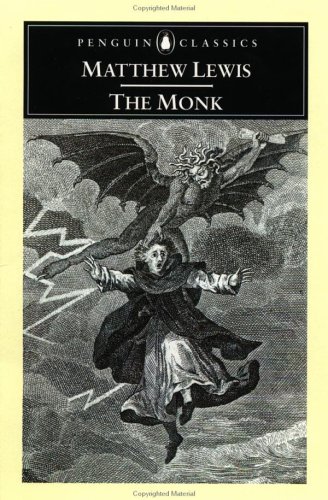
The Monk (Le Moine): A Film Review

As I begin my dissertation chapter on Matthew Lewis, I try to think of not only what research I can contribute to the field but also what related teaching opportunities and activities could be useful in future classes. One possibility for teaching well-known literature is often to include a lesson on adaptation: how can a text change by portraying it through a different medium and all the different lenses that that involves? It helps me to reemphasize to my students the idea that the way a story is formed is a choice made by the author, director, artist, etc. This helps students to see literature as a crafted piece of art that invites multiple interpretations, not just a story that portrays objective, black-and-white facts. Particularly in the case of complex classic literature (or most literature, for that matter), the creator of an adaptation must make drastic sacrifices to reduce a 400-page text to an audience-friendly film under two hours. This is why we have so many different film versions of texts like Frankenstein, Pride and Prejudice, Oliver Twist, etc. (not to mention children’s books). Each one is different.
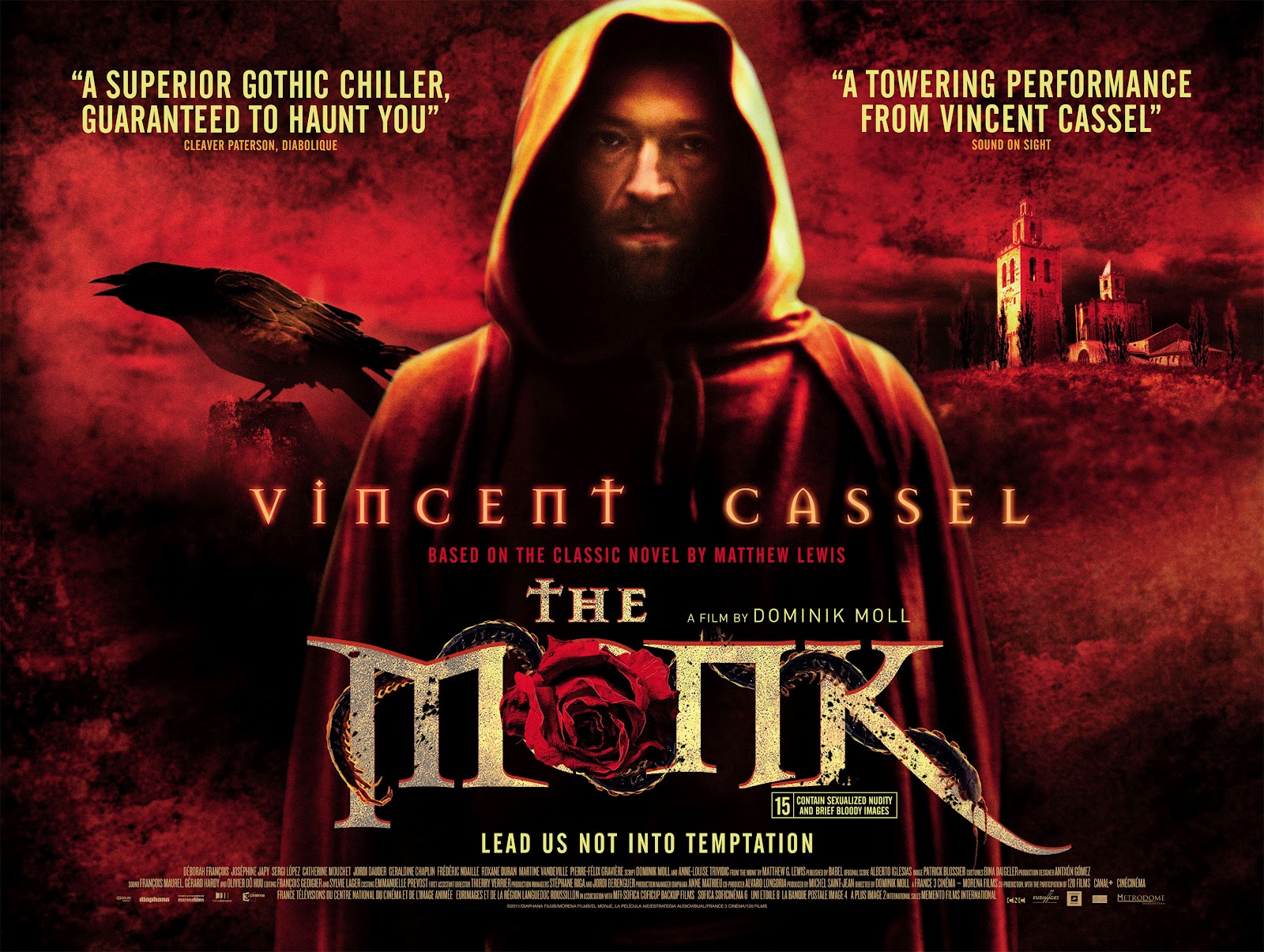
I know of three adaptations of Matthew Lewis’s 1796 novel, The Monk: two versions in English in 1972 and 1990, and the most recent and highly-anticipated French version, Le Moine, released in 2011. Those who have read The Monk would probably not be surprised to learn that all three versions are difficult to find: the novel is complex, with many simultaneous plots that would make a film version seem practically impossible without sacrificing some great material. In terms of the viewing experience of this film, it is a little on the slow side, though the scenery and atmosphere are beautiful and create a believable (if bleak) setting. It is certainly not an action film and involves a lot of contemplative silences and slow discussions. The English subtitles, while understandable, are probably not extremely accurate (or grammatical), placing more weight on the visuals to carry the film. However, while I would not say that Le Moine is a particularly fantastic film—especially with little or no knowledge of the novel—it does do some interesting things that could lead to a pedagogical discussion among higher-level students of what the Gothic does in the late eighteenth century and the way subtle changes in an adaptation help to accentuate those features.

(Click photo for trailer)
 
Warning: SPOILERS!
The central storyline of Lewis’s text follows the monk Ambrosio, who, seduced by the demonic Matilda (in disguise), proceeds to seduce the virginal Antonia (his sister), kill her (his) mother and eventually rape and kill her before standing trial at the Inquisition. He is then rescued by the devil, sells his soul, and is dropped off a cliff by Satan. Already, this sounds like it could be a Lord-of-the-Rings-sized trilogy! However, large parts of the novel deviate from this storyline to follow Antonia’s fiancé Don Lorenzo, his sister Agnes, and her lover Don Raymond. Agnes, a nun, has become pregnant by Don Raymond (after a long adventure of his own, involving banditti and the Bleeding Nun) and is imprisoned in the nunnery, where she gives birth and coddles her dead child in one of the most horrific scenes in Gothic literature.
Though it includes a few brief scenes of Agnes’s discovery and punishment and the growing love between Antonia and Don Lorenzo, the film, of course, focuses primarily on the relationship between Ambrosio and Matilda. Matilda, donning a stunningly-unsettling porcelain mask, enters the monastery as a deformed plague victim, who has an uncanny ability to quiet the “voices” in Ambrosio’s head. The devil is already among the citizens of Madrid according to this version, as an exorcism and the warning “It’s here!” foretell Matilda’s identity and Ambrosio’s fated association with her. The multiple layers of deformity, masking, and victimhood suggest an interesting link between illness/ misfortune and theatricality/artifice and (of course) the devil’s involvement in all of it. The exorcisms and the known presence of the devil suggest a more established and ongoing battle with evil that does not appear as strongly as in the novel, though corruption within the church is still present, notably in the Prioress’s dealings with Agnes.

One of the things that I found most interesting in this adaptation, however, is the emphasis on punishment. When Ambrosio turns Agnes over to the Prioress, he tells her that she should want and welcome punishment for her crimes. Yet, Agnes is the only one punished in the film (and she quickly dies of starvation, cursing Ambrosio’s name until the end). Romantic Gothic literature is nothing if not surprisingly conservative: crazy, evil, and scandalous things happen, but the ending is almost always about punishing those involved in some of the cruelest ways possible. In this way, it acts very much like Bakhtin’s idea of the carnivalesque: controlled chaos turns peasants into princes and vice versa, but at the end of the day, order is restored and all goes back to normal.
In the novel, Agnes survives, but the Prioress who imprisoned her is graphically trampled to death by an angry mob. Ambrosio himself spends weeks in the dungeons of the Inquisition before he finally gives his soul to Matilda in exchange for his freedom. She delivers, but then she (as the devil) also brutally kills him. In the film, however, Ambrosio does end up crawling through the desert after his trial and is confronted by the devil. However, he markedly redeems himself (to some extent): when the devil offers to take him to paradise in exchange for his soul, he asks for the now-insane Antonia’s happiness, instead. He makes a choice to suffer, but that suffering is not imposed upon him, making him into a tragic hero of sorts. A martyr. Lewis’s monstrous and desperate villain of Catholicism has become a creature much more akin to later fiction starting with Shelley’s Frankenstein, in which the monster is not all monster at all… or at least provokes a great deal of pity and admiration.
Despite this, the film is disappointingly conservative in other ways for modeling itself after one of the most shocking novels of all time. Empire magazine says it best in its review of the film when its author says, “An austere, cerebral reading of a book which is unfettered, blood-bolstered and wildly sensationalist — Lewis is the father of torture porn, not a master of subtle chills. It’s interesting and unsettling, with a charismatic lead performance, but nowhere near as shocking as it should be.” The most shocking second half of the novel is condensed into about twenty minutes, taking attention away from Ambrosio’s depravity and giving instead a slow, quiet view of monastic life and one man’s psychological struggle within it.
Sharing Process, Sources, Product: Around My Talk on Grad Student Group Blogging

Just a couple weeks ago, I gave a talk at MLA13 on graduate student blogging in which I call for graduate students, like us and in our example, to blog more about what we do over the course of the years we spend training for our jobs and for publishing. Rather than just reblogging my talk, this post is an effort to share my process of writing this talk, since it was highly dialogic and a new process for me. Feedback from other bloggers was critical to my learning how different users read, write, and connect through communities of graduate students studying Romanticism and other topics in the Humanities and to thinking through two very different kinds of group blogging forums: our nassrgrads blog and HASTAC.
Here’s a link to the talk: “‘A Large Amount of Good Second-Class Work’: The Value of Graduate Students’ Contributions to Scholarly Group Blogs”
Twitter and Storify: While writing my talk, and especially during MLA, I Tweeted a bunch and was on the lookout for Tweets on topic that pointed to relevant scholarly discussions. I made a Storify of these tweets, which you can find here.
To get to the final version of this talk I needed a lot of feedback from nassrgrads.com bloggers — thank you very much for your email replies! I also sought feedback from HASTAC (another group blog forum I wrote about and that I participate in). To think things through, I blogged on HASTAC and through those blogs generated two sets of very useful conversations.
Blog 1: “Graduate Student Research Blogging” and its conversation (on HASTAC) led me to …
Blog 2: “How Do You Use HASTAC” and its conversation (again, on HASTAC’s platform). All I can say is: wow! It is incredibly satisfying and exciting to have real-time discussions with scholars, like Cathy Davidson, and to have those conversations inflect my work so directly and meaningfully. More, please!
Here is a loose compendium of the sources I consulted while writing this talk, pub’d in Google Docs. One source I just thought of that is not on the list, and that includes blogs as scholarship, is Debates in the Digital Humanities (ed. Matthew K. Gold, U of Minnesota P, 2012).
On the “shoulder” of the MLA talk project, I was simultaneously thinking a lot about how we can make our nassrgrads.com blog a better, more fruitful, rewarding, rich, fun, and useful collection of posts and conversations. I’m looking forward to working on these improvements as a group!
All of this is to share a process that was extremely nontraditional for me in terms of scholarship production. It was true for this paper that thinking editorially about our blog and group on nassrgrads, blogging questions and comments in multiple fora, Tweeting and making a Storify, researching in The Chronicle and other pubs that focus on the relationship between scholars, modes of scholarship, and the profession helped me recognized the lack of serial scholarship produced by graduate students (on the whole) and ways in which we can increase our value as working Humanists who produce great quantities of useful work over the course of our training. It was a highly dialogic writing process in which comments from people I only know through HASTAC or nassrgrads — by professional connection in an online research community — contributed to critically thinking through the issues and identifying what I wanted most to say. After all, Mark Sample was adamant that each speaker only had 6 minutes and 40 seconds at the podium. I sweated this one and a lot of discussing and reading went into those few minutes.
Now that most of it is collected here, in this blog post, I am turning to my first spring semester projects: dissertation fellowship applications, revisions for my entries in the Johns Hopkins Guide to New Media and Textuality, and revising a diss chapter into an essay-length piece.
What are you working on right now? Looking forward to hearing from you — tally-ho, Spring semester projects!
###
Image of raw cookie dough: By Nick Ares (originally posted to Flickr as Cookie Dough) [CC-BY-SA-2.0 (http://creativecommons.org/licenses/by-sa/2.0)], via Wikimedia Commons

MLA Panels of Interest to Graduate Students

Right on the heels of Carmen Mathes’ suggestion to attend the Romantic Media Studies Panel, I will also point out that there are a number of graduate-student specific events at the convention to be aware of. I have copied this from the MLA website and pasted it below. I will be at MLA attending panels on Thursday afternoon, all day Friday, part of Saturday, and all day Sunday. If you will be there, as well, and would like to catch up email me and we’ll connect! (Kirstyn dot Leuner at gmail)

2013 MLA Convention Sessions of Interest to Graduate Student Members

A lounge where graduate students can meet for discussion or relaxation will be located in the Sheraton Boston (Exeter, 3rd floor).
The Job Information Service will operate a center at the Westin Copley Place (American Ballroom, 4th floor). The Association of Departments of English and the Association of Departments of Foreign Languages will arrange times for experienced faculty members to offer one-on-one counseling to job seekers in the center.
The CSGSP encourages graduate student members attending the convention to comment on Twitter about sessions of interest to graduate students. Please use the hashtag #mla13 for all 2013 convention tweets and add tags such as #mlagrads and session numbers (e.g., #S394).
Officers and experienced editors who are members of the Council of Editors of Learned Journals (CELJ) will be available on 4 and 5 January from 9:00 a.m. to 1:00 p.m. in Jamaica Pond, Sheraton, to provide informal information and private consultations about what to expect in journal submission, peer review, and publishing processes. Beginning scholars (graduate students and entry-level professors) are particularly welcome.
Sessions of particular interest to graduate students include the following: