Please note that the NASSR 2015 deadline for conference abstracts has been extended to February 7th, 2015. Information about the conference can be found here, and special session details are available here.
If you’re interested in participating in the NASSR Graduate Student Caucus Roundtable on Public Romanticism (in addition to any other speaking responsibilities at the conference), please see our CFP here. For details on the many fascinating special session panels organized by graduate students, consult this blog’s previous post.
We look forward to seeing you all in August!
A Year of Growth
The passing of a calendar year prompts reflection among many folks, including the NASSR Graduate Student Caucus co-chairs. Looking back, 2014 was a big year for the Caucus.
The NGSC Board doubled in size. After putting out a call for board members, Jake, Laura, and I were overwhelmed at the response. Graduate students at all levels (first year M.A. students to doctoral candidates), enrolled in universities across the country, volunteered their efforts and energy to expand the Caucus. For the first time, the co-chairs and board members met using Google Hangouts. More than twenty-five people participated in the meetings. Many of the ideas and changes that fill the rest of this post are the result of these meetings and the giving, thoughtful folks who make up our Board.
Continue reading “A Year of Growth”
Guest Post: Another Kind of “Gentlemen’s Club”: A Brief Illustrated History of an Institution
By Katherine Magyarody
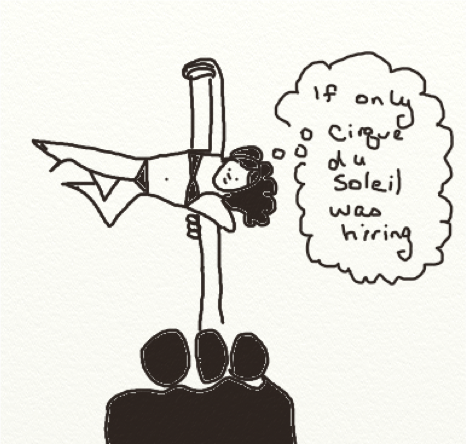 The contemporary gentlemen’s club may be encapsulated in the image of scantily clad women performing impressive acrobatic routines in front of a beery audience rather less capable of similar athleticism in a windowless building that clings to the seedier edges of town. It seems a fine irony that these strip joints, with their sticky, slick furniture, skewed sexual voyeurism and spilt beer take their moniker from establishments adjoining London’s centre of power, which excluded women, and had large windows from which the elite could watch the world outside without being seen.
Our modern gentleman’s club’s idea of the gentleman is as flat as its beer and as restricted as a bouncer’s facial expressions. There is a much more interesting story to be told, one that tracks the evolution of masculinity and gentility throughout the nineteenth century while touching on wider patterns of socialization. Continue reading “Guest Post: Another Kind of “Gentlemen’s Club”: A Brief Illustrated History of an Institution”
Romantic Midwinter Festivals
With New Year’s Day behind us, the holiday season may seem to be over… but the great Romanticism-inspired festivals of the bleak midwinter are just beginning. With its plethora of anniversaries, birthdays, saints’ days, and bicentennials, January offers many occasions to host scholarly-themed celebrations that will brighten up your new semester! Below is a sampler of top hits:
2015: Celebrate Artistic Bicentennials with This Reading List
Wordsworth, Collected Poems and The White Doe of Rylstone
Scott, Guy Mannering
Austen, Emma
Peacock, Headlong Hall
Byron, Hebrew Melodies
Shelley, Alastor (written 1815; published Feb. 1816)
Malthus, An Inquiry into the Nature and Progress of Rent
Schubert, Der Erlkönig
Grimm’s Fairy Tales, vol. 2 Continue reading “Romantic Midwinter Festivals”
'Tis the Season for Haunting: The Ghosts of Christmas Past
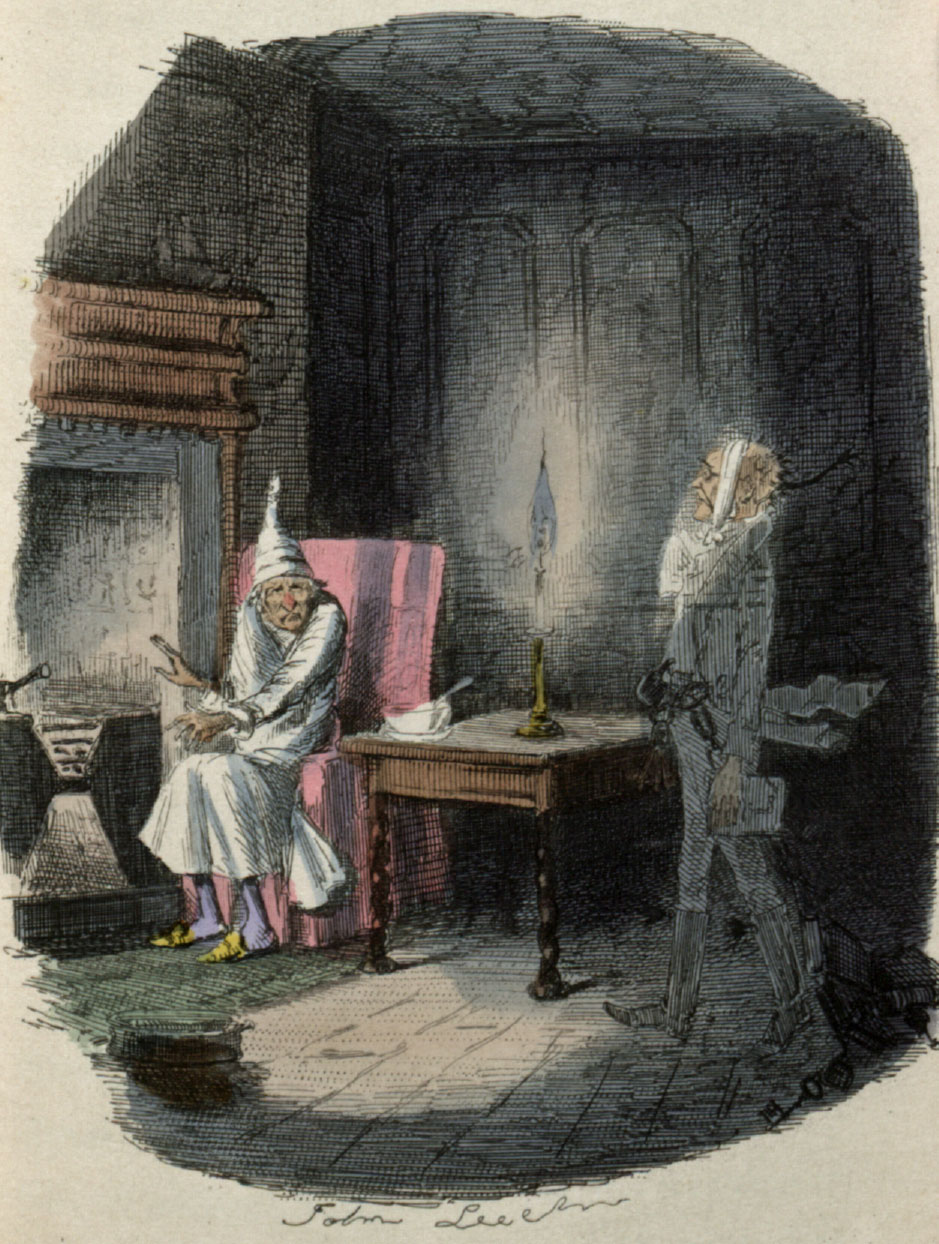 “‘Man of the worldly mind!” replied the Ghost, ‘Do you believe in me or not?’
‘I do,’ said Scrooge. ‘I must. But why do spirits walk the earth, and why do they come to me?’” (Charles Dickens, A Christmas Carol 1843).
Charles Dickens’s A Christmas Carol; A Ghost Story of Christmas has permeated each year’s cultural interpretation of the Christmas spirit, from adaptations like A Muppet Christmas Carol to commercials for the newest gadgets. It’s by far the most recognizable Christmas ghost story. Though we often think of Halloween as the most obvious time for telling ghost stories, Christmas used to hold that office. The Paris Review did an article about this tradition this month, with five recommendations for Christmas ghost stories. The days get shorter, the darkness rolls in and stays there, bringing the cold with it and inviting gatherings around the fireplace with warm drinks, warm company, but chilling tales. I recently became a ghost guide for my town’s ghost walks through its eighteenth-century historic downtown. We mostly run through October, but we’ve started to embrace the traditionally haunting winter evenings (well, not me, with my low tolerance for PA winter temps). In doing the tours, I’ve seen first-hand how the atmosphere created by a small group of people, gathered close in the darkness around flickering candlelight, can produce a belief in ghosts. And it was in this spirit that Dickens drew on a long history of communal ghost stories. Continue reading “'Tis the Season for Haunting: The Ghosts of Christmas Past”
The Joy of Colloquium: Recipes for Workshop Success
It’s that time of year when we come together with those close to us to celebrate, before the year ends, the things that really matter… like conference proposals (NASSR’s is due January 17th!), chapter drafts, readings from new books, and the other standard fare of the nineteenth-century working group. But concocting the perfect colloquium moves beyond a craft to become an art form, and it is the aim of this post to give you some pointers on preparing that rare colloquium that is truly — well done.
Continue reading “The Joy of Colloquium: Recipes for Workshop Success”
Dissertating with a Hammer: An Idiot’s Generalizations on Scholarship and Activism
I begin with two passages that will be the epigraphs to my dissertation:
Few critics, I suppose, no matter what their political disposition, have ever been wholly blind to James’s greatest gifts, or even to the grandiose moral intention of these gifts … but by liberal critics James is traditionally put the ultimate question: of what use, of what actual political use, are his gifts and their intention? Granted that James was devoted to an extraordinary moral perceptiveness, granted, too, that moral perceptiveness has something to do with politics and the social life; of what possible practical value in our world of impending disaster can James’s work be? And James’s style, his characters, his subjects, and even his own social origin and the manner of his personal life are adduced to show that his work cannot endure the question.
Trick yourself into productivity: the best technologies to keep you focused
‘Tis the season—to become a crazy hermit living under a pile of blankets and books as a tangle of charging cords threatens to spill your very full coffee mug or wine glass (or both, no judgment) onto your laptop. The worst time of the school semester is upon us as the holidays collide with final deadlines. Student grades need to be finalized and seminar papers written, all while family and friends inundate you with invitations to various shenanigans. Personally, this is the time of year where I struggle to get everything done while still enjoying the holiday cheer and remaining sane. So I have compiled a list of the best technologies tested by yours truly to help you reach your deadlines, whatever they may be. Good luck! Continue reading “Trick yourself into productivity: the best technologies to keep you focused”
On First Looking into…Manfred
By Julia Malykh
The enchanting sensuality of Lord Byron’s closet drama Manfred (1816) lies in its depiction of a power struggle. On encountering the text, it is easy to underappreciate Byron’s magnetic innovation by writing off Manfred as a fictionalized account of the poet’s incestuous relationship with his half-sister Augusta Leigh—in keeping with his personal reputation as “mad, bad and dangerous to know.” Upon a closer look, however, it becomes clear that Byron’s dramatic poem is a series of tableaux depicting power struggles between a Byronic hero, Manfred, and a Byronic heroine, Astarte. Continue reading “On First Looking into…Manfred”
Poem: Now
This is an older poem – not one explicitly written with anything to do with Romanticism in mind. But I think my mental image of the speaker owes a great deal to the mythic Romantic genius figure (as seen by himself, of course!). I’ve been starting to think about connections between Romanticism and current genre fiction – more to come!
Now
Now, darling, you know that we’re living in sci-fi –
I have seen this city from the sky
And it’s the gleaming metropolis of everyone’s dreams.
This bonfire of lights below us seems
So alien – what strange planet do we walk
Across now?
Honey, I’m not going to talk
About an alien invasion,
How their spies (so adeptly disguised) are already in position;
I’m not going to try to tell you, dear, that we
Have robotic brains. You misunderstand me.
Listen: I come to you as a prophet to his people, glorious and
Holy, reaching out my hand
To you my flock, descending from the height of this airplane.
I deign
To tell you the truth, beloved (and how!) –
I have seen the future, and it is now.