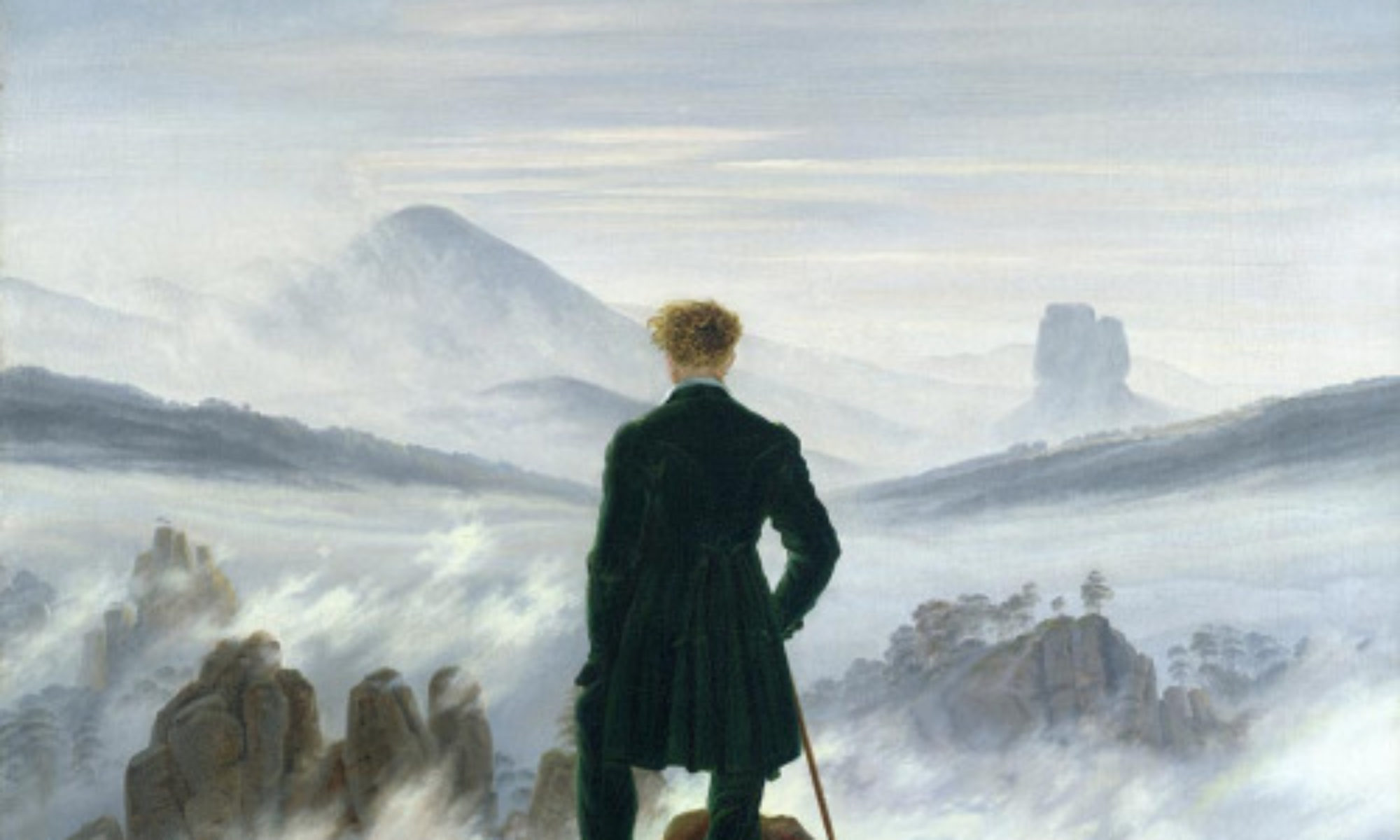

In Edmund Burke’s attack on the “metaphysic rights” (152) of men that inspired the French Revolution, he urged Britons to look to their “breasts” rather than their “inventions” for the source of liberty. Burke deployed the language of sensibility to naturalize a political system organized around the idea of heredity. The argument goes that inheritance binds English citizens to their constitution with the instinctive force of a bond of kinship. But Burke has to admit that the awe-inspiring aspects of the state –its “pedigree and illustrating ancestors” (121)—are just so many “pleasing illusions” that make “power gentle, and obedience liberal” (171). Psychologically, however, Britons need these institutions because they have so thoroughly internalized the principles that they represent that those principles have become second nature. What keeps property and political representation in the hands of the few is what ties Britons to a shared past and future. Burke’s logic would be like Foucault’s if Foucault had wanted to celebrate the panopticon. Continue reading “Ancient Pedigrees, Old Trees and Numinous Rocks”
Planning for MLA!
With winter break almost now in full swing, we have to come to a frightening realization: MLA 2016 in Austin is just 3 weeks away!
In preparation for this event, the largest of our academic yearly conferences, some of us might be sweating profusely over the idea of interviewing for those dearly coveted jobs, while others may be frantically polishing papers for our MLA debuts.
To help minimize the fury of pre-conference preparations, here below you’ll find a list of panels and events that may be of particular interest to young Romantic scholars and graduate students. Bookmark it now!
The entire searchable program is available online here. And the Committee on the Status of Graduate Students in the Profession has gathered a catalogue of important networking and social events at the conference, along with workshops and panels of interest to graduate students, which can be found listed here.
See you in Austin!!

Eucatastrophe in The Rime of the Ancient Mariner
First, let me say that I’d love some constructive feedback on this post. This is a sort of companion piece to my last post, in which I examined Coleridge’s influence on J. R. R. Tolkien’s conception of the imagination and its pivotal role in the creation of fantastic literature. But my long-term plan for my dissertation entails developing a critical theory of fantastic fiction (a loaded term in and of itself, I realize) from Longinus’s conception of the sublime as it relates to language and rhetoric, Romantic ideas about the imagination, and higher-order “big picture” ideas about the role of fantasy from Tolkien and, to a lesser extent, C. S. Lewis. Continue reading “Eucatastrophe in The Rime of the Ancient Mariner”
"We are here!" Interstellar Messages and Why the Humanities Matter
By Caroline Winter
Why study the humanities? It’s a question that doesn’t seem to go away no matter how many times it’s answered or in how many different ways. Here, I’d like to propose yet another answer, one that also answers a related question: why study Romanticism? This answer was inspired by two videos about science, of all things: an episode of Neil deGrasse Tyson’s series Cosmos: a Spacetime Odyssey, and a YouTube video in the Vsauce series that describes our efforts to send messages into space, in the hope that we’re not alone in the universe.
Continue reading “"We are here!" Interstellar Messages and Why the Humanities Matter”
A Bird’s Song, and Two Men Divided by Death, United by Age
 It’s nearing the end of the year, finals are over, papers are due, but we’re literature majors here, so of course the only thing that matters is the symbolism of winter. The year is dying and ready to sleep forevermore — bringing in its death a spark of new life, new possibilities, and the mass cultural/capitalistic orgy that is the Christmas season. Parting with the cynicism, however, I decided that rather than construct coherent argument, I would instead remember a moment from one of my Romanticism courses and muse on the experience. Continue reading “A Bird’s Song, and Two Men Divided by Death, United by Age”
Ozymandias

This is a sketch I did a number of years ago. It was published originally on my blog White Tower Musings, but I wanted to share it since it was inspired by one of the most, possibly overused but still brilliant poems, Ozymandias by Percy Shelley.
The poem has always been one of my favorites because of its ability to really convey the ephemeral nature of Mankind’s creations. Men build egos and empires, and in the end it all fades. Nature is the only force that lasts.
Here’s a link to the original post:
https://jsjammersmith.wordpress.com//?s=ozymandias&search=Go
Avoiding Winter Break Burn-Out: R&R for the Holidays
Recently, I’ve started trying to keep tabs on other academic blogs. After fumbling around with my partner to figure out how to get all (okay, most) of the posts in one reader, we finally got it to work, and I can now browse through them on my phone. In particular in the last month, I’ve seen a spike in posts dedicated to self-care. Apparently, it’s particularly difficult for academics to practice it in late November/early December—something to do with papers, grading, grant deadlines, and—oh yeah—making sure to have quality time with your family and friends on Thanksgiving if you celebrate it. To name a few posts I’ve seen: Raul Pacheco-Vega redefines academic success (in both small and large scopes); Meghan Duffy reminds us that while we are busy, we don’t actually work 80 hours a week and should stop feeling guilty if we aren’t; Steven Shaw discusses realistic expectations and developing a healthy perspective (as opposed to a “tough skin”); and our own Amy Gaeta highlights self-care as part of surviving the first semester of grad school.
All of these writers give great advice, and if you find yourself in a rut, they’re worth a read. Still, as helpful as their posts are, sometimes all we can manage during the end of a semester is to go, “Right. Green tea. I should drink that instead of coffee this afternoon,” and then table the rest for when our workloads die down. But when winter break starts (or summer, or spring if you’re on a quarter system), sometimes we want to collapse or throw all caution to the wind and celebrate that we’re finally done (for the time being, anyway).
Continue reading “Avoiding Winter Break Burn-Out: R&R for the Holidays”
The Story of Death
In its “List of Deaths for the Year 1750,” the Gentleman’s Magazine included one
Mrs Reed of Kentish Town, aged 81. She had kept a mahogany coffin and shroud by her 6 years, when thinking she should not soon have occasion for them she sold them, and dy’d suddenly the same evening. (188)
There’s an elaborate art of dying premised here. We can start with the articles of burial, at the ready, signaling Mrs. Reed’s vigilant preparation. Coffin and shroud are inmates, given the privilege of domestic intimacy, and death too will arrive like an intimate relation returning home. By disposing of the accoutrements of burial, Mrs. Reed presumed she would live. The unstated conclusion: her lapse in preparation invited the very thing she had ceased to fear. And it caught her, cruelly, without the benefit of last rites. (As Philippe Ariés explains, it is only recently that we have come to desire a quick death.) Death may be unknowable, but it seems to have an eye for formal irony and narrative resolution. Where we nod, it comes winking.
Continue reading “The Story of Death”
Charles Dickens vs. Leigh Hunt: Charity, Social Reform, and the Problem of Hell
My sister and I have two very important holiday traditions: 1) we always go to a haunted corn maze before Halloween, and 2) we always watch The Muppet Christmas Carol before Christmas. We don’t often admit to the second tradition (and when we do, we kind of pretend that we only enjoy the Muppets “ironically”), but it’s something we’ve done for as long as I can remember. It just doesn’t feel like Christmas until Katie and I are sitting on the couch, singing along to the song “Marley and Marley” while two enchained muppet ghosts rattle around the TV screen, bemoaning their eternal punishment.

Continue reading “Charles Dickens vs. Leigh Hunt: Charity, Social Reform, and the Problem of Hell”
First Year Graduate School Guide: Surviving Semester One
Please allow my brief detour from the Romantic optic of the blog to offer some tips and reflections have grown out of the last few months of semester one of graduate life. I share them in hope others in a graduate program for literary studies or other related fields will learn or perhaps remember how to keep afloat in semester one.
Confession: I have yet to turn in any seminar papers and there’s still 11 days left before I can truthfully call myself a victor, but I’ve made it this far—perhaps there’s something to my method besides madness.
Continue reading “First Year Graduate School Guide: Surviving Semester One”