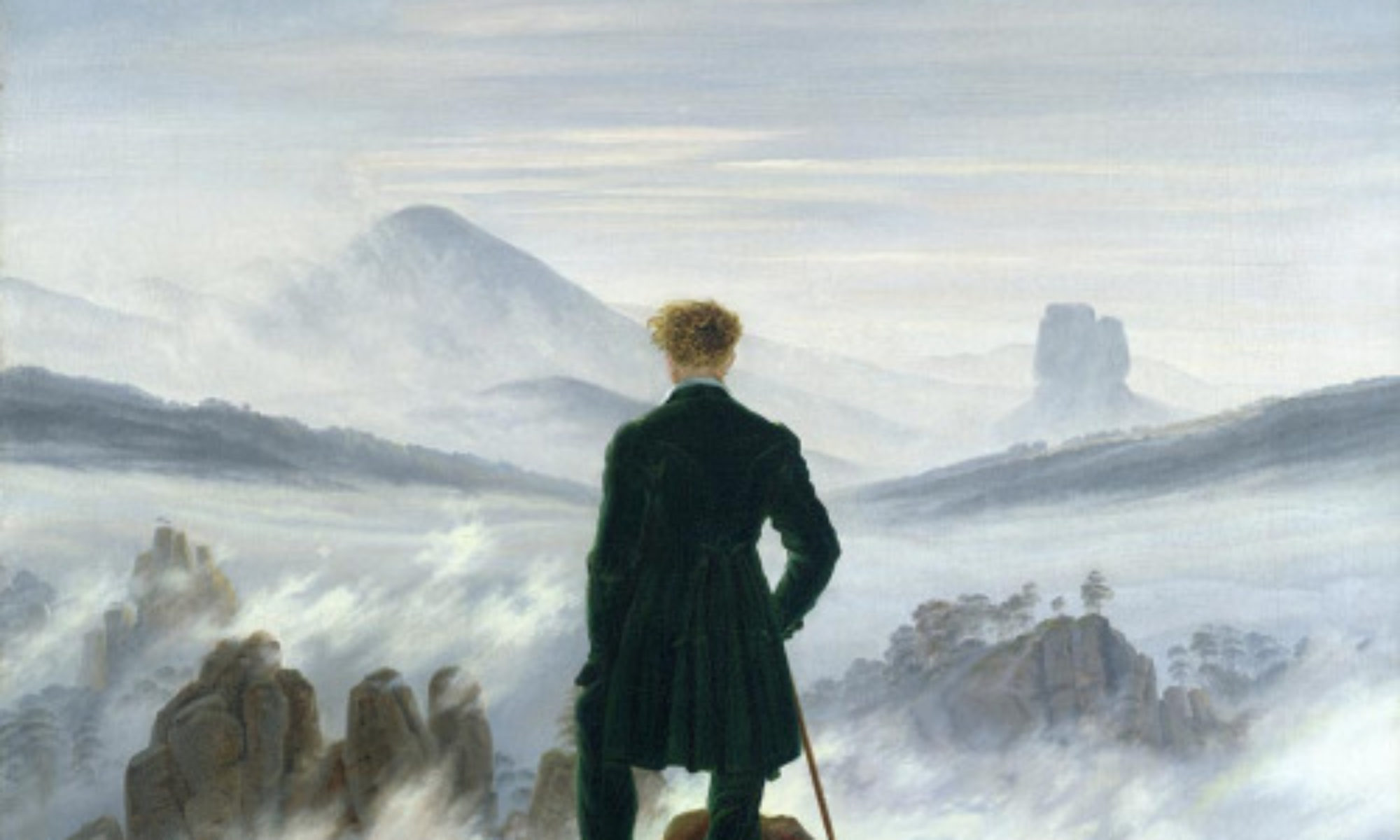
William Paley’s Natural Theology (1802) was a profoundly influential distillation of what was then known as the argument from design, and is now called intelligent design. Observing a profoundly functional world around him, Paley claimed that “in the properties of relation to a purpose, subserviency to an use, [the works of nature] resemble what intelligence and design are constantly producing, and what nothing except intelligence and design ever produce” (216). Paley’s God is a master tinkerer, less omnipotent immensity than systematic, clever craftsman. Everywhere he turns his argumentative lens (the eye, after all, being Paley’s chief example), he finds a natural world that works. Functionality proves design, design indexes a designer, and a designer must design consciously, with specific ends in mind. The divine idea is realized in the created world through the careful accretion of contrivance. This is Paley’s word: God as the great contriver, with an exquisite design sensibility. Final cause predominates, as everything is shaped by divine purpose toward its end.
Continue reading “Unintelligent Design: Keats, Natural Religion, and Reproduction”
Solitary Moods in Andrew Davies’ Jane Austen Adaptations
 Over winter break, I’ve had the opportunity to fuel my Jane Austen obsession with Andrew Davies’ BBC adaptations of Sense and Sensibility (2008) and Pride and Prejudice (1995). I enjoyed them both! In my enthusiasm, I’ll follow up Caroline’s wonderful post on Alan Rickman’s Colonel Brandon and Cailey’s fascinating review of Feeding France with a few comments on the very different ways that Davies’ two miniseries represent the kind of solitary states that turn up all the time in Austen’s novels. I mean those moments in the narrative when a character’s (often the heroine’s) “privacy” is inflected with—or we might say invaded by—irrepressible thoughts and feelings for others.
  The tendency to doubt, judge, “(re)read” and generally speculate about other minds is one of the things that makes an Austen heroine the herione–this capacity distinguishes Elinor Dashwood from Anne Steele, Elizabeth from Mary Bennett. (There are shades of thinking and feeling for others, of course. Lucy Steele, for instance, is good at anticipating other people’s behavior but her cunning doesn’t enable her to transcend her immediate interests.) Frequently, a heroine’s thoughts and feelings about other characters come into relief when she is alone—i.e. temporarily free from the claims, misconstructions and physical proximity of others.
After reading Darcy’s letter exposing the ‘truth’ about Wickham, Elizabeth Bennet famously cries, “Till this moment I never knew myself.” The expression passes in just the kind of reflective solitude that I want to suggest is the special privilege of the Austenian heroine. We might equate Elizabeth’s urgent solitary exclamation with the sort of emotional content that Shakespeare’s soliloquies represent. Think, for instance, of Richard III’s despairing exclamation upon waking from a nightmare that, “There is no creature loves me; / And if I die, no soul shall pity me: / Nay, wherefore should they, since that I myself / Find in myself no pity to myself?” For Richard as for Elizabeth, self-knowledge comes with a fresh and difficult (humiliating, haunting) perception of one’s relation to another (or others) . In general though, dialogic forms like drama and film evoke solitary movements of thought and feeling far less frequently than realist novels. For Frances Ferguson, “the limitation of theater is that it consists of almost nothing but direct quotation, so that drama must continually create an unfolding plot that motivates individual characters to present their views, to have thoughts that rise to the level of the expressible” (167). Theatre can’t, in other words, capture unvoiced thoughts and feelings like free indirect style.

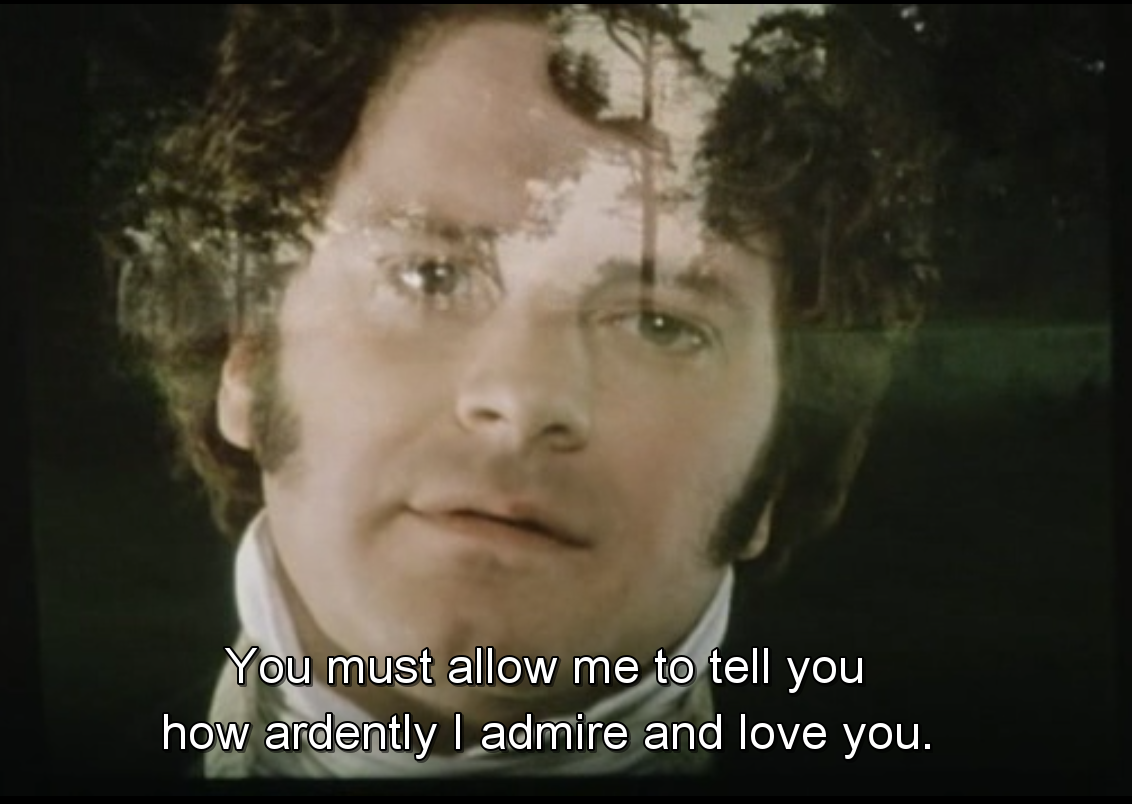
Though their film consists of almost nothing but direct dialogue, screenwriter Andrew Davies and director Simon Langton manage to evoke the intense feelings of shame, regret and longing that accompany Elizabeth’s recognition that she has misjudged Darcy’s character. Nancy Yousef has observed that Elizabeth’s attachment to Darcy grows with self-abasing feelings of gratitude that are “largely described and situated in solitary meditations” (107). The BBC adaptation stays faithful to the spirit of Austen’s novel by showing us that Elizabeth’s romance with Darcy develops as much in private spaces of reflection as in face-to-face encounters. The filmmaker’s attempts to show that Elizabeth is a reflective character are respectable (she is frequently shot sitting in front of the mirror) but, in one instance, the visual representation of Elizabeth’s preoccupation with Darcy is semi-ludicrous. In the carriage ride from Rosings to Merryton, Elizabeth gazes pensively out of the window and, all of a sudden, a ghostly apparition of Darcy appears reflected before her. He rehashes a line from the proposal scene: “You must allow me to tell you how ardently I admire and love you.” Although Elizabeth’s feelings of regret and self-loathing are conveyed in the bodily shudder with which she responds to and vanquishes Darcy’s specter, the whole bit has me thinking less about Elizabeth’s affective state (the scene leaves little to the imagination) and more about how unnatural it feels to know exactly what a character on screen is feeling. Movies may just be better off leaving us to wonder about the content of characters’ minds.
By not giving us full access to Elinor Dashwood’s thoughts, a montage towards the end of the BBC adaptation of Sense and Sensibility imagines new possibilities for Austen’s heroine. The montage is about as effective as any scene in Antonioni at generating ambiguity about a silent figure. Multiple shots dwell on Elinor after she has returned to Barton and learned (been misinformed) that Edward Ferrars has married. In this moment in the novel, psycho-narration follows Elinor’s thoughts as she conjures a vision of Edward settled in marriage and discovers that, “happy or unhappy,—nothing pleased her; she turned away her head from every sketch of him.” In the film, however, Elinor’s mood of frustrated desire saturates a series of strangely beautiful shots that picture her going through the solitary motions of everyday life. We watch her paint a landscape, hang a picture, buy a fish, gaze out the window and, finally, out at the sea. Though Antonioni would probably leave off the sad tune that acknowledges Elinor’s disappointment all too obviously, her contemplative activities suggest visually the kind of aimlessness that he became famous for representing on screen. Watching Elinor, we entertain the idea that she may be sad, bored, distracted or lonely but we are not certain that her feelings correspond to thoughts of Edward.

In the final shot, Elinor appears on a bench before the sea, with her back to the viewer. In an essay on Austen and Cavell, Eric Walker argues that this image represents Elinor’s self-sufficiency—“like Elinor herself in the image, Elinor’s desire, autocentric and allocentric, faces elsewhere, elusively”—and simultaneously anticipates her upcoming marriage—“the bench marks the grounded and settled spot where the marriage empire summons identity to take seated place, with room for one other.” Insofar as the shot suggests thoughts of an absent other, it evokes the typically intersubjective quality of solitude in Austen. But where the novel Sense and Sensibility gives us an incontestable description of the unpleasant thoughts about Edward that are running through Elinor’s head in this moment, the film, which can only suggest thoughts and emotions, leaves open the possibility that Elinor’s thoughts may tend, elusively and abstractly, towards a horizon that is hers alone to imagine.
Works Cited
Ferguson, Frances. “Jane Austen, Emma, and the Impact of Form.” MLQ: Modern Language Quarterly 61, no. 1 (2000): 157–80.
Walker, Eric C. “Walker, Austen and Cavell,” July 1, 2014. http://www.rc.umd.edu/praxis/cavell/praxis.cavell.2014.walker.html.
Yousef, Nancy. Romantic Intimacy. Stanford, Calif.: Stanford University Press, 2013.
"The world’s first instant mashed potato factory," and other Romantic-era food innovations
As a lover of anecdotes in a field (English) that doesn’t always embrace them in its scholarship, I often come upon delightful details I want to share, but can’t—in my dissertation, at least. So, it makes me especially happy to have the opportunity to write for this blog, as I get the chance to relate all the fun facts I’ve been learning in my food studies-related reading. Today, I’m expanding from my previously England-centric scope to delve into E.C. Spary’s recent book Feeding France: New Sciences of Food, 1760–1815. Continue reading “"The world’s first instant mashed potato factory," and other Romantic-era food innovations”
Five Great Things about Alan Rickman’s Colonel Brandon in Ang Lee’s Sense & Sensibility (1995)
By Caroline Winter
The actor Alan Rickman passed away on January 14, 2016. He played many roles—most people probably know him best as Severus Snape in the Harry Potter movies—but to me, he will always be Colonel Brandon, a role he played brilliantly in Ang Lee’s Sense and Sensibility (1995). The film departs from the novel in many ways, as all adaptations do, but it remains one of my favourite adaptations of Austen, in part because of Rickman’s performance. So, I’d like to share five things I love about Alan Rickman’s Colonel Brandon.
Continue reading “Five Great Things about Alan Rickman’s Colonel Brandon in Ang Lee’s Sense & Sensibility (1995)”
New Initiative: Romantic Bicentennials!
I’m pleased to announce a new initiative sponsored by the Keats-Shelley Association of America and the Byron Society of America: ROMANTIC BICENTENNIALS! This project offers scholars, readers, and the general public the opportunity to get involved and to receive updates about annual symposia, related conferences, networked events, and other media celebrating 200 years of Romanticism.
The project’s main website (still under construction) is located here: http://dev-romantic-bicentenials.pantheon.io/. On the website, read about each day’s events 200 years ago, and stay informed about current scholarly events celebrating bicentennial anniversaries throughout 2016 to 2024 (Geneva to Missolonghi). There will be one major sponsored conference each year: this year, it’ll be on May 21st, at the New York Public Library, celebrating the Genevan Summer of 1816.
Reach out if you would like to get involved — we’re looking for people to live-tweet events with our hashtag #Romantics200! We are also looking for scholars to participate in the annual symposia, as well as to attend the networked events throughout the year. To stay in touch, connect with us through our Facebook page: https://www.facebook.com/romanticbicentennials/. (A twitter handle is coming soon). And write to me if you have questions!
Romanticism & the Abstract: Finding the Sublime 20th c. American-Avant Garde Art
Happy new year Romantics and all readers alike!
The promises of the title carry the weight of a dissertation title rather than a blog post, so to focus such reflections I write in response to an exhibit I recently visited at the Institute of Contemporary Art, Boston. “Leap Before You Look: Black Mountain College 1933–1957” has recently and consistently been hailed as one of the best exhibitions in 20th century American Art of the 2015 museum season, however throughout the various reviews I’ve yet to see the word “Romantic” spring up yet despite my thoughts. Continue reading “Romanticism & the Abstract: Finding the Sublime 20th c. American-Avant Garde Art”
Teaching “Intro to Women’s Literature” as a Romanticist
Last semester I got my first taste of teaching an “Introduction to Women’s Literature” course at CU Boulder. As winter break now comes to a close, I’ve been pondering the revisions I’ve made to my syllabus this month – revisions that have prompted me to analyze familiar questions: What is women’s literature? How does one teach a survey of women’s literature as a Romanticist? What are the desired outcomes of such a course? Continue reading “Teaching “Intro to Women’s Literature” as a Romanticist”
And now, a brief update from MLA…
We bring you the Shelley, Keats, and Byron dance party.
COP21: Opinion Piece
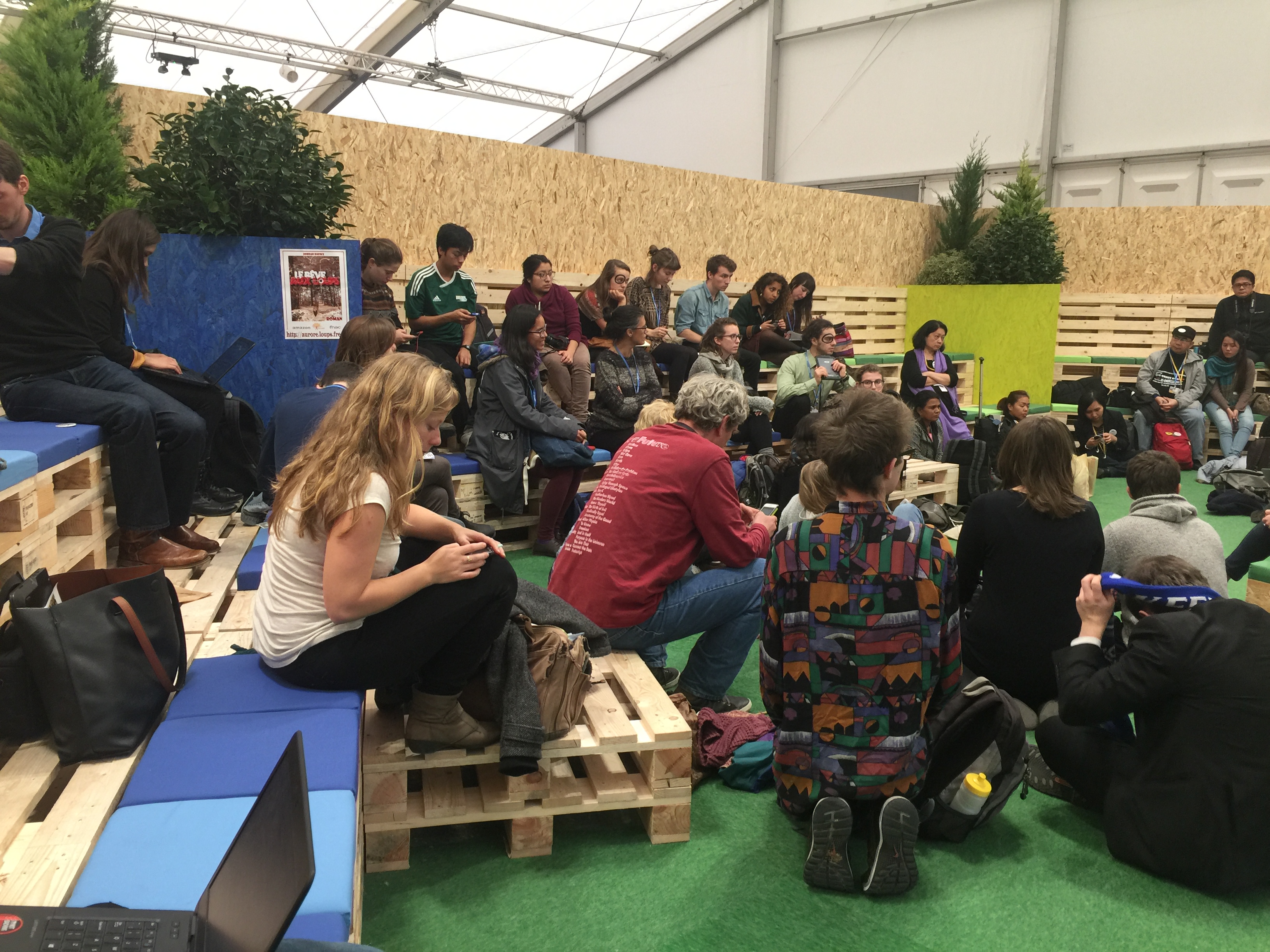
Introduction: It’s been two and a half weeks since the COP21 concluded, and it has taken as long for me to feel I could begin forming my own perspective on the events. In one of the last remaining assemblies where all nations are equitably represented, according to the aspirations of the mission, and progress is made only by consensus, 196 countries for the first time in history reached agreement in the United Nations Framework Convention on Climate Change (UNFCCC. The unity necessary for nations to together begin addressing industrially-produced greenhouse gas emissions was at last achieved. I believe, in part despite the criticisms of the agreement leveled by members of both the diverse global political left and and right, that when placed in the proper, nuanced, and historical perspective, the accord represents a terrific and tremendous success. Indeed, if there was one strain of pessimism many of my friends and associates expressed before and during the conference, it was that the event would represent only “médiaques,” simply “media hype,” the image of progress without the substance of promise and action. In this post, I engage in a critical reflection on the Paris Agreement, offer my optimistic sense of what it offers, what it leaves to be done, and a speculation on where we go from here. It is my position that is precisely the image of the accord–as opposed to its actuality–that will make what it purposeively aims to do achievable. Towards this end, I also include some of my favorite images from the ArtCOP21 festival and climate-related events in which I was fortunate enough to participate.
Continue reading “COP21: Opinion Piece”
Panopticon Palate
Like it or not, 2016 is fast approaching, along with a return to all the responsibilities grad school entails. Perhaps you’re surveying the last few weeks of financial and dietary excess (and work backload) that the holiday season seems to demand with a feeling of regret and rising panic. If that’s the case, then I have just the book for you: Jeremy Bentham’s Prison Cooking: A Collection of Utilitarian Recipes!

Continue reading “Panopticon Palate”