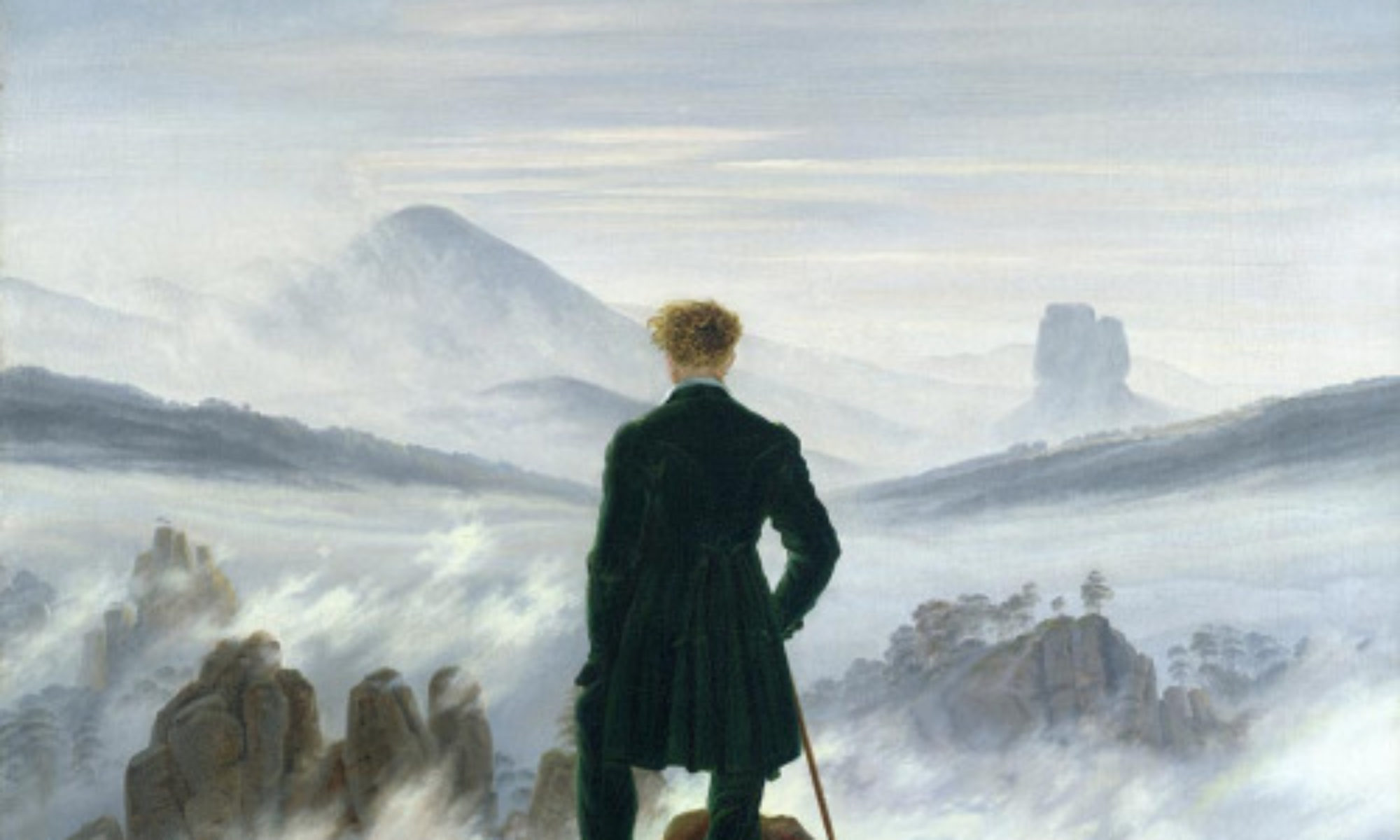
This post is part of the “Graduate Guide to Guest Lectures” series, a collaborative endeavor by NGSC bloggers Deven Parker, Grace Rexroth, and Conny Fasshauer, all Romanticist graduate students at the University of Colorado at Boulder. Drawing on our collective experiences organizing guest lectures at our university, our aim for this series is to offer advice and tips for NGSC readers hosting visitors at their institutions or attending one of these events.
“Networking” is a word I dread more than laundry day.
Because I wandered through the corporate world for several years before finally deciding to go to grad school, the term “networking” conjures up myriad awkward experiences – themed cocktail parties, company logos, uncomfortable seminars where strangers assess the grip of your handshake…it’s not my idea of a fun Friday night.
…and yet…
With English department sizes shrinking, enrollment numbers dropping, and an ever diminishing job market (thanks NY Times op-ed), networking is arguably a skill we need now more than ever. So, in addition to preparing for comps and formulating a prospectus, “networking” has joined the inner sanctum of my PhD goal list. Practically speaking, this means that, in addition to attending conferences (those hallowed networking meccas), I actively seek opportunities for building relationships in the field. “But how does one go about ‘networking’ outside of a conference?” you may ask. The glib answer: become a chauffeur.
Continue reading “A Graduate Guide to Guest Lectures, II: Networking or “Relationship-Building” on the Road. Literally.”
The Climate of Romanticism: Autumn in Paris 2015
Fall has always been my favorite season. The excitement and energy of a new academic year, with the promise and potential for new experiences, engagements, commitments and ideas never ceases to amaze me. I’ve experienced this to be especially true this fall. Felicitously, and making good on Devoney Looser’s advice regarding applying for fellowships, published on this blog, I received a fellowship to take part in Northwestern’s Paris Program in Critical Theory, a graduate exchange program with the Université Sorbonne Nouvelle. In the Program, you spend the autumn in a seminar covering a select topic in critical theory (this year, belief in Jacques Derrida’s “Faith and Knowledge”) led by Samuel Weber, best known as a theorist, scholar of media, and translator of Derrida and Theodor Adorno. For the rest of the year, you are free to engage in archival research and dissertation writing, and to take part in European academic life. I’ve included a link to the program’s website, since it is open to all graduate students with external funding. With annual graduate fellowships available at most universities in the form of presidential fellowships and other awards that don’t require full-time residence at the home university, in addition to important external awards to apply for, such as the Fulbright program, ACLS/Mellon Dissertation Completion Fellowship, the Chateaubriand Fellowship in the Humanities, and many more, numerous great possibilities exist for grads across the humanities and social sciences to take part in the Paris Program in Critical Theory.
Specifically, I’m in Paris this year for two reasons. First, I’m here to study contemporary French environmental theory as I develop the conceptual framework that’ll drive my dissertation on Blake and ecological politics. Consequently, over the coming months on the blog, expect reading lists and book reviews of the latest in European social thought, with an emphasis on texts that haven’t been translated into English that I imagine will be especially relevant to graduate students generally, and Romanticists especially. There’s also nothing like having an audience to focus and sharpen the mind with language learning, translation, and writing, right?
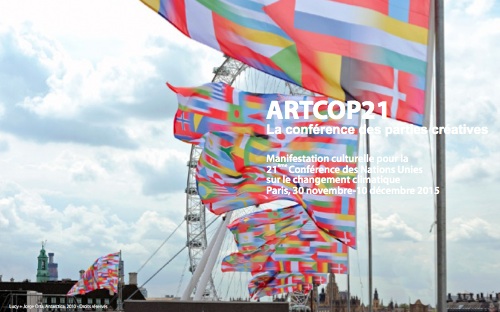
Yet, this year–as I’m sure most of our readers are already aware–is an especially significant one for climate politics, decades in the making for climate policy experts and negotiators, and centuries in the making, with respect to the conditions those most optimistic among us hope will begin to be overturned: the massive amounts of carbon accruing in the earth’s atmosphere. In December, the United Nations Climate Change Conference (also known as the COP21) will convene in Paris, with the hope of establishing a legally binding universal agreement to begin curtailing carbon emissions. The goal is ultimately to limit the amount of atmospheric carbon to that which will produce no more than a 2°C rise, on average, above pre-industrial levels. So second, and relatedly, my fellowship is geared to support my hope to help document the important visual culture that looks to emerge around the the climate conference. Already, there are prominent stirrings–with the ArtCOP21 cultural festival set to convene in Paris, and across the globe, paralleling the climate summit. All of this, I believe, retains certain implications for the study of Romanticism.
Continue reading “The Climate of Romanticism: Autumn in Paris 2015”
Guest Post: Disability and Visibility at the Academic Conference
By Caitlin Rose Myers
We would all agree that conferences are an essential part of the job of academic. However, I’ve recently discovered firsthand that fulfilling this part of our job is extremely difficult for those scholars and graduate students who have disabilities, in ways that are often overlooked – not out of malice, but out of a lack of understanding or foresight. On a recent trip to two conferences in the span of two weeks, I encountered many of the obstacles I’m referring to while using my wheelchair to try to navigate the conference atmosphere. I’d like to share these obstacles in the hope of promoting more foresight and more activism for the rights of disabled conference attendees. Since my disability is largely related to mobility, that is my focus here, although I hope that more conversation can occur about sensitivity and accessibility for all disabled scholars. As a part of our job, we shouldn’t struggle as much as we do to engage with these events, and I hope to encourage those who notice some of these issues at conferences you attend to speak to organizers about promoting accessibility.
Continue reading “Guest Post: Disability and Visibility at the Academic Conference”
Dickens in Eden, 2.0
NASSR-time is upon us, and I am very excited to see many of our Romanticist writers and readers in Winnipeg! Readers can expect an update on the conference — and particularly the sessions for graduate students — next week. But first, I’d like to give my report on The Dickens Universe 2015, which I attended for the first time at UC Santa Cruz at the beginning of this month. This annual week-long event is part academic conference, part professionalism workshop, part Victorian reenactment, and part summer camp: it brings together faculty and graduate students from the US and abroad, but also “Road Scholars” of all ages whose admiration for Boz brings them back each year to discuss a new novel. And, while Dickens isn’t strictly part of the Romanticist repertoire, the conference has much to offer for the aspiring nineteenth-century aficionado/a. Continue reading “Dickens in Eden, 2.0”
Constructing an Academic Self: The Worksheet
This follows up on my previous post, concerning the necessity of renewing resolve and reorienting goals for the forthcoming academic year. Over the last month, in starting to capitalize on the commitments I explored there, I’ve increasingly realized the importance of utilizing reflective writing to actively work through the process of beginning the dissertation, and for the first time really envisioning what type of scholar I’d like to become through that particilar endeavor. As I imagine is the case for most romanticists, certain professional investments have started to become clarified as a result of engaging in the intense, challenging, and rewarding project of dissertation writing–in my case, guided by reading Donald Hall’s The Academic Self, Jean Botkin’s Writing Your Dissertation in Fifteen Minutes a Day, and Timothy Morton’s Ph.D Advice. To honestly think through these core themes that I’m realizing connect work, communities, and more (and, especially, because I’ll be going on the predoctoral fellowship market next year, and think the activity will be helpful for writing research statements), I’ve developed a series of fifteen questions to answer to better understand how areas of academic research, values, and goals are shaped by a longer history of development, different institutions, multiple great mentors, and romanticist friendships. In this blog–an unconventional one, admittedly–I am posting these questions I’ve generated, in hopes that they might be helpful for other grads to think through. I also invite others to post additional questions in the comments you’ve found helpful in creating fulfilling academic trajectories. Continue reading “Constructing an Academic Self: The Worksheet”
Get It Together, Leveton!: A Romanticist's Resolutions for the (Academic) New Year
For me, getting to candidacy this year was challenging. Of course, in the end, all went well. I found reading for my qualifying exams rewarding, and having the dissertation prospectus approved was a joy beyond measure. Nevertheless, allowing myself a moment of honesty and vulnerability in this forum, despite the year’s successes I’m left with the feeling I broke with the strategies for success devised in part through blogging with the NGSC, and which were successfully implemented my first and second years. This year, I found myself reading and writing into deadlines–as opposed to allowing thought to open up and evolve over time. Accordingly, and inspired by Deven Parker’s similar post, I thought that composing a piece in the wake of the conclusion of Spring Quarter regarding resolutions for the upcoming academic year starting July 1 would be a positive step towards restoring a sense of balance in how I approach my work. My hope is that it will be helpful to caucus members who, like me, can craft solid work strategies, but may struggle from time to time to sustain the good academic habits carefully cultivated.
1. Goal Setting Continue reading “Get It Together, Leveton!: A Romanticist's Resolutions for the (Academic) New Year”
Studies in Romanticism: An Assistant’s Perspective
By Talia Vestri
This post discusses some of my experiences as an Editorial Assistant for Studies in Romanticism since 2012. These are, of course, my own experiences in journal publishing, and all journals probably work differently, having their assistants focus on different tasks. Below, I offer some reflections about the job and my copyediting projects. In my next posting, I’ll offer a follow-up conversation with SiR editors, including some advice on the publishing process and insights for grad students—so stay tuned! Continue reading “Studies in Romanticism: An Assistant’s Perspective”
Graduate Student Housing for NASSR 2015
Hello NASSR Grads,
We have recently been advised by the organizers for this year’s NASSR conference in Winnipeg that the University of Winnipeg Hostel (a twenty minute walk from the conference venue) has a limited number of rooms available at grad-friendly rates.
If interested, see: http://uwhostel.com/.
Looking forward to seeing everyone in Manitoba!
Jacob, Caucus Co-Chair
NGSC E-Roundtable: The Pedagogy of Romanticism
INTRO: Renee Harris, Emily Zarka, and Daniel Nutters will focus their roundtable discussion on pedagogy around two essays by Mark Edmundson included in his recent book Why Teach? In Defense of a Real Education. The essays are entitled “The English Major” and “Teaching the Truths” and were previously published in The Chronicle of Higher Education (June 29th, 2013) and Raritan (23.1) respectively.

While Why Teach? contains a polemic against the bureaucratization of education and the corporate logic of professionalism that governs academia, it also offers a vision of a “real education” that rests upon many assumptions inherent to what we now call “romantic ideology.” What makes this book, and especially the two essays we will consider, such an appropriate text to consider for a roundtable on pedagogy on the NASSR Graduate Student Caucus blog is the manner in which it demonstrates the continued relevance of such highly charged categories as “genius,” “imagination,” “truth,” and all the motifs of a “natural secular” theology of art. At the core of Edmundson’s thinking is not just a familiar and clichéd humanist vision, but one that has survived the culture wars (see Edmundson’s edited volume Wild Orchids and Trotsky), the apparent anti-humanist theory (or as he puts it anti-literature philosophy) of the 1970s and 1980s (see his Literature Against Philosophy). Absorbing these consequential intellectual events has allowed Edmundson to assess our current academic scene and argue for a vision of education that builds upon his own experience of the changes witnessed and occurring in higher education. Continue reading “NGSC E-Roundtable: The Pedagogy of Romanticism”
A Year of Growth
The passing of a calendar year prompts reflection among many folks, including the NASSR Graduate Student Caucus co-chairs. Looking back, 2014 was a big year for the Caucus.
The NGSC Board doubled in size. After putting out a call for board members, Jake, Laura, and I were overwhelmed at the response. Graduate students at all levels (first year M.A. students to doctoral candidates), enrolled in universities across the country, volunteered their efforts and energy to expand the Caucus. For the first time, the co-chairs and board members met using Google Hangouts. More than twenty-five people participated in the meetings. Many of the ideas and changes that fill the rest of this post are the result of these meetings and the giving, thoughtful folks who make up our Board.
Continue reading “A Year of Growth”