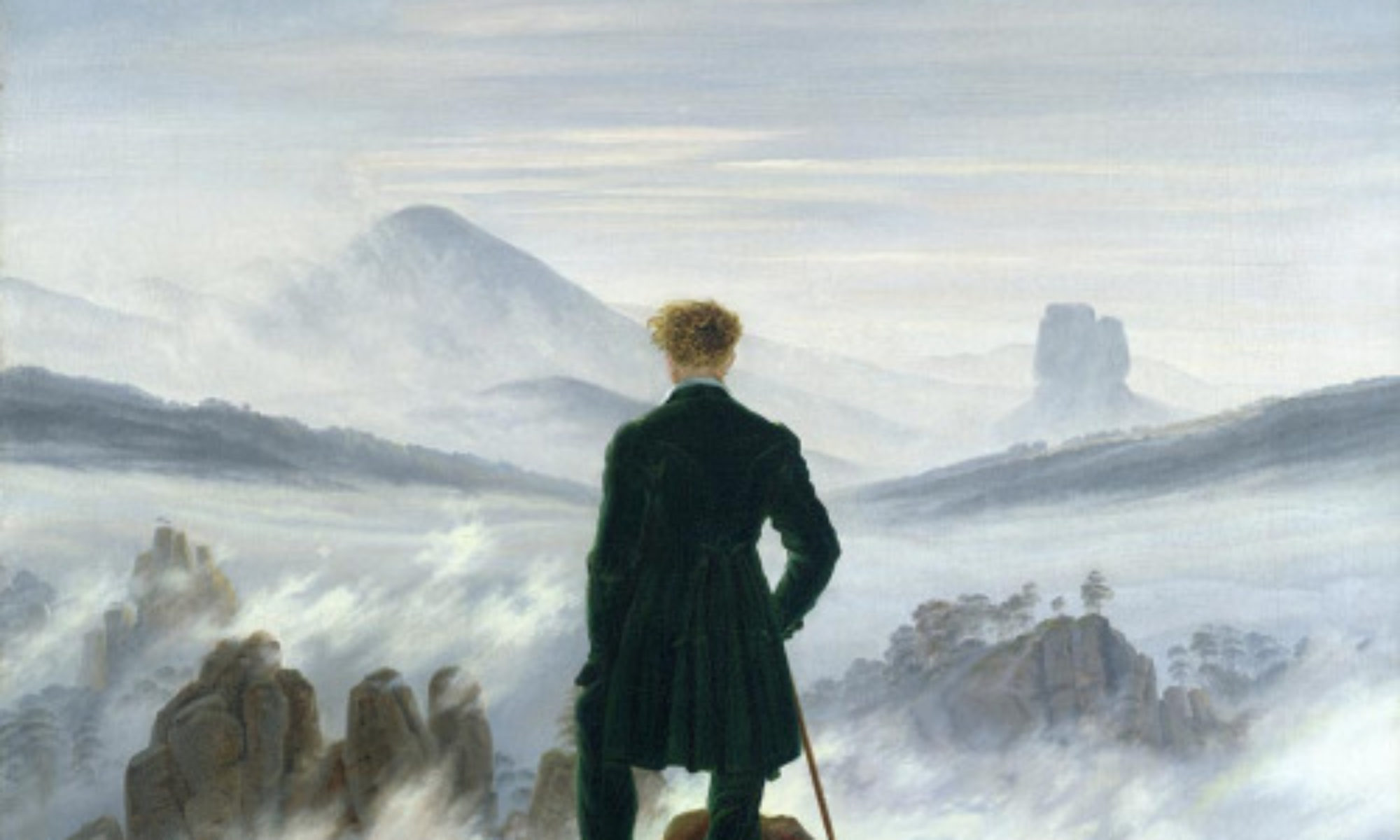
For some strange reason, I was always drawn to the mysterious topic of film in my country, Croatia, and the neighbouring countries whose story of different cultures intertwined at some point in history. I used to watch a lot of films while I was growing up, but I have never actually considered them as being that interesting, or multi-layered, with a hidden message crawling under the main storyline of a film, probably because of the themes that explored the problems of social significance through a representation of violence, for example, or comedies that came out after the war period in Croatia, dealing with memories and consequences of it, and the fact that I was too young at the time. But that changed rapidly. I grew up, and started to see the world around me in a different way, while struggling with the grim reality of a young person with so many hopes and dreams to be cut off and put down by the political and social situation in the country I lived in. More and more I realized that the topic of identity and the crisis of the same is becoming a vital part of my research, as well as my own existence. A lot of people have asked me why film then, and horror film of all genres, to explore identity, and the more people asked me that, the more I thought that I chose precisely the right medium for my research. Continue reading “In the shadows: memories of childhood, memories of identity”
Coleridge's Imagination through the lens of J. R. R. Tolkien
 As a writer of fantasy, J. R. R. Tolkien hardly needs an introduction. Even before the success of the film adaptations of his work turned Tolkien into a household name, he had won first the hearts of children with The Hobbit in 1937 and, some twenty years later, the hearts and minds of adult readers with The Lord of the Rings. But, like Coleridge and MacDonald before him, Tolkien thought deeply about his craft as a writer and creator, and it is by largely virtue of this thought that his art has achieved such timeless success. His 1939 lecture “On Fairy-Stories,” subsequently published as an essay in the 1964 book Tree and Leaf, is, as the editors of the recent authoritative edition of the essay put it, “Tolkien’s defining study of and the centre-point in his thinking about the genre (of fantasy), as well as being the theoretical basis for his fiction” (Flinger and Anderson 9). In this seminal work, he addresses all the points about the imagination raised by Coleridge and, following the Victorian writer George MacDonald, defends their application in the literary arts. Continue reading “Coleridge's Imagination through the lens of J. R. R. Tolkien”
Walter Scott and the Raiders of the Lost Honours
Historical events that reveal authors as encountering the world in ways other than through their pens add a dimension of intrigue to their personal stories. In Walter Scott’s case, a particular treasure hunt in Scotland blurred the lines between the thematic content of his fiction and his personal love for Scottish folklore.
This story starts around the time when Oliver Cromwell was Lord Protectorate of England. During his reign, Cromwell sold some of the English crown jewels in order to raise money for his new government. Scotland—which had yet to be unified with England (that happened in 1707)—feared that Cromwell and his armies would invade them and steal the Honours of Scotland, their royal regalia. The Honours consisted of three pieces: the Sword of State, a gold crown that predates the 1540s, and a silver scepter, thought to be a papal gift and topped with a large crystal stone. According to local legend, Cromwell wanted to melt the pieces down; for him, they stood as a symbol of the monarchical system he opposed. The story goes that the treasures were smuggled away before he could find them. They remained missing for a century. Over time, people began to believe the Honours were simply mythical objects.
Continue reading “Walter Scott and the Raiders of the Lost Honours”
Thomas Gainsborough, Jane Austen and Fashionable Society

Thomas Gainsborough is best known as the painter of rustic, sentimentalized scenes like The Harvest Wagon and of ultra-stylized portraits like The Blue Boy, which has achieved iconic status. A year after Gainsborough’s death, Sir Joshua Reynolds chose to celebrate Gainsborough’s “portrait-like representation of nature” and noted that Gainsborough’s excellence was “selected by himself from the great school of nature” (qtd. In Bermingham, 58). Since then, the critical consensus hasn’t much changed; it’s Gainsborough’s innovations in landscape painting that make him the proto-Romantic artist who paved the way for JMW Turner. One could look at Gainsborough’s Cottage Door with Cowper’s “The Task” or Wordsworth’s “An Evening Walk” to get a sense of the perspectives, affects and fantasies that shaped the early Romantic pastoral. This being said, I’m interested in aligning Gainsborough with the writings of the Romantic period along a different axis: it may be productive to read his portraits alongside Austen’s domestic realism. The thinking here is part of a larger project on the two artists that I’m trying to make-work. For now, what compels me about the Gainsborough-Austen connection is not their shared preference for the countryside but their ambivalent representations of fashionable people and places, often associated with the urban. Continue reading “Thomas Gainsborough, Jane Austen and Fashionable Society”
“Monumental” Ghosts: The Spectral Statesmen of 1813
It was a dark and stormy night, less than a month before Halloween, when the leading story in The Examiner volleyed the first chilling claim of the morbidly resurrected: “It may startle our readers to advance such an opinion, but really the most vivacious persons, now living, and making the most noise in the world, seem to be dead men” (561).
Indeed, in the frosty days of fall, dead statesmen were top news for England’s press. It seemed that nary a dead man could refrain from leaving his grave to wreak new havoc on the world. Louis Alexandre Berthier, for example, was reported dead by the Dresden newspapers, only to reemerge a week later as the Major-General of Napoleon’s French armies. Napoleon himself, The Examiner declared, “was assassinated many years back, since which time he has more than once met his death in a similar way, and is now, with a want of sympathy hardly to be expected in a dead man, preparing for new scenes of slaughter in Germany” (561). Continue reading ““Monumental” Ghosts: The Spectral Statesmen of 1813”
“True Crime” in the Regency: why the Romantics would have been addicted to Law and Order
In December of 1811, Leigh Hunt’s Examiner featured the gruesome news of two families murdered near Ratcliff Highway, in London’s East End. These murders attracted prolonged public attention: The Examiner and The London Times, for example, both followed the “Horrid Murders” from December 8th through January of the following year and invoked them over the next decade as a standard against which all other horrific crimes were measured. The murders also inspired a satiric essay by Thomas de Quincey, first published in 1827 in Blackwood’s Magazine, entitled “On Murder, Considered as One of the Fine Arts.” In it, he describes murder as an art form and the Ratcliff murders as the pièce de résistance. The Regency’s public interest in this crime has an uncanny cousin in our modern-day fascination with police procedural TV shows, and I’d like to suggest that we can see the newspapers’ representation of this moment—particularly because of de Quincey’s essay—as an early exploration of a “True Crime” genre that, narratively, features the same foundations as the serial television shows many are drawn to today.
First, a note about De Quincey’s essay. It features a transcribed lecture presented by a member of the fictional Society of Connoisseurs in Murder—I’ll refer to him as SCM here. These members “profess to be curious in homicide; amateurs and dilettanti in the various modes of bloodshed” and “criticise [murders] as they would a picture, statue, or other work of art” (1, 2). After the murder is “over and done,” SCM—quoting anecdotes from Coleridge and Wordsworth for support—claims that we can “make the best of a bad matter” and “treat it aesthetically” (12). An aesthetic treatment of murder involves examining its “design, [. . .] grouping, light and shade, poetry, sentiment” (5), and SCM has elaborate rules for the characterization of the murder’s victim, place, and time. He calls the early nineteenth century the “Augustan age of murder” (40), and he lionizes Williams—the man accused of committing the Ratcliff murders—as the Milton or Michelangelo of murder, claiming that his crimes are “the sublimest and most entire in their excellence that ever were committed” (54).
Continue reading ““True Crime” in the Regency: why the Romantics would have been addicted to Law and Order”
The Resonance of the Veil: Some Thoughts about Methodology
By Caroline Winter
For most of my academic career, I didn’t think much about methodology. I read, I think, I write (and rewrite, rewrite, rewrite). This changed when I took an introductory Digital Humanities course, a survey of digital tools and methods. My biggest takeaway from this course (other than that computers are frustrating) was that methodology affects not only the results of research, but also the way we think about our data and the types of questions we ask. This not a new idea for many scholars, I know, but for those of us used to the read-think-write strategy, it bears thinking about.
Continue reading “The Resonance of the Veil: Some Thoughts about Methodology”
Review: The Theory of the Sublime from Longinus to Kant by Robert Doran
 Any scholar in any discipline with even a passing familiarity with the Romantic era knows how central the idea of the sublime is to Romantic thought. But exactly what is the sublime? The sense of awe and terror that overwhelmed Percy Shelley’s mind and spirit upon first looking at Mont Blanc? Wordsworth’s epiphany of cosmic truth upon his return to Tintern Abbey? Any number of wondrous and terrible events that befell Coleridge’s Ancient Mariner on his adventures? Well, yes and no. For these are merely descriptions of sublime events, and do not in themselves provide any sort of qualitative definition. Before reading Robert Doran’s sweeping and erudite study, I’m not sure I could have answered this question. To be honest, I still don’t know if I can answer it satisfactorily, since by its nature the sublime has a way of both transcending and subverting things. But Robert Doran’s The Theory of the Sublime from Longinus to Kant at least provides a rich and detailed map of the the subject, and even if the map isn’t exactly the territory it’s still invaluable to a scholar of Romantic ideology. Continue reading “Review: The Theory of the Sublime from Longinus to Kant by Robert Doran”
Romantics, they’re just like you and me: Health fads of the 18th and 19th centuries
If there was one thing* I was completely unprepared for in my pursuit of a PhD, it was the toll grad school would take on my body. After working for several years post-college, I found returning to student life more physically draining than I expected: I hadn’t fully anticipated that my slightly older body would need more sleep and better food than it did in college, that the fonts on my computer would require some magnifying, or that my right wrist would come to demand the support of a carpal tunnel brace. While I realize the hardships of excessive sitting pale in comparison to, say, those of transportation to Botany Bay, that awareness couldn’t fully stop me from dwelling on the chair-bound grad student lifestyle’s surprising tendency to hurt, in places expected…and unexpected.
Perhaps it’s no surprise that as I learned how to take better care of myself as a grad student, I found myself gravitating towards health-related topics in my research. Or perhaps I simply felt vindicated by medical opinion new and old, both of which emphasized the evils of too much sitting. Indeed, Swiss physician Samuel August Tissot’s Essay on Diseases Incident to Literary and Sedentary Persons (1768; translated into English, 1769) would not seem out of place among the numerous recent articles detailing the threat posed by chairs, comfy and otherwise. Tissot’s medical advice is far from the only text that calls to mind current health preoccupations. In this post, I want to highlight a few of my favorites:
Continue reading “Romantics, they’re just like you and me: Health fads of the 18th and 19th centuries”
The Climate of Romanticism: Autumn in Paris 2015
Fall has always been my favorite season. The excitement and energy of a new academic year, with the promise and potential for new experiences, engagements, commitments and ideas never ceases to amaze me. I’ve experienced this to be especially true this fall. Felicitously, and making good on Devoney Looser’s advice regarding applying for fellowships, published on this blog, I received a fellowship to take part in Northwestern’s Paris Program in Critical Theory, a graduate exchange program with the Université Sorbonne Nouvelle. In the Program, you spend the autumn in a seminar covering a select topic in critical theory (this year, belief in Jacques Derrida’s “Faith and Knowledge”) led by Samuel Weber, best known as a theorist, scholar of media, and translator of Derrida and Theodor Adorno. For the rest of the year, you are free to engage in archival research and dissertation writing, and to take part in European academic life. I’ve included a link to the program’s website, since it is open to all graduate students with external funding. With annual graduate fellowships available at most universities in the form of presidential fellowships and other awards that don’t require full-time residence at the home university, in addition to important external awards to apply for, such as the Fulbright program, ACLS/Mellon Dissertation Completion Fellowship, the Chateaubriand Fellowship in the Humanities, and many more, numerous great possibilities exist for grads across the humanities and social sciences to take part in the Paris Program in Critical Theory.
Specifically, I’m in Paris this year for two reasons. First, I’m here to study contemporary French environmental theory as I develop the conceptual framework that’ll drive my dissertation on Blake and ecological politics. Consequently, over the coming months on the blog, expect reading lists and book reviews of the latest in European social thought, with an emphasis on texts that haven’t been translated into English that I imagine will be especially relevant to graduate students generally, and Romanticists especially. There’s also nothing like having an audience to focus and sharpen the mind with language learning, translation, and writing, right?
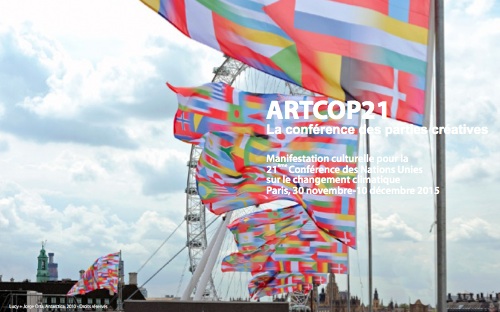
Yet, this year–as I’m sure most of our readers are already aware–is an especially significant one for climate politics, decades in the making for climate policy experts and negotiators, and centuries in the making, with respect to the conditions those most optimistic among us hope will begin to be overturned: the massive amounts of carbon accruing in the earth’s atmosphere. In December, the United Nations Climate Change Conference (also known as the COP21) will convene in Paris, with the hope of establishing a legally binding universal agreement to begin curtailing carbon emissions. The goal is ultimately to limit the amount of atmospheric carbon to that which will produce no more than a 2°C rise, on average, above pre-industrial levels. So second, and relatedly, my fellowship is geared to support my hope to help document the important visual culture that looks to emerge around the the climate conference. Already, there are prominent stirrings–with the ArtCOP21 cultural festival set to convene in Paris, and across the globe, paralleling the climate summit. All of this, I believe, retains certain implications for the study of Romanticism.
Continue reading “The Climate of Romanticism: Autumn in Paris 2015”