Like many who have read Ann Radcliffe’s Romance of the Forest, I began the novel with the knowledge—one could even say the predisposition—that I would find in it the moments that Jane Austen parodies in Northanger Abbey. In Northanger, Catherine Morland finds a scrap of paper that she is certain will prove to be the last testament of General Tilney’s late wife—only to find that the memento is actually a laundry bill. This scene is one of many in which Austen communicates how Catherine’s excessive engagement with gothic novels has prejudiced her ability to interpret her immediate surroundings and experiences. I’ve read Northanger a handful of times and have always been a big fan, so I approached Radcliffe’s work anxiously, waiting for her heroine, Adeline, to find some damning piece of paper, which would fulfill my own expectations of gothic horror conventions.
Sure enough, a little over 100 pages in, Adeline stumbles upon the manuscript of a man who had years before been captured and killed in the abbey where she and her guardians, the La Mottes, are hiding from the French authorities. The “MS” horrifies yet captivates her, and for the next few chapters, she continually rushes back and forth between the room where she keeps the manuscript and the other rooms of the abbey, where she finds herself having to fight against the Marquis de Montalt’s sexual and marital advances. Her attention is torn between the written fragment of the past—much of which has been obscured by the erosion of ink on the page—and the immediate dangers of her present.
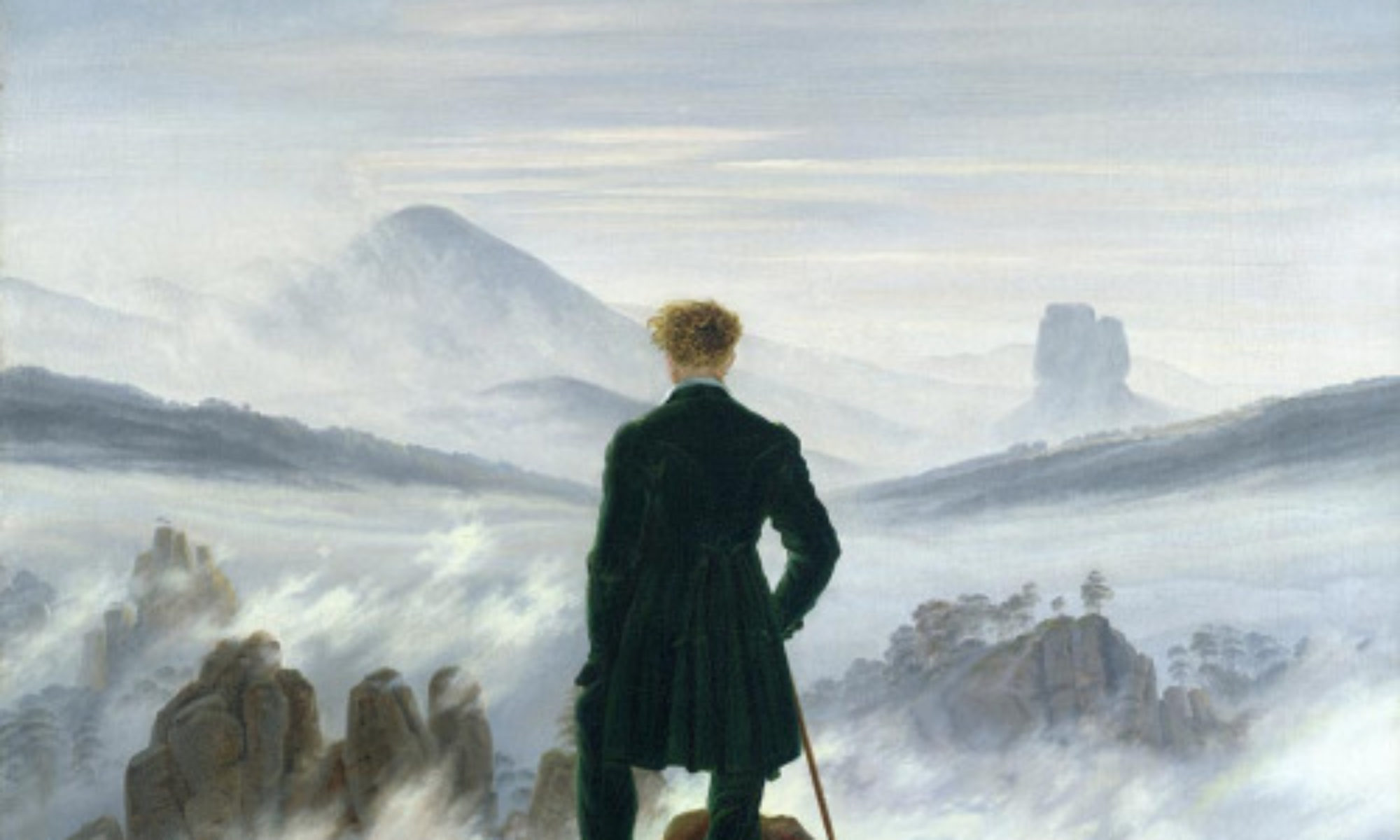
Did it fulfill my desires for cliché yet disturbing gothic goodness? Absolutely. But when I got to that part of the novel, I didn’t think of Northanger Abbey. Instead, a completely unexpected picture flashed through my mind:

Continue reading “Finding "Romance of the Forest" in a Scrap of Toilet Paper”
"The world’s first instant mashed potato factory," and other Romantic-era food innovations
As a lover of anecdotes in a field (English) that doesn’t always embrace them in its scholarship, I often come upon delightful details I want to share, but can’t—in my dissertation, at least. So, it makes me especially happy to have the opportunity to write for this blog, as I get the chance to relate all the fun facts I’ve been learning in my food studies-related reading. Today, I’m expanding from my previously England-centric scope to delve into E.C. Spary’s recent book Feeding France: New Sciences of Food, 1760–1815. Continue reading “"The world’s first instant mashed potato factory," and other Romantic-era food innovations”
Romanticism & the Abstract: Finding the Sublime 20th c. American-Avant Garde Art
Happy new year Romantics and all readers alike!
The promises of the title carry the weight of a dissertation title rather than a blog post, so to focus such reflections I write in response to an exhibit I recently visited at the Institute of Contemporary Art, Boston. “Leap Before You Look: Black Mountain College 1933–1957” has recently and consistently been hailed as one of the best exhibitions in 20th century American Art of the 2015 museum season, however throughout the various reviews I’ve yet to see the word “Romantic” spring up yet despite my thoughts. Continue reading “Romanticism & the Abstract: Finding the Sublime 20th c. American-Avant Garde Art”
COP21: Opinion Piece
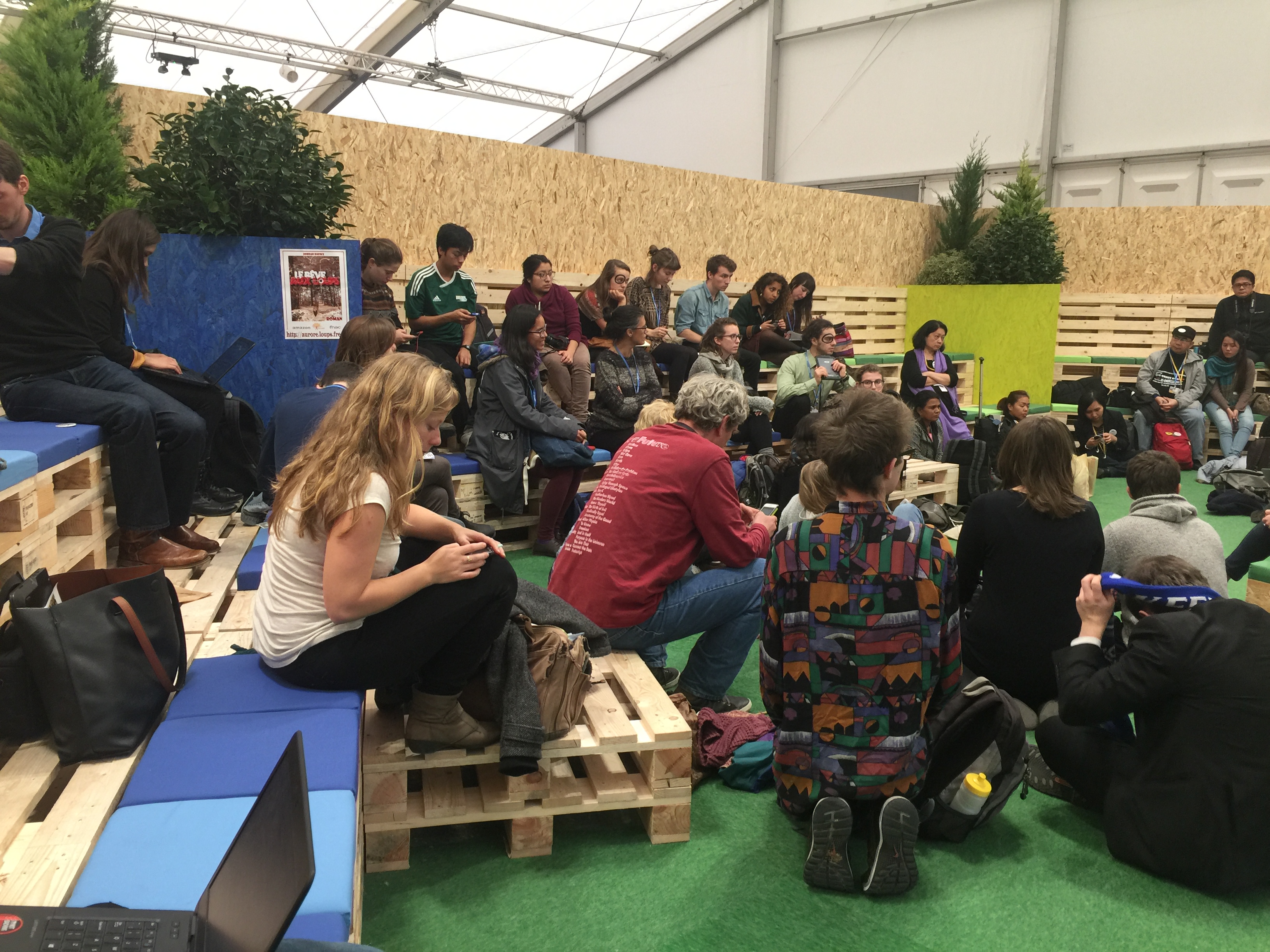
Introduction: It’s been two and a half weeks since the COP21 concluded, and it has taken as long for me to feel I could begin forming my own perspective on the events. In one of the last remaining assemblies where all nations are equitably represented, according to the aspirations of the mission, and progress is made only by consensus, 196 countries for the first time in history reached agreement in the United Nations Framework Convention on Climate Change (UNFCCC. The unity necessary for nations to together begin addressing industrially-produced greenhouse gas emissions was at last achieved. I believe, in part despite the criticisms of the agreement leveled by members of both the diverse global political left and and right, that when placed in the proper, nuanced, and historical perspective, the accord represents a terrific and tremendous success. Indeed, if there was one strain of pessimism many of my friends and associates expressed before and during the conference, it was that the event would represent only “médiaques,” simply “media hype,” the image of progress without the substance of promise and action. In this post, I engage in a critical reflection on the Paris Agreement, offer my optimistic sense of what it offers, what it leaves to be done, and a speculation on where we go from here. It is my position that is precisely the image of the accord–as opposed to its actuality–that will make what it purposeively aims to do achievable. Towards this end, I also include some of my favorite images from the ArtCOP21 festival and climate-related events in which I was fortunate enough to participate.
Continue reading “COP21: Opinion Piece”
Panopticon Palate
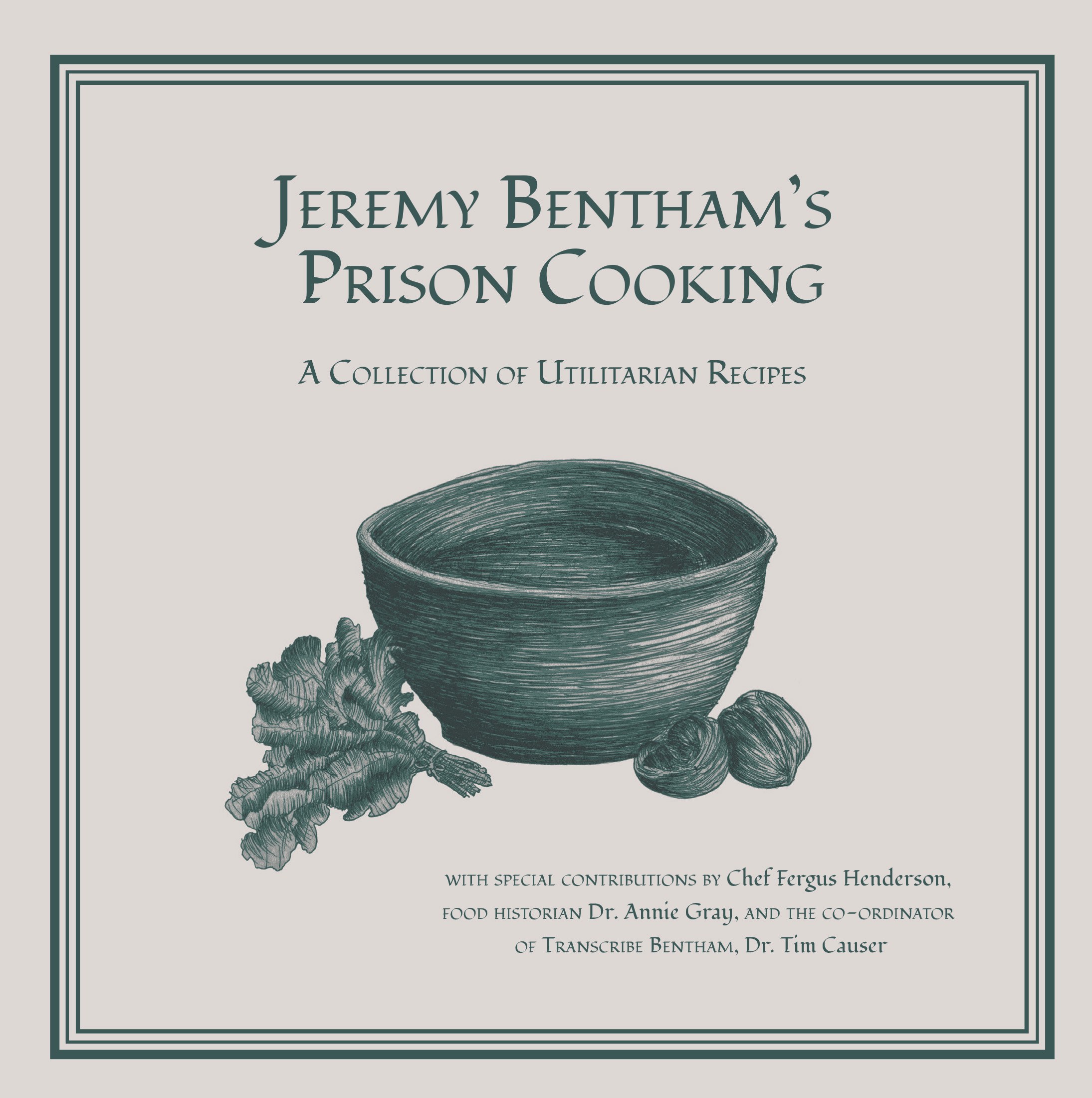
Like it or not, 2016 is fast approaching, along with a return to all the responsibilities grad school entails. Perhaps you’re surveying the last few weeks of financial and dietary excess (and work backload) that the holiday season seems to demand with a feeling of regret and rising panic. If that’s the case, then I have just the book for you: Jeremy Bentham’s Prison Cooking: A Collection of Utilitarian Recipes!
Continue reading “Panopticon Palate”
Ancient Pedigrees, Old Trees and Numinous Rocks

In Edmund Burke’s attack on the “metaphysic rights” (152) of men that inspired the French Revolution, he urged Britons to look to their “breasts” rather than their “inventions” for the source of liberty. Burke deployed the language of sensibility to naturalize a political system organized around the idea of heredity. The argument goes that inheritance binds English citizens to their constitution with the instinctive force of a bond of kinship. But Burke has to admit that the awe-inspiring aspects of the state –its “pedigree and illustrating ancestors” (121)—are just so many “pleasing illusions” that make “power gentle, and obedience liberal” (171). Psychologically, however, Britons need these institutions because they have so thoroughly internalized the principles that they represent that those principles have become second nature. What keeps property and political representation in the hands of the few is what ties Britons to a shared past and future. Burke’s logic would be like Foucault’s if Foucault had wanted to celebrate the panopticon. Continue reading “Ancient Pedigrees, Old Trees and Numinous Rocks”
Eucatastrophe in The Rime of the Ancient Mariner
First, let me say that I’d love some constructive feedback on this post. This is a sort of companion piece to my last post, in which I examined Coleridge’s influence on J. R. R. Tolkien’s conception of the imagination and its pivotal role in the creation of fantastic literature. But my long-term plan for my dissertation entails developing a critical theory of fantastic fiction (a loaded term in and of itself, I realize) from Longinus’s conception of the sublime as it relates to language and rhetoric, Romantic ideas about the imagination, and higher-order “big picture” ideas about the role of fantasy from Tolkien and, to a lesser extent, C. S. Lewis. Continue reading “Eucatastrophe in The Rime of the Ancient Mariner”
"We are here!" Interstellar Messages and Why the Humanities Matter
By Caroline Winter
Why study the humanities? It’s a question that doesn’t seem to go away no matter how many times it’s answered or in how many different ways. Here, I’d like to propose yet another answer, one that also answers a related question: why study Romanticism? This answer was inspired by two videos about science, of all things: an episode of Neil deGrasse Tyson’s series Cosmos: a Spacetime Odyssey, and a YouTube video in the Vsauce series that describes our efforts to send messages into space, in the hope that we’re not alone in the universe.
Continue reading “"We are here!" Interstellar Messages and Why the Humanities Matter”
Charles Dickens vs. Leigh Hunt: Charity, Social Reform, and the Problem of Hell
My sister and I have two very important holiday traditions: 1) we always go to a haunted corn maze before Halloween, and 2) we always watch The Muppet Christmas Carol before Christmas. We don’t often admit to the second tradition (and when we do, we kind of pretend that we only enjoy the Muppets “ironically”), but it’s something we’ve done for as long as I can remember. It just doesn’t feel like Christmas until Katie and I are sitting on the couch, singing along to the song “Marley and Marley” while two enchained muppet ghosts rattle around the TV screen, bemoaning their eternal punishment.

Continue reading “Charles Dickens vs. Leigh Hunt: Charity, Social Reform, and the Problem of Hell”
COP21: Halfway Through
Today marks the halfway point of the COP21 United Nations Climate Summit, a multinational effort–including some 30,000 delegates and diplomats from 195 countries–to produce a global accord to reduce greenhouse gas emissions, slow and eventually stop human-produced global warming, and begin to alleviate environmental problems associated with the industrial-scale burning of fossil fuels. Because the climate negotiators are taking today as a break, I felt it a good time to offer my summary and assessment of how matters have progressed in Paris.
Reason for Optimism
Overall, I have been heartened by a number of the advancements made. The discussion at the conference has, in large part, served to validate the optimism that columnist Mark Hertsgaard showed in his critical piece that appeared in The Nation last month. There, Hertsgaard made the case that “popular pressure” ahead of the COP21 has actively moved policy makers towards positions that would increasingly “leave fossil fuels in the ground.” This represents a major departure from the failed talks in Copenhagen in 2009, when public opinion had not yet turned in favor of policy-based action against global warming to the extent it has today. This shift is borne out by recent polling: two-thirds of Americans now believe that the US should join an international treaty to stop global warming. Continue reading “COP21: Halfway Through”