Books Are Good. Ebooks Are Good. Both are Better: Avoiding the Word “Versus” in the Future of Libraries

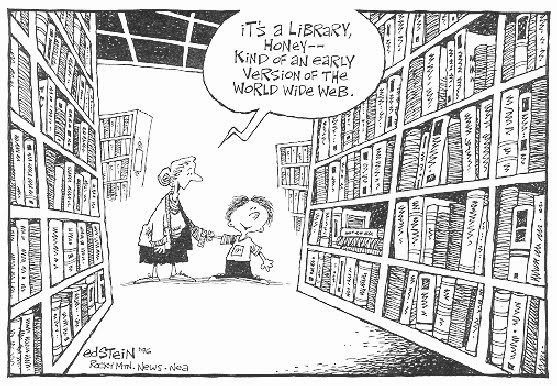
We bookish types are worried about our books. Articles, conferences, discussions, podcasts and references in all the social media about the future of libraries and of reading have become common and seemingly endless. Physical books versus internet sources, libraries versus digital texts, bookstores versus ebook orders, even letters versus emails. It seems that, when we talk about the increasing popularity of the digital humanities, the word “versus” inevitably comes into use, despite our best intentions. But, should it, and why? That’s one of the many questions that came up throughout a one-day conference at The College of Physicians of Philadelphia on December 6th in celebration the astounding 225th anniversary of its library. The conference was titled, “Emerging Roles for Historical Medical Libraries: Value in the Digital Age,” and was comprised of five speakers from different perspectives, all dealing with historical medical libraries in some capacity and highlighting what they considered to be the values and stakes of this “versus” debate. Below, I’ve gathered some of the points made during each scholar’s talk, points that I found relevant for anyone invested in libraries and research. For more detail about the conference program, visit the library website.

Jacalyn Duffin on the archive as treasure hunt:

Dr. Duffin presented her experiences with texts that had been reprinted through several editions across many libraries as she stumbled across other texts and historical figures through library exploration: she spoke to archivists and librarians, poked around shelves, and paid close attention to marginalia and illustrations. Sounds like the typical book-loving-researcher’s story: reassuring to hear and gratifying with which to agree. She also discussed the cost of knowledge, however: how does digitization affect cost, and is this effect positive or negative? Editions of the books she was researching went from expensive, to print on demand, to digitized on ECCO (though only for a university audience). Despite these changes, she reiterated that space and place are still incredibly important in understanding the book and its contexts. Duffin ended by posing a familiar question, with a haunting response: “Why libraries? Maybe we won’t know why we need them until they’re gone.”
Jeffrey Reznick on methods of assessing libraries from a national perspective:

Dr. Reznick brought the perspective of the National Library of Medicine and discussed methods of assessing libraries as well as his own experiences as a reader. Much of his talk referenced other books and sources on the topic, showing a myriad of different perspectives. Some of the many I found myself furiously copying into my notes include: IndexCat, Library 2020, and Circulating Now.

Nancy Cervetti on the library as place of creative power:

Dr. Cervetti brought perhaps the strongest literary perspective to the conversation, providing a list of exciting texts about literary depictions of archives and written materials, peppering her talk with quotes from Foucault and Derrida. She herself had begun as a scholar of literature who, through archival digging, started leaning towards history of medicine, particularly related to Weir Mitchell (who famously invented the “rest cure”). As Duffin did, Cervetti stressed the importance of being present in the archive in order to interact with librarians and to make discoveries through exploration, creating a multidimensional understanding of a subject rather than simply gathering information.

Mary Fissell on books as records of readers and readership:

Dr. Fissell shared her experiences using the College of Physicians Library collections in order to trace the readership of books through marginalia, looking at the book as an artifact that has its own subtext hidden in individual detail. Her work with recipe books showed readers interacting with the text and using it to keep track of experiences. She reiterated previously-made points about respecting and valuing the physical book for its differences among editions and the information its size, texture, and material can bring to our understanding of it. At the same time, she could not have pursued her project without the aid of digital archives and resources. The digital can help us use the archive and vice versa. They should be seen as tools to aid each other.

Simon Chaplin on rebuilding the library:

Dr. Chaplin is the head of the Wellcome Library in London, a “free library for the incurably curious,” its strength in the medical humanities. The Wellcome is in the process of remodeling its library and museum space, and Chaplin discussed the techniques of the library to boost its readership to match its museum patronage. The library will intertwine the library with the museum, making it easier for visitors to stumble upon (a key phrase throughout the conference) and make discovers by whim, according to a thematic organization. This new design speaks to a re-prioritization of the library to include more things. Accessibility and applicability will make it a place visitors want to explore. “Libraries don’t have to die!” he claims. They simply need to be willing to change and help people recognize what they already do so well: to “create questions where none existed previously.”

While all five speakers lauded the advantages and the joys of archival research, celebrating the place, space, contacts, and objects of books, some of the questions posed by the audience spoke to the dangers of denying the practicalities and the benefits of digitization in favor of over-romanticizing the rare book archive. I have heard sessions at conferences and by visiting speakers, either in vague praise of ever-changing technological advances in the humanities or full of anxious or romanticized defense of libraries: however, it seems both more useful and more difficult to discuss how these two archival methods complement each other. When questions arose pleading the necessity of digitization and online research, the speakers were very eager to admit that, of course, they never could have done their research without preliminary or follow-up investigation.
Yet, why does this feel like a concession? We’re worried about our books and their disappearance. Yes, libraries are in danger, for many reasons that I will not go into here, but perhaps it’s time to ease back from the admirable and protective tributes to libraries and focus on the strengths and weaknesses of the two types of research as they work together. This topic would be extremely complicated and (perhaps) contentious but would perhaps also help us to cement an inseparable relationship between the two and to achieve a vocabulary for talking about that bond that can support libraries better than a spirited defense. We don’t need libraries or online archives. What we need is both.
Dr. Brandy Schillace has also covered this event on her excellent blog, The Daily Dose!

Interview: Dr. Michael Chwe

Emma Woodhouse reflects upon notions of truth and strategy, stating, “Seldom, very seldom does complete truth belong to any human disclosure; seldom can it happen that something is not a little disguised, or a little mistaken.” Famous for being the only one of Jane Austen’s heroines who “no one but [herself] will much like,” Emma reveals a dangerous fact that we all know instinctively: the complete truth rarely exists without some sort of agenda.
But, sometimes, an interpretation of Austen’s agenda is inspired by complete coincidence. Dr. Michael Chwe explains that finding the children’s book Flossie and the Fox at a garage sale was the beginning of his project, titled Jane Austen, Game Theorist.  Much has been said about our Austen in the past several years—we’ve asked questions about her sexuality, questions regarding her censored letters, and questions about her publication history, but we’ve never considered her a game theorist until now.
Chwe’s book Jane Austen, Game Theorist supports Emma’s assertion, and argues that “Jane Austen systematically explored the core ideas of game theory in her six novels, roughly two hundred years ago” (1). Chwe looks at how Austen’s characters negotiate the main principles of game theory: choice (a character does something because they want to do that action), strategic thinking (a character does something based upon how they think others will perceive and respond to it), and preferences (a character does something because they prefer it over another option). The result is an interesting, interdisciplinary analysis of Jane Austen and her work.

INTERVIEWER

You mention in the preface of your book that this project started when you found Flossie and the Fox at a garage sale for your children. You used this experience and paired it with all the years you spent teaching and reading folktales and Austen to create Jane Austen, Game Theorist. Can you tell us more about how you came up with your idea and how it changed over time?

CHWE

The original title of the book was called Folk Game Theory, which revolved around the idea of people who use game theory who are not traditional game theorists. The examples were folk tales, and I actually had a whole chapter on Rogers and Hammerstein’s Oklahoma, the musical. But, most of it was Austen.  Seventy, eighty percent was Austen. So, one of the [manuscript] reviewers said, “You should just say that this is about Austen.” It was a good choice. The original idea was to say that this book is many instances of people who are developing game theory, not necessarily in a theoretical way, but through narratives […] In my teaching, I use examples from movies and other things to show students, so I’m always on the lookout for more examples […] I got interested in Austen after I saw the movie Clueless. Then, I started watching Austen movies. And then, I started reading her books. That’s how the whole Austen thing came about.

INTERVIEWER

That’s incredible. So, Clueless was your gateway into Austen.

CHWE

It was indeed. Yeah, I never read Austen in college or in high school […] In college, I never took a literature class, so I didn’t read Austen until I was like forty. I’m glad because if I had read Austen in my twenties, I wouldn’t have understood a lot of it, to be honest.

 INTERVIEWER

Was Emma the first of Austen’s novels that you read?

 CHWE

I originally thought the book [Jane Austen, Game Theorist] would talk about Emma as just one case because it is so clear that Emma is about manipulation and meddling […] I thought I’d focus this book on Emma, but then I wanted to read the other books and see what I could say about them […] I think that if Austen had written twenty or thirty books, I wouldn’t have been able to read all of her books, but because she only had six, I thought I’d just go ahead and do it.

INTERVIEWER

Do you have a favorite Austen novel?

CHWE

No, I really like them all.  Pride and Prejudice is a little shallow to me in the sense that most of her characters are fully formed at the start. To me, Mansfield Park is better because it’s about the development of a human being. People change more. Persuasion, I also like a lot. So, those are my favorites, but, of course, I like them all.

INTERVIEWER

In terms of your book, what was the publication process like?

CHWE

I was lucky in that I had already published a book with Princeton […] back in 2001.  So when the time came around to think about writing a book again, I sent it to Princeton. I also sent it to Oxford University Press. Neither place had problems with the idea being a little bit non-standard, but it was hard to find reviewers on the literature side […] Everyone talks about how important it is to do interdisciplinary work, but it is harder in a sense because people have a harder time judging it.

 INTERVIEWER

What do you make of EverJane, the online role-playing game based upon Jane Austen novels? Have you played it? What might it say in terms of your argument?

CHWE

I haven’t played it, but I think that it’s a great idea and that it has potential. I saw the Kickstarter page. I think, potentially, it is a great way for people to get into Austen and I think Austen’s world view is very much about the decisions you make to get ahead and how important a single decision can be. I think that Austen’s literary worlds are worlds where […] you think about yourself in terms of decisions. Other people’s worlds might think in terms of visuals or characters or history, but when you think about Austen’s worlds, it’s about […] what would you do? What would you think about? What connections would you make?

INTERVIEWER

What I’m wondering right now is do you see EverJane as a physical representation of your argument? Or, I guess, a virtual representation?

CHWE

I haven’t worked with the game, but maybe. I’m not sure how they structured the game […] I think because Austen emphasizes decision making so much, maybe her novels are most suited for this kind of thing…For example, if I made a game out of Virginia Woolf’s To The Lighthouse, I’m not sure what that game would look like.  So, some novels don’t necessarily lend themselves, but I think Austen’s do.

INTERVIEWER

I understand your argument as an interpretation of Austen, herself, as a game theorist, as well as the notion that she portrays her female characters as game theorists—that is, Austen extends her own strategic thinking to her characters, which is demonstrated through their culminated marriages. How might readers navigate your argument if we don’t view Austen’s novels as strictly heteronormative? How might Austen’s game theory change?

CHWE

I don’t see Austen’s novels as all that heteronormative. There’s a whole thing with Henry Tilney […] [and] gender roles. There’s the discussion with Catherine Morland and Henry Tilney, where he says that women have so much talent that they don’t need to use more than half…I think its representative of the questions: Are women better at strategic thinking than men? What are the social determinants of that?
When Henry Tilney buys the muslin for his sister, that’s like him being in drag or being gay or bisexual…But back to marriage—I’d say that you can think of [game theory] more in terms of social advancement. I think that Austen is trying to be general and is saying: this is how you can understand human behavior […] Marriage is just one of those possible objectives, so [game theory] doesn’t hinge on the idea that marriage is the final goal. For example, in Northanger Abbey, if you think of Henry Tilney as not as stereotypically masculine as other characters, maybe he could have been in touch with his feminine side. He’s one of the better strategic actors in the novels. He doesn’t make huge mistakes like Mr. Darcy does. I think Henry Tilney, more than any other male character, explicitly says things about strategic thinking. He talks to Catherine Morland and says,  “When you think about other people’s motivations, you think about them in terms of what you yourself would do, as opposed to what a person of their age or their status would do.” That’s a very clear explication of the problem of strategic thinking. We always tend to think of people in terms of ourselves. We’re not necessarily good at putting ourselves in the mindset of others. Henry Tilney says that. He has a definite feminine side. He’s not as stereotypically masculine as some of the other male heroes […] I don’t think [Austen] takes heterosexuality as necessarily as a given.

INTERVIEWER

So, the game theory wouldn’t necessarily change at all, even if marriage wasn’t the end goal.

CHWE

No, not at all.   Austen thinks getting married is important to their world, but she doesn’t necessarily see [marriage] as a sacred life goal. Her interest is more about the process. She’s not interested in what happens to people once they’re married […] She’s interested in how people get to that goal.

INTERVIEWER

You argue that Austen, herself, was a game theorist. How might considering Austen’s own strategic thinking complicate traditional ways of viewing her work as domestic narratives?

CHWE

I’ve never myself been concerned with the critique that just because she talks about five or six people […] that somehow her work is not significant. All game theorists and a lot of social scientists realize that you can explore interactions amongst a handful of people. Those can have applications to a very large group of events. When I teach game theory, the most interesting parables are those between two people and then you generalize them. A parable or story about people deciding whether to cooperate or fight each other over painting a fence […] can be a parable for international relations or war. The very fact that Austen doesn’t talk about historical things or a huge world event has nothing to do with whether her ideas are applicable or generalizable. Any social scientist would say that.  There’s no reason to think that just because it’s a domestic narrative that the insights there may not apply to lots of other things. I think that we shouldn’t think necessarily of a narrative or novel in terms of its subject matter but in terms of its vision for how people interact with each other. Those insights can apply to many different cases.
It’s like slave folktales. Slave folk tales are tales about animals, but they’re not about animal behavior. They’re used to talk about uprisings or strategic techniques that slaves can use against their masters […] They tell narratives about rabbits and foxes—it’s obvious that these slave folk tales are about, in terms of their subject matter, animals. But what’s relevant about these specific strategies is that they express techniques that these animals use against each other.

INTERVIEWER

Interesting! How does game theory apply to scholars in Romanticism? How might game theory be used to enhance literary criticism, appreciation, or cultural study?

CHWE

I think that the obvious thing is to use game theory to illustrate aspects of novels. Game theory might come from a situation like a prisoner’s dilemma—these are situations where people can gain if they all cooperate, but no individual person wants to cooperate–so [scholars in romanticism] might say, “In this novel, I’ve found an example of a prisoner’s dilemma and this is how they solved it.” You could do that. With Austen, I did something a little bit different, which is to say that we’re not using game theory to understand her work, but rather, we’re trying to understand her as a game theorist herself. This won’t be the case for every single author. Some authors may be more interested in emotions or social context or irrationality or self-perception or delusion […] If you’re aware of how people in the social sciences try to make explanations for things, you can maybe use them to understand how certain authors seem to be expressing theories of human behavior. It might be another way of analyzing their work.
For example, since I was working with game theory, I was really monomaniacally thinking in terms of choices and in terms of purposeful action […] so I was really sensitive to those issues. […] People who are interested in psychology or how we constitute the self can also take that to literature. Some people have taken that to Austen.
It can’t hurt to be aware of certain [social science] ideas and where they come from […] If you’re sensitive to these things, then you might find another avenue for reading other people’s work and understanding their objectives […] In Austen’s time, there wasn’t anything called social science or a systematic discipline for understanding human behavior. If you were interested in human behavior and wanted to analyze it, probably, you ended up going to the novel. That’s what you did back then. If we think of understanding human behavior, we shouldn’t think of this as a specialized thing—it’s something that we all do. It’s not surprising that if you’re a novelist or a writer and thus you have to think about human behavior, part of you develops some sort of theory about it.

Young Poets. Young Scholars.

When I was a junior in college, I studied abroad in England for a semester, and as part of my Modern British Poetry class, I took a literary pilgrimage to Wentworth Place, Keats’s home in Hampstead. This trip was genuinely transformative for me, as it fueled a fantasy that I was John Keats’s lover in another life (hey, we all have our literary crushes). And more importantly it began my creative and scholarly work on the poet. As I wandered room to room, swooning over the handwritten manuscript of “Ode to a Nightingale” in the corridor and tearing up at the death mask encased in the library, I hadn’t a thought of my future with the poet.  But this week I received an acceptance to the first ever Keats Foundation conference at the Hampstead house.  And I began to reflect back on my 20-year-old self and how she would laugh to know that she would return to Wentworth Place as a career Keatsian almost a decade later.

Over the last month, I have been thinking a lot about how identity gets organized, both my own as I am beginning to define myself as a young scholar and that of the poets I study.  This all came about as I prepared proposals for the Keats and His Circle conference in Hampstead and NASSR 2014.  For each of these, I am looking to begin some foundational dissertation work that looks at identity organization in the Cockney School.

Journalist, poet, and radical Leigh Hunt attempts to organize the second generation of Romantic poets in his creative works and his weekly newspaper The Examiner. Though he never writes an overt manifesto and never claims the emergent artists of Romanticism’s second generation as “his” school, I believe he constructs a clear political and artistic mission for himself and his friends. In The Examiner on December 1, 1816, Leigh Hunt published the “Young Poets” article, which announced a new school of poetry led by Percy Shelley, John Hamilton Reynolds, and John Keats (with a nod to Lord Byron). As he writes here and elsewhere, this new school was not innovative so much as restorative, returning the focus of modern poetry to “true” nature and more genuine understandings of “human nature.”

Hunt organizes their poetic identity both as an extension of and reaction to the first generation (esp. after the publication of Wordsworth’s Excursion, lambasted by Byron, Hunt, and Hazlitt as the mark of Wordsworth’s establishment allegiance). He says the new poets are continuing the cultural work begun with the linguistic and political experiments of Lyrical Ballads, a project he believes the now conservative first generation has abandoned. As he defines the cultural work to be done by his school of artists and political reformers, he touts the revolutionary power of loose versification and conversational language (he maintains that the language of conversation is the language of “true nature” and “nativeness”), but he also touts cheerfulness and sociality, as opposed to the Wordsworthian egotistical sublime–poetic insight emerging through solitude. Hunt and crew value brotherly love, charity, and a mutual support of fellow beings. And they uphold these virtues in contrast to the modern vices of extreme individualism, commercial interests, and exploitation of the disenfranchised.

As applied to this circle, the term “Cockney School” in itself demonstrates the ways in which identity gets imposed upon a person or group. Famously, “Z,” a semi-anonymous critic for the Edinburgh Review, printed a series of vicious essays on this group of liberal (and often dissenting) intellectuals from the London suburbs, titled “On the Cockney School of Poetry.”  According to Z, the school was headed by Leigh Hunt, and included such figures as Keats, Webb, Haydon, and Hazlitt.  His reviews frequently digressed from the work of this school, using ad hominem attacks to belittle the men with their shortcomings in class–all with the intent to discredit this second generation of Romantic artists because of their politics.  Intriguingly, pieces of this class prejudice against Cockneys precedes the era, and the stereotype can be seen today in the classic appropriation of Liza Doolittle style Cockney accents in parodies of the English.  A particular favorite of mine in the last year has been Fred Armisen’s portrayal of Queen Elizabeth II as a sort of Cockney thug on Saturday Night Live.

Nevertheless, the Hunt circle appropriated the qualities of this pejorative stereotype and other labels applied to them, reading into these intended delimitations a revolutionary power for greater liberty. Z complained of their inferior education, their limited knowledge of Greek and Latin, but for Cockneys like Hunt, Keats, and Reynolds translations and retellings proved more democratic, opening new worlds of knowledge and opportunity for people of middle and working class backgrounds. Chapman’s Homer introduces Keats to new peaks, new oceans, new planets, horizons previously inaccessible. Z complained of their vulgarity and obscenity, but Hunt, Keats, and Shelley celebrated sensual overflow and freedom of expression.  Their poems portray this liberty literally by catalogues of sensory images and metaphorically by unconventional representations of love (sympathetic idolaters, demon lovers, love triangles, etc.).

In a trend I find problematic, Keats scholars of the twentieth- and early twenty-first centuries perpetuate a prejudice against Keats’s supposed Cockney roots, often undervaluing the politically engaged young Keats of 1816-1817.  Moreover, they divorce his later work from Hunt’s influence (rightly so, perhaps, as Keats distanced himself from Hunt for numerous personal and professional reasons). As a young scholar just beginning my work on Keats’s Cockney roots, I don’t know yet to what extent I agree that Keats’s work transcends his Cockney identity.  Though his 1820 volume may demonstrate sophistication well beyond the wrenched rhymes or weak adverbial descriptors of Huntian style, his thematic concerns remain deeply Cockneyfied.  Romances like Isabella; Or the Pot of Basil and Lamia betray his continued resistance against a modern capitalist economy that exploits both human and nonhuman resources.  And even his great ode sequence, which ostensibly celebrates a pure aestheticism, carries the taint of political agenda and historicity.  The nightingale disappears, the poet awakes. He returns to a historical reality of the Six Acts, the Corn Law Protests, Peterloo, disenfranchisement, disease, and personal loss. To say the least, his 1820 volume shows a conflicted relationship with the Hunt school (perhaps a topic for another post).

Armisen’s Queen from SNL 2013

I feel immensely fortunate to have the opportunity to explore London and its suburbs again, as a slightly more seasoned romanticist, Keatsian, and anglophile. And while I will not adopt a phony Cockney accent for the duration of my visit, I will expand upon my original pilgrimage, exploring the sites that were key to the school’s development.  On the list thus far, other than Hampstead Heath, of course: Edmonton, Enfield, Guy’s Hospital, and the Vale of Health.  I will keep you apprised of my plans for exploration as well as archival research as the reality of this trip continues to set in.

Digitization and Humanities: Navigating e-Text and Using Social Media as a Scholarly Database

My name is Sydney Lines, and as a member of the 19th Century Colloquium at Arizona State University, I’ve been given the honor of offering up this month’s blog post. I am a bit of a non-traditional member at the moment. I joined the Colloquium while I was completing my MA (English Literature) at ASU. Since graduating in spring 2013 and deciding to take a year off before applying to doctoral programs, the Colloquium has graciously allowed my continued participation and still offers support and mentorship in preparation for my looming doctoral applications and requisites. (Many thanks!)

slines
Follow my research at https://asu.academia.edu/SydneyLines

My research interests include science and Romanticism, women writers, travel writing, the supernatural, and the gothic sublime. It is only very recently that I would also include the digital humanities in that list. In an effort to consider just one of the many varied possibilities the digital humanities offer, and to demonstrate its use as a potential tool for scholars, this post will detail my own experience using digital texts and social media as an organizational database for my research.
I am often met with combined levels of reservation and intrigue when I mention that I have turned social media into a digital humanities project that acts as a scholarly database. Admittedly, my foray into this sphere was largely experimental, and I had no real expectation about results or functionality. What I found is that it creates an alternative organization system that is represented visually and offers another mode of piecing my research together. It is also, in my case, publicized in a social media network where some non-scholars are interacting with my research and finding interest in areas they may not have considered prior to engaging with my Tumblr blog. In detailing my methodology, I hope to provide a glimpse of how a digital humanities project can operate and hopefully provide another resource for scholars who wish to organize their research in similar formats.
slines2
One of Blake’s illustrations of Gray’s “Descent of Odin.”

Originally, I was interested in supernatural women in Romantic texts from a folkloric perspective. Somewhere along the way, I came across some obscure references to Old Norse mythology in British texts and was delighted to find supernatural female figures[1]. Out of mere curiosity, I decided to look further. I wanted to see if women writers were using the same mythological figures, if they were portrayed in similar ways, and if there was a potential area of research within this space. Searches through the university library revealed that there has not been much scholarship at all in this field, and the majority of what I now refer to as “Norse Romantic” texts, have had little critical attention[2]. This newly discovered movement in Romanticism offered the benefit of being a niche space I could bring to light while conversely offering the challenge of trying to synthesize the scattered scholarship, the forgotten texts, and the historical references. But how was I going to pull all of this into one coherently organized system?
Thanks to digitization projects like Google Books, HathiTrust, and the increase in digital scholarly databases, I could do preliminary research without having to incur travel expenses and devote time and energy to a potential project I was not yet sure existed. I started with Adriana Cracun’s Women Romantic Era Writers (UC-Riverside) and the collection of British Women Romantic Poets (UC-Davis). I located the first woman writer in the databases and literally began by using the “Ctrl+F” command throughout her listed works, typing in some of the same words I found in other identified Norse Romantic texts that designated a Nordic association. I am still surprised at how much I was able to find with this simple technique. I noticed a few identifiable trends and started keeping a folder of all the works I located. I amassed quite a bit of information and was struggling to find a good organizational system that allowed me to access it from multiple locations.
The answer came in the form of social media.
A screenshot of my "Norse Romanticism" research Tumblr blog.
A screenshot of my “Norse Romanticism” research Tumblr blog.

And thus came the creation of http://norseromanticism.tumblr.com/. It acts as my own interdisciplinary database of artwork, literature, scholarship, and historical documents I encounter in my research and gives me the opportunity to post a multitude of media and text types—whether curated from other places on the web or self-created. Every submission template also comes with a “source” box, so my bibliographic information stays attached to each post.
Every post on the Tumblr page is added by me, and it is completely tailored to my research interests, following a set of guidelines I designed for my own specific use. My Tumblr is public, so everyone on the web can access it, and anyone with a Tumblr account can share or interact with any of the posts. If you prefer a private database that is seen strictly by you or a few others with whom you choose to share it, Tumblr allows a password-protected account.
One of the most useful features I’ve found is the tagging system. I have developed my own series of tags that help me categorize the posts in ways that will help me continue to access them for future use. For instance, if I want to look solely at artwork or artists, I will go to my “Tags” page, click the “art” tag, and Tumblr will populate all of my posts with that tag. I can use this similar function with any other tag. If I want to see only works by William Blake, I can click the “William Blake” tag or if I want to see only travel writing, I can click the “travel” tag and so on.
A screenshot of posts returned by clicking the "art" tag.
A screenshot of posts returned by clicking the “art” tag.

By using these tags, I can more quickly navigate the categories and begin answering questions like: How are the Norse figures and/or the Scandinavian North depicted in art? In literature? In travel writing? In women’s writing? What are the similarities and differences I see between each group? Is there an underlying theme that connects them all? Etc.
Though my MA thesis is completed, I continue to update the account with new information I find as I hope to create a larger project out of the research. The Tumblr account has assisted me largely in terms of identifying patterns more easily, allowing space for imagery, and offering quickly populated, categorized information without having to go through the process of paying for or creating my own personal database with the added benefit of simultaneously creating an interactive digital humanities project in its own right.


[1] See Thomas Gray’s “Fatal Sisters. An Ode” or “The Descent of Odin,” both illustrated by William Blake.
[2] Robert Rix and Margaret Clunies-Ross are two current scholars; Rix proposed the “Nordic Exchanges” panel at NASSR 2013.

Romantic Geologies and Post-Organic Forms

I’d like to begin by thanking the NGSC for welcoming me to this year’s blogging roster. It is a pleasure and privilege to write alongside these intriguing and diverse graduate scholars, and I’m looking forward to reading the material our collective will produce this year.
The blog posts we’ve seen already have been so compelling, both intellectually and personally, that I would like to continue the conversation by engaging with the fundamental questions previous posts have posed. “Fundamental” seems to be a key word for us, as we think about how the foundations of our scholarly temperaments act as cornerstones for our intellectual flights. As Nicole and Deven’s posts illustrate, we can describe this layered relation of the personal to the scholarly by drawing on material metaphors of sedimentation, accretion, and metamorphosis.
Deven and Nicole’s descriptions of their scholarly uses of archaeology and geology—as accretive fields that can inform their work with the material aspects of literary texts—come at a fortuitous time, for me at least. I have been thinking about how aspects of literary form can be captured through scientific metaphors, and their posts have sparked my interest in thinking about how geology and Romantic poetic form intersect.
Geology is a fascinating area within the Romantic sciences, partly due to the period’s uncertainty about whether “rocks and stones and trees” formed an organic continuum. This problem of unclear organicity dated back at least to Buffon’s 1749 proposal that mountains were formed when “all the shell-fish were raised from the bottom of the sea, and transported over the earth.” During the height of British Romanticism, the problem of distinguishing between organic and inorganic forms was compounded by the discoveries of giant fossils of extinct lizards between sedimented layers of rock. In 1809, the natural scientist Georges Cuvier, who had already examined the fossil of a giant sloth and coined the term mastodon, classified these reptilian fossils as the Mosasaurus and the Ptero-Dactyle, leading the charge for the study of dinosaurs, which was to reach a high point in the discovery of the iguanodon in the 1820s. As a geologist as well as an early paleontologist, Cuvier was faced with the challenge of defining sedimented organic forms as both crucial to, and distinguished from, non-living terrestrial matter.
This instability of Romantic geology shook the foundations of the period’s poetry. Though we might usually think of huge and ancient organic forms first emerging “to rise and on the surface die” in Tennyson’s 1830 poem “The Kraken” (l. 15), Romantic literature abounds with buried dinosaurs and geological eruptions. Keats’s Endymion witnesses skeletons “Of beast, behemoth, and leviathan [and] Of nameless monster” on the ocean floor (III, 134-36), while in Cain, Byron challenges the usual Biblical chronology by referring to the “Mighty Pre-Adamites who walk’d the earth / Of which ours is the wreck” (II.ii, 359-60). Likewise, in Prometheus Unbound, Shelley describes at length the “monstrous works and uncouth skeletons” and “anatomies of unknown winged things” that lie buried in the deep (IV. 299, 303). Moreover, geology could help describe the poetic process: we see this best in Byron’s celebrated metaphorical account of his own creative tendencies, with his passions building up internally and finally erupting volcanically into verse. (Meanwhile, in Don Juan, he jokingly writes, “I hate to hunt down a tired metaphor: / So let the often used volcano go. / Poor thing! How frequently, by me and others, / It hath been stirred up till its smoke quite smothers” [XIII.36]). At the same time, though he doesn’t acknowledge it, Romantic geology poses a problem for Coleridge’s definition of literary organic form, which considers the growth of the text from its inception to its adult shape—not its later stages of death, decay, and post-organic potential re-use.
Today, Romantic geology, with its imagery of defunct and sedimented layers of organicity, has profound implications for how we think about poetic form—particularly the forms of Romantic poetry. Geology is a key metaphor for many Romantic critics: David Simpson, for instance, writes that “a great deal of Wordsworth’s poetry is best approached as if it were a core sample of an especially contorted geological substrate. One works with a rough prediction of how the layers ought to relate one to another, but there are continual local deviations and surprises.” Moreover, in recent New Formalist arguments, the sedimentation of dead organic matter can be a crucial motif for thinking abstractly about the life-cycle of a literary form or genre. Recently, I read a very compelling essay, Group Phi’s “Doing Genre” (in New Formalisms and Literary Theory, eds. Theile and Tredennick, 2013), which takes geology, plasticity, and recycling as its governing metaphors. In this text, Group Phi proposes that “genre” is a “sedimented and metamorphic historical category that is received by readers,” and that “form” is the “the reader’s activity of adopting/adapting that category for further use”—more simply, that a genre is like a sedimentary rock, with accretions of its use built up over time, while form is like the wind, shaping the rock and depositing new layers of use upon it. Further developing this intriguing metaphor of geological sedimentation, Group Phi then discusses at length how genres can be “recycled” and “repurposed”—to my mind, invoking a layer of crude oil, the result of decayed organic matter, that is buried within the sedimented structure, drawn out, made plastic, “refocused, repurposed” and reshaped, and then recycled for future use. This is no doubt a metaphor of literary form characteristic of our own time, reflecting our concerns about the ethics of geotechnical excavation, and particularly the problem of violently appropriating formerly organic structures, now metamorphosed into inorganic matter (oil). Group Phi’s invocation of recycling, mid-way through the essay, is perhaps one way of “greening” their potentially problematic metaphor of the generic sedimentation of post-organic (literary) forms.
But the Romantics themselves may have something to say about these contemporary geological forms, and here I’m thinking of Shelley in particular. In Alastor, or the Spirit of Solitude, Shelley writes about the hero’s journey as he pursues “Nature’s most secret steps” to where the “bitumen lakes / On black bare pointed islets ever beat / With sluggish surge” (85-86). What Shelley means by “bitumen lakes” has long posed a problem for critics, who have variously identified them with the Dead Sea, with the lake of fire in Paradise Lost, or with molten lava-flows in general; the most obvious precedent for Shelley’s 1815 use of the term is Southey’s reference to the “bitumen-lake” in Thalaba the Destroyer (1801). To me, the image of bitumen lakes in Alastor points within Romanticism to the era’s own problem of uncertain organicity (compounding the animal imagery of decayed dinosaurs, “bitumen” introduces a layer of vegetable matter in its etymological relationship to “pitch”). Yet for today’s readers, Alastor‘s bitumen lakes gain much in the translation: “bitumen” is the correct scientific term to describe the heavy crude oil now being excavated—in part, through hydrofracking—from the vast tar/oil sands of Alberta. Anticipating one of the great environmental controversies of our time, Shelley’s prescient use of the geological term can perhaps cast light on the deep Romantic substrates of current forms of representation of the tar/oil sands project.
In short, building on Group Phi’s model, we might look more closely at how the geological realities that underlie our contemporary metaphors of form and representation are built upon a deeper layer of Romantic uses. The mixed organicism of geological sediment has rich potential for talking about poetic language. Recalling Shelley’s account of continually dying metaphors in A Defence of Poetry, Ralph Waldo Emerson writes that “language is fossil poetry”; we too might look to the strata of literature’s organic forms in our own search for deeper meanings within Romanticism.
 

Inaugural Post to the Artist in E-Residency Position

Something From Home Nicole Geary intaglio, collagraph, chine collé 11" x 14"
Something From Home, Exhibited 2013. Intaglio, Collagraph, Chine Collé, 11.00 x 14.00 in. (27.94 x 35.56 cm.

 
I first want to thank the NASSR Grad Caucus Board for such a warm welcome to this blog and, also, to the NASSR community. I am thrilled about the many ways in which my role as an active artist can contribute to conversations about, and in response to, issues in Romanticism, illuminating both historical frameworks and existing political or ideological currents. I’ve been provided such energetic feedback to all of my initial questions that I now feel I am ready to tackle an initial post. To do so, I’ll introduce myself more thoroughly. I recently graduated with a Master of Fine Arts in Printmaking from the University of South Dakota and I am currently living and working in San Antonio, Texas. I teach printmaking, make prints and sculpture, and also involve a good deal of geological and art-historical research in my practice.
To more fully explain my work, I need to talk about where I’m from and what I’ve studied. I’m going to take some latitude to go into a little selected personal history and write at some length about what drives me to make work.
I grew up in North-Central Florida for most of my life, born and raised in a swampy and green part of the state that informed most of my understanding about nature and animals. The idea of mountains, snow, desert, or indeed of other spaces, is foreign to me. I am captivated by the idea of travel while at the same time am imbued with a sense of desire for “home.” In many ways, the work that I make is about exploring the feeling of longing for two places. As a young art student, Jean Baudrillard’s “The Precession of Simulacra” always resonated with me, perhaps because I grew up in Florida, and he most briskly takes Disney down to a mere order of infantile fantasies. [It should be noted that Baudrillard is referencing the Disney Land in Los Angeles, but I hold that the same is true for its own iteration in Orlando, again the simulation of itself.] I believe Baudrillard’s writing on simulacra also held sway with me. I felt that a place could hold a fantasy, a wonder, significance – and be in reality nothing more than a swampland.
By the time I reached graduate school, I’d found that my attention to land and the impression that certain areas had upon me were developing into a research-based artistic practice focused on maps and geology. I was interested in understanding more thoroughly, on a scientific and rational basis, why land was so important to me. I specifically wanted to take emotion out of the equation. It was my point of conjecture that my feelings of homesickness, anger, pain, or regret were, to put it logically, contaminating my results. In an attempt to dissolve those feelings into a solution of metaphor, charts and graphs balanced sensitive marks. It was tricky at first, because old anger and severe homesickness didn’t want to be dealt with. I looked for ways in which I could talk around these feelings without being too blatant. The more I read about maps, the more I realized that signs and signifiers wouldn’t work for me anymore. Replacing emotion with a symbol was too simple an answer; the reality of emotion goes deeper and is felt more thoroughly than any pocket-size road atlas could contain. To go forward and really grapple with emotion I must nod to the oft-referenced Jorge Luis Borges fable and say , “the map is not the territory.”
Geology seemed to have all of the answers. As a printmaker, I work in layers and stages naturally, and the process of observation and investigation is something of a peek into history. I had been slowly growing more aware that to know what my work was about in the present, I needed to know where it came from. I desired to be able to read the strata of my own history. Geologists can do a wonderful thing: they can walk out into the world and, using careful observation, tell you what kind of environment used to exist there thousands or millions of years before. They see the world as it is now and as it was then, peeling back the layers of time before them like the blankets on a press bed to slowly reveal the surprise beneath. Geologists and printmakers both work in strata.
My prints are often akin to a journal page or even a field note, a place for working out internal thoughts or recording events: poetry of inner questioning and curiosity. Formally I tend to be drawn to the work of artists that utilize their own handwriting or found items into prints or drawings, like the pages of a well-loved diary or sketchbook. To me, this is part of the process of knowing. Scientific diagrams are beautiful and clean, as they are meant to be effective teaching tools. What tends to be forgotten is the disarray that went into the collection of data to get to that well-prepared and perfect outcome. I’ve become more interested in the mess that came before.
I welcome any comments in response to this evolution and to these thoughts as I’ve outlined them. As this is my first post, I’d like to share more as I go along, diving into more diverse realms of pedagogy, practice, and specific areas of research.
 

Never Have I Ever Read

Photo courtesy of: http://www.victorianweb.org/painting/millais/drawings/50b.jpg
The Eve of St. Agnes Millais (1863) http://www.victorianweb.org/painting/millais/drawings/50b.jpg

At the beginning of summer, my husband, our two basset hounds, the cat and I moved into a little white rental house with a backyard. And once we had unpacked all our books, installed a makeshift closet in the back room (in the whole house, we have one tiny little 2×3 feet closet in the bedroom), and felt sufficiently settled to have company, we threw a housewarming party.
Naturally, ninety-percent of our guests were English grad students, and, as we were sitting around the fire-pit in our new backyard, someone suggested we play a literary version of the party classic “Never Have I Ever.” In the original game, the players take turns admitting to something they have never done (never have I ever been skiing–a sad truth!), and each person who has done the event loses a point until only one person is left with points, or something of the sort. In our version, we shamefully admitted works we had never read, and the other players were to put down a finger of the full ten with which they started. Of course, we awarded a slight handicap of negative five points to the only three non-bookish types (my husband the mathematician, a former history major, and a physicist) to make the game somewhat fair.
We were never quite clear on the goal of the game, since in our circle there seemed more pride in “losing” the game than surviving to the end with fingers still raised. In fact, one of our friends “lost” twice by the time we called the game. And we were all envious. But we went round and round, enjoying ourselves immensely.

“Never have I ever read Moby Dick.”
“Never have I ever read Huck Finn.”
“Never have I ever read Beloved.”

I have been studying for comprehensive exams for the past five months, and while I have read a significant number of the works on my lists in past graduate seminars, I feel like the whole process is a long game of “Never have I ever read…”
At the University of Kansas, where I am in my third year of doctoral studies, you compose three lists with your committee–two of which are time period lists (your area and an adjacent time period) and the third is a list of your own choosing (often an author, literary theory, a genre, etc). As a Romanticist with a fairly extensive background in Victorianism, I have chosen my period lists to form the full nineteenth century in British literature, and my final list is geared toward the Leigh Hunt Circle as I prepare for a dissertation focusing on Keats, the Cockney School, and how this context shaped his conception of “work.”
After reading criticism and biographies for the last two months as I try to whittle away at the dissertation list, I have switched to fiction for a much needed breather. I find it heartening to zip through a couple of novels in a week, when I have been slogging through nonfiction for what seems like a lifetime (and I will say I have read several “lifetimes” in that list, and highest praise must go to Nicholas Roe’s 2012 Keats biography. I have added it to the ever-growing list of books I wish I had written). In anticipation of the Halloween season, I scheduled myself several gothic novels in a row. And last week, I read Wuthering Heights for the first time.
Perhaps I just permanently altered your opinion of my clout as a nineteenth-century scholar. Well, so be it. I certainly admit the sad fact with a touch of shame. But now I have checked it off my list of never-have-I-ever-reads, and I have moved on to the next novel that somehow fell through the gaps in my long tenure as a literature student.
I feel this game “Never Have I Ever Read” haunts literature scholars. It certainly helps us flesh out syllabi–how else will we force ourselves to finally pick up Dombey and Son if we do not assign our students (and ourselves!) to read it?–and the game even fuels our research, it seems.
Three weeks ago, I had the pleasure of traveling to Portland and presenting on a Romanticism panel at the Rocky Mountain MLA. This conference has become a tradition for a couple colleagues and me, who would likely never travel and present together otherwise since our areas are so diverse. I presented on the connection between architectural structures and female bodies in Keats’s romances. I looked at the way in which the lived experience of female bodies, specifically in rape narratives, becomes abstracted into a symbol (the first step of which is the equation of the female body to the house or palace that protects her–i.e. Madeline is endangered because her house is penetrated in “The Eve of St. Agnes”). This cultural phenomenon is allegorical in so far as the female body comes to represent social bodies (structures) in various forms through literature and even political propaganda. The specific and material become crystallized into a generic trope that can be circulated, translated, and exchanged, depending upon the terms of its use, its ability to anger, inspire, manipulate.
In the Q&A portion of the panel, another presenter asked if I had read Cymbeline. I shook my head and shyly admitted I had not. Despite taking two courses in Shakespeare and Renaissance drama, never had I ever read, seen, or even heard a plot summary of the play. Nor is the classic John Middleton Murry volume Keats and Shakespeare listed among my secondary texts for comprehensive exams.
Nevertheless, I did my research that evening in my hotel room, and discovered much speculation on the play’s influence in Keats’s portrayal of Madeline’s boudoir. Indeed, Charles Cowden Clarke wrote, “I saw [Keats’s] eyes fill with tears, and his voice faltered,” as the poet read aloud from the play in summer 1816 (qtd. on page 56 of Walter Jackson Bate’s biography of Keats). In addition to speculation on the scenery, importantly, Imogen has been reading the story of Tereus and Philomela before falling asleep. According to Greek mythology, Tereus rapes Philomela and cuts out her tongue so that she cannot report the assault. Jove later transforms Philomela into a nightingale, and her song becomes an echo of sexual violence throughout literature, including T.S. Eliot’s “The Fire Sermon” in The Wasteland (a piece I have read many times since first crossing it off my never-have-I-ever list in high school).
Scholars speculate on what the literary greats have read (or not read) as an everyday practice. My fellow-scholar who asked if I had read Cymbeline was presenting truly stellar archival research that sought to uncover whether Keats had read various seventeenth-century ballads on nightingales. She lamented that we do not know to what volumes he had access while staying with Benjamin Bailey at Oxford in the summer of 1817. And as she had not yet read Roe’s recent Keats biography, she did not know the conflict between Bailey and Keats’s London friends, and why Charles Brown and other early biographers would not have contacted him to inquire about Keats’s reading that summer. Even in their lifetimes, Keats and Leigh Hunt gained the label “Cockney” as a class slur partially due to the fact that they never had ever read mythology in the original Greek, and instead got their knowledge of the classics through translations.
Next up on my reading schedule is Northanger Abbey, and I will be reading it for the first time. This will be my last novel for a while, and, as I want to preserve my reputation with you at least beyond my first blog post, I will not admit the Romantic poetry I will be reading next week–for the first time.

Quarterly Editor’s Note: Interdisciplinary Idea(l)s & Graduate Studies in Romanticism

It’s been an exhilarating and frenetic start to autumn, not least because I’ve been entrusted with managing this extraordinary blog in addition to taking up my first position at Northwestern in the capacity of graduate fellow at the Mary and Leigh Block Museum of Art. There, I’ve been—and will spend the better part of this year—gearing my energies towards the organization of an exhibition of William Blake’s art in relation to his reception into the literary, musical, and visual cultures of the long-1960s. In many ways, it’s a dream year. Yet, the first five weeks of the quarter—serving as both a curator and editor of sorts—have become cause for new meditations on new possibilities. Convening a group of accomplished scholars working on romanticism and re-constructing Blake as an artist whose work becomes an impetus through which further acts of artistic production became catalyzed has led me to consider the role our blogging community plays in the generation of new approaches to both research and teaching. At its core, it seems to me that the blog represents a space in which our experiences are shared, best practices are disseminated, the rush of new insights are felt, and that new directions in scholarship become swiftly circulated so that others might immediately benefit. To my mind, it is when this dialogue takes place at the nexus of differing disciplinary practices that it proves most effective. These commitments inform how I’ve gone about organizing the blog for the coming academic year. As a result, in what follows—my first “editor’s note,” an exercise I hope to repeat quarterly, not as a point of privilege but as a means to synthesize and highlight certain aspects of the blog’s discussion from time to time—I introduce this year’s new authors, discuss my launching of a contemporary artist in “E-Residence” position with the blog, and present an imagining of how these matters might play out. Moreover, I invite comments and suggestions as to how others feel about the goals and objectives of the blog, and specifically about what others might wish to see addressed in the coming months.
At the center of all this is how truly excited and elated I am with respect to the Romantic Studies graduate blogging team joining the community with the advent of the 2013/14 academic year. Perhaps, it is because I am the resident art historian of the NASSR Graduate Student caucus, but what I enjoy most about this collective of emerging scholars is the dazzling array of interdisciplinary work that—to my mind—comprises the very best in scholarship presently being undertaken in our field. In this regard, I am extremely delighted to welcome the graduate students who will begin writing for the blog, all of whose work stands at the interstices of romanticism and a veritable range of disciplinary practices, from economics and gender (Renee Harris), to the medical sciences (Arden Hegele), to the digital humanities (Jennifer Leeds), and all the way to archaeology (Deven Parker). Given the critical mass of perspectives and viewpoints this fall’s new cadre of bloggers represent, the discussions that take place here promise to be important, insightful, and vital ones. Just as well, I am thrilled to welcome the first scholarly collective to be featured on the blog—the highly enterprising Arizona State University 19th Century colloquium. In principle, I believe it’s crucial for us to chart, not only the ideas and practices that we come up with on our own as romanticists (and/or as scholars of the long eighteenth- and nineteenth-centuries generally), but also the advances that necessarily come about through the social networks with which we identify. After all, it is my contention that when we do our best work, we often do so when we operate neither in scholarly isolation nor in seclusion, but when we combine minds and efforts taking part in robust scholarly communities.
Further, I am ecstatic that Nicole Geary (Printmaking MFA, 2013) has accepted the caucus’s invitation to join the blog as this year’s Artist in (E-)Residence. Because Nicole’s work as a printmaker and sculptor intensely engages issues of contemporary ecology, geology, and memory—and does so within the artistic key of a research-based practice predicated upon on a scientific methodology—I thought Nicole a particularly well-suited artist to take part in the NGSC. Her art grapples with a set of social/environmental problems and critical and aesthetic possibilities resonant with the scholarship presently being taken up by a number of caucus members. While the idea is an experiment on my part—though not entirely original, in that other communities have sought out insights that might be gleaned from scholarly/artistic collaboration—I am eager to see how an artist’s perspective will illuminate our own work as scholars in new ways. Also, I find myself enticed by the prospect that our community might contribute to the production of art within our own social/cultural horizon. Ultimately, it is my hope that the Artist in (E-)Residence caucus post might prove sufficiently viable so as to alternate in succeeding years between a poet and an artist working in visual or other media (musical, architectural, or otherwise).
In any event, I enthusiastically anticipate a quarter, and year, for this graduate student caucus wrought with brilliant possibilities for intellectual revelry, debate, and jouissance at every level. Indeed, posts have already been proposed taking up a range of topics from thinking through contemporary issues of fracking with Percy Shelley, to issues of gender and sexuality as they pertain to Michael Suk-Young Chew’s recent book, Jane Austen: Game Theorist, to the critical issue of the contingencies, risks, and rewards associated with open-access online scholarly engagement.
The year promises to be lively. The state of graduate studies in romanticism is strong. Therefore, I say, please join in the discussion, either by way of comments or as a guest blogger. We look forward to your participation.


How To Do Archival Research (Report of the NGSC-sponsored professionalization roundtable from NASSR 2013)

If you happened to be at the NGSC-sponsored roundtable at the NASSR conference in Boston two weeks ago, you know that it was one of the best events we have organized so far!  Truly, it was probably the highlight of the whole conference for me, and that’s saying something.  Fun, Interesting, and amazingly useful, the panel brought together five incredibly accomplished (and let’s just say it: frickin’ cool) scholars in our field for a mini-course in archival research.   I’ll do my best in this post to translate my notes (along with Kirstyn’s, thanks, KL!) into an efficient reference for anyone preparing to spend quality time in some alluring repository  of old books, papers, and objects.  If you’re like me, then even if you don’t have a research trip in the works right now, you might just find yourself itching to plan one.  Anybody want to meet up at the British Library?
Special thanks again to our panelists Michelle Levy, Devoney Looser, Andrew Burkett, Dan White, and Jillian Heydt-Stevenson for sharing their insights.   I have taken the liberty of organizing this post according to topic (rather than strictly by speaker), but have noted broadly who covered what.  Now, here we go!
How to integrate archival research into your studies (Michelle Levy)
Before you embark upon archival research, take some time to approach it thoughtfully and deliberately.

  • Consider what types of research actually requires the use of archival materials—that is, stuff that has not been republished in other more readily-available formats, or that contains vital information in its original material makeup.  Book History and Material Studies projects require this, as do many kinds of academic side-projects such as critical editions, biographies, or edited collections of letters.  Though these types of publications will not qualify a person for tenure, they become very useful resources; you might ask an advisor if they have such a pet-project in the works that you could help with—or eventually, you could do one of your own. (Also, think about where/how you might publish such a project, including in digital formats—check out PMLA’s “Little-known Documents” as an example).
  • Be sure to build in TIME; archival research cannot be done at the last minute.  You need time to sift through materials before you find the gems that matter.  You need time to write applications for research fellowships, including the lead-time for letters of recommendation.  You need time to learn the research techniques that reveal the documents’ secrets (see next item).
  • Build research skills before you go. Take a course in book history or bibliography if you possibly can.  Use the Special Collections of your home institution to get a sense of how they work, how often they contain non-catalogued materials, and how vital it is that you form a good relationship with the librarians.
  • Take time to figure out WHERE you will need to go in order to look at the documents you need, and whether that institution provides any research fellowships.  Some large institutions in the US do (like the Huntington, the Pforzheimer, and the Harry Ransom Center); most institutions in the UK do not (in which case, you might apply for a fellowship from your own university or some other funding body).

How to apply for research fellowships (Devoney Looser — see full text of her very useful handout HERE).

  • Remember, the surest way to not get funding is to submit a shoddy application.  You are in competition with lots of other smart people.
  • Give your advisors plenty of lead-time to write you letters of recommendation (a month is polite).
  • Show that you have specifically researched the holdings of the institution you plan to visit.  Use their online catalogues and finding aids, talk to others who have researched there, and even consider calling and talking to the librarians and curators (as long as you’ll be asking them smart questions, and not ones you could have answered yourself if you had just looked at their website).
  • The Project Narrative is the most crucial part. Don’t let another critic’s voice take center stage.  Explain WHY your research is exciting and important.  It is not enough to “fill a gap”—you must explain WHY the gap needs to be filled. And never begin your narrative with a quote from someone else!
  • Remember that you’re writing to a committee that comes from several disciplines, not necessarily including Romanticism.  Be sure that an educated non-romanticist could understand the importance of your project.
  • Don’t give up if you don’t get the fellowship!  Seek feedback, improve your application, and keep trying.

Tips for planning your research trip, including some packing essentials (Michelle Levy et al)

  • When planning your research trip, travel off-season if you can; it will be cheaper and libraries will be less crowded, which means you will get your books faster and librarians will be more available to help you.
  • Learn the archive’s rules and procedures before you go, so you don’t waste valuable time when you’re there.  You can usually order your books in advance, and occasionally you have to do so.
  • Read as much as you can before you go, including electronic forms of your primary documents, so that you can focus your precious time on the info you can’t get otherwise.  Software like Adobe Professional is useful for taking notes on PDFs.
  • Use a number of resources to plan the trip.  Contact the archivists (with smart questions, of course); they are really helpful.
  •  ALWAYS get a letter of endorsement from your advisor, printed on university letterhead and signed in BLUE ink.  Some institutions will not allow you access to their archives without this. Also, be sure to check whether they have other requirements, such as more than one form of ID, or a passport, or proof of current address.
  • Every institution will have its own rules and restrictions on what you can bring into the archives, (be sure you understand their policies involving photography and reproduction)  but pack yourself a basic “research baggie”—it will probably include pencils, a ruler, some paper, a magnifying glass, your laptop, a camera, and a jacket or sweater—libraries are CHILLY!

How to get the most out of your time in the archive itself (Andrew Burkett and Dan White; check out the full text of Andrew Burkett’s talk HERE)

  • Have a plan, but be open to discovery!  Let the archive drive you, but have a clear sense of your research questions (start with the broadest one, which is “I want to learn everything about _____.”)
  • Expect to be overwhelmed completely by the avalanche of information you might uncover.
  • MAKE FRIENDS with the archivists and curators. They can help give you a roadmap through those materials and focus your search.  Some archivists will be very helpful, others markedly frosty; kill them all with kindness!  They hold a lot of power, and if they decide they like you, their input can radically impact your work.
  • Allow yourself to enjoy your time while searching through the materials. Talk to other people working there. These work sites are dynamic and alive and exciting.
  • Embrace the fellowship in your fellowship!  Think of time at the archive as professionalization through sociability.  Learn how to talk about your work in a way that excites other people who are not necessarily in your field.

How to manage the notes and pictures you gather (Dan White)

  • Approach your note-taking systematically; essentially what you’re doing is amassing a body of notes from which, at a later point, you are going to produce scholarship.  The more clearly and obviously you can organize and tag what you gather, the more you’ll thank yourself later.   You’ll likely develop a system that’s unique to you, but as you do, imagine how your future self will be using your notes.  You want your notes to help you create ideas for scholarship.
  • ALWAYS record full bibliographic information for every item you look at!!
  • Have a system of naming your electronic files; long names are useful and perfectly acceptable; include key info such as author surname, keywords from title, date, other keywords.
  • Include cross-references for yourself, as you think about linkages you’re finding.  Within the file of notes on a given item you can include items like  “See ‘full name of file’ and ‘full name of file.'”
  • In your file for each item, clearly differentiate your transcriptions from your meditations (perhaps with different-colored text?), but definitely include BOTH!  Your epiphanies will be easily forgotten in the deluge of information you gather, so cherish each fleeting thought and keep a running narrative for yourself.
  • Don’t forget that there are different kinds of notes; if an electronic copy of a given text is available, you can download it and (with proper software) take notes on the PDF.  i
  • On a shorter visit (one month or so), it’s probably best just to spend your time gathering as much info as you can.  If you have a longer research period, you’ll probably want to work in some more formal writing/processing sessions for drafting the chapters or articles you’re working on.  Keep in mind, though, that the research narrative you produce in your notes is part of that drafting process.

How to go about locating and working in private, lesser-known, and otherwise unconventional archives (Jill Heydt-Stevenson)
Occasionally you might find yourself searching for texts or objects that don’t end up in academic institutions.  (Professor Heydt-Stevenson spent her summer researching collections of Paul and Virginia memorabilia, everything from handkerchiefs to cuckoo clocks, things that have mostly ended up in the hands of private enthusiasts who have all sorts of different reasons for collecting, and house their collections in their homes).  So, how do you go about finding such repositories, and how can you prepare to use them?

  • Search for clues about these kinds of collections on the internet, and definitely ask anyone you can think of who might know about anything useful.  If you have friends locally, they can give you a spring board for people who won’t be on the internet.  When trying to set up a visit don’t be afraid to use the phone!  Keep in mind that some private collectors are older, and may hail from an era before email was so prevalent, or may live in the countryside with spotty internet access.
  • Be prepared for the personalness of the research, and of your interactions with the collectors and their space.  Keep in mind that you may be in someone’s home, going through their prized possessions, and your people skills will be very important.
  • Be prepared for a huge difference between what the private collector does, versus an institution.  What matters to them may not be what matters to you, and you must respect this.  There will likely be no catalog, and little recorded information or analysis for each object.   You will also likely not have a lot of time with the collection.  These are huge challenges for a scholar.
  •  Bring notepaper as well as a computer to take notes in this house. There may be no wifi.
  • Have a really good camera on you – not an iPhone camera. Take lots of photos!
  • Be sure to ask the curator and owner if they want to be cited.  Some do, and others feel intensely protective of their collections and do NOT want publicity.
  • Be prepared to see one thing, or 300 things, depending on the situation.
  • Be prepared to do a ton of socializing and talking, like a job interview.  The curators will likely be thrilled that someone is interested in their collections, and will want to know all about what you’re planning to say about them.  All this talking will take up some of your research time, but be gracious and keep in mind that  it will likely enable you to do more research with the collection in the future.

 
Happy researching, everyone!  And if you want more information, be sure to check out our collection of posts on Libraries & Archives.  (You can access this from the drop-down menu for “Categories” on the right side of the page).
 

“Writing a Winning Fellowship Application” by Devoney Looser

Devoney Looser
Department of English
P.O. Box 870302
Arizona State University
Tempe, AZ 85257
Devoney.looser@asu.edu
http://www.devoneylooser.com
NASSR 2013 Graduate Caucus Roundtable

Writing a Winning Fellowship Application

Know your project, and research the competitions that best fit your needs.

  • Dissertation fellowships
    • Support late-stage (usually final year) completion of your dissertation.
    • Look at Academic Jobs Wiki page, Dissertation Fellowships Page
    • Consult with your advisers/mentors
  • Long-term fellowships
    • Post-doctoral or pre-doctoral, 6-12 months, to complete large projects
    • May allow you to dictate your whereabouts
    • May involve residency in a particular institution/library
      • Long-term fellowships at libraries may involve agreeing to give a lecture but rarely involve teaching
      • Post-doctoral fellowships at universities usually involve teaching
    • Seek advertisements through your professional organizations
    • Seek advertisements through research institutions or libraries
    • Consult with your advisers/mentors
  • Short-term fellowships
    • Two weeks to 3 months to travel to a particular collection for research toward a book, book chapter, or essay
    • Requires SPECIFIC knowledge of collection and why it is necessary to undertake your research there
    • Seek advertisements through your professional organizations, listservs, institutions themselves, etc.
    • Some fellowships offer residency and access but not travel (e.g. Chawton House Library). Be prepared to combine resources/funding
    • Consult with your advisers/mentors
  • Workshops
    • These fellowships require you to work in a group to complete readings, participate in conversations, and/or share your research in progress.
    • NEH Summer Seminars and Institutes for College and University Teachers now reserve two slots for graduate students.
    • Start now to track early post-doctoral opportunities, e.g. National Humanities Center Summer Institutes in Literary Studies: http://nationalhumanitiescenter.org/sils/
  • Graduate student travel to conferences
    • Usually require an accepted paper, application, and recommendations
    • Seek advertisements through your professional organizations
    • Seek internal awards at your institution (department, college, university, graduate students organizations, student fees, etc.)

 
Leave yourself plenty of time

  • The surest way not to get funded is to do rushed, last-minute work.
    • Produces shoddy applications
    • Prevents you from building a reputation as someone who does smart, careful work
    • Frustrates advisers/recommenders who want you to be known for doing smart, careful work
    • Remember: a fellowship is not a lottery; it’s a competition. Train for it!
  • Applicant packets have many parts, all of which are important.
    • Project description (length specified; follow it!)
    • CV
    • Letters of recommendation (2-3)
    • Budget
  • Share your application packet with peers and trusted others for feedback.
  • A month prior to the deadline, ask recommenders whether they would be willing to write for you.
    • It is polite to give your recommenders a copy of the draft of your project description after he/she has agreed to write.
    • The more information you offer a recommender (project description, CV, etc.) the more detailed a letter he/she will be able to write.

 
Sell your project

  • Project narratives: a genre to study and master.
    • Start with the big picture
      • Your first paragraph should give readers the information they need to answer this question:  “This writer is studying (TOPIC) because he/she is trying to discover (QUESTION) in order to understand (PROBLEM) so that (ARGUMENT).” (The Craft of Research)
      • What does your project offer that advances current conversations and debates? Why should scholars in your field(s) be interested in what you are doing?
      • Do not rely on “This fills a gap!” How and why?
    • Show that you are joining ongoing conversations/debates, but don’t let other voices have the floor for too long.
      • Reference some names or concepts, if you must, but this is not the place for long quotations from other scholars.
      • Why start a paragraph with another critic’s name, if you can help it?  Make an argument or a concept the first part of a topic sentence, not the critic.
    • Seek examples of successful applications.
      • Do you know anyone who has gotten one of these fellowships recently who might share his/her application packet? Does your adviser?
      • Look at the people who received funding in past years (often listed on the website).  Do you have connections to any of them to ask for advice or feedback on drafts?
      • Scrutinize what kinds of projects were funded.  Does yours seem to “fit” in its title, topic, conception, and/or scope?
      • Large organizations (e.g. NEH) will sometimes be willing to share model applications upon request.
  • Remember: you are writing to the committee reviewing applications.
    • Who is on this committee?
      • It is likely that they are academics and affiliates of the granting agency, not necessarily in your precise field.
      • They may be past recipients of these fellowships.
      • They will likely be rank ordering applications based on the worthiness of the project, its promise, and demonstrated need/fit.
      • Consider whether you should enlarge your rhetorical frame or give more cues to readers not directly familiar with your subfield.
        • Include full names, titles, dates for any texts/authors you mention that may not be well known to evaluators.
        • Consider adding brief descriptive adjectives on first mentioning a lesser-known figure, e.g. “the once-celebrated historical novelist Jane Porter.”
    • Be as clear and direct as possible.
    • Present any needed background information as part of an argument, not as part of a summary. Don’t lecture your readers; lead them.
    • Get rid of: cute or clever titles (use descriptive keywords + argument) and opening paragraphs that are flying at 30,000 feet (“In the beginning, there was literary criticism.”).
  • Read more academic self-help literature on this question. 

 
Show compelling need

  • How will this agency determine need, and do you “fit”?
    • Read the call for applications.  What kinds of need are you asked to demonstrate?
    • Is there a specific way you can show rather than tell, e.g. not “I am but a poor graduate student,” but “This fellowship would make it possible for me to complete needed research, as my university does not currently fund graduate students’ international research travel.”
  • Demonstrate knowledge of the program/library you want to invest in you.
    • In ways subtle and unsubtle, echo the keywords in their call.
    • If applying for a travel-to-collection fellowship, include 1-2 paragraphs (often toward the end of the project narrative) in which you specifically name the resources that you plan to consult and why.
      • Research the collection in question. What does it have that is unique?  What are its strengths?  Know your library!
      • Name the specific categories of materials and even specific titles that you will plan to consult and how they may meet your research needs.
      • Make sure that you are not proposing to travel to read something easily accessible elsewhere (Google books, ECCO, NCCO).
      • Do not suggest that you will complete more reading/writing than you can reasonably do in the amount of time stipulated.
      • Be specific about outcomes. “In three months, I will finish my book” is much less persuasive than “During the first two months of the fellowship, I plan to revise chapters three and five, using xyz. In the third month, I propose to complete research for the book’s conclusion, using abc.”
  • Budget realistically
    • Ask your adviser or someone who has applied previously to share a sample budget.
    • Use categories that are allowable within the grant.
      • What are the actual costs for airfare, hotels, etc.?  Use them.  Reference them.  Estimate upward if you would be traveling at a time it is more expensive.
      • Consult federal per diem rates for a particular city to estimate costs for lodging and meals.
      • Does your university’s Office of Research help with budgets?
  • Never, never, never give up!
    • All of us have been rejected.  Multiple times.  Dust yourself off, and try again next year or in another competition.
    • Seek constructive feedback. Ask trusted others, not the organization itself, why your application might not have been successful.
    • Some large organizations do allow you to ask for comments on your application (e.g. NEH). They specify this in their instructions.

[Editor’s note: published with permission of the author]