
I was lucky enough, during one of the few trips I made into London from the West Country via rail, to catch a musical performance of Coleridge’s Rime of the Ancient Mariner by the Trad Academy Sea Shanty Choir at historic Wilton’s Music Hall. The show was at 7:30 pm on 15 July, a Saturday; and because the last train back to Templecombe would leave Waterloo Station at precisely 9:20, I had to find lodgings in London for that night or risk getting “locked out” and, possibly, forced to pay through the nose for a few restless hours in a room that didn’t fit into my budget (this had happened once before, but is a story for a different day). I booked a room for that night in a nearby Chamberlain’s (the pub chain) hotel about a ten minute walk from the music hall. I showed up there several hours early, ate fish and chips, requested “iced tea” as my complimentary beverage (to the utter dismay of the bartender), climbed the five flights of stairs to my room (for the lift was broken), and took a nap. After the 140-minute train ride in, and another two hour walk from the station (I refused to pay for a cab), I knew that I needed to sleep or I would be unable to savor the coming performance.
Continue reading “Romantic Landscapes, Part II”
Romantic Landscapes, Part I
I recently took a class in post-colonialism which was subtitled “Place and Space in Contemporary Anglo-American Literatures.” The professor wanted us to think like real estate agents: that is, to always be repeating the mantra “location, location, location” as we read various contemporary texts. One of the novels we read for class was V.S. Naipaul’s The Enigma of Arrival, the autobiographical story of a Trinidadian writer who retires to the English countryside in Wiltshire, living in a guest cottage on the edge of a manor that has fallen into disrepair.
Continue reading “Romantic Landscapes, Part I”
What does a Romantic Classroom Look Like?
Reflections, questions, & forum for response.
The dawn of another academic year always comes with a slew of first year Teaching Assistants. Graduate students must now stand up in front of the classroom and, if any of them are like me, spend more time reflecting on their own learning processes than ever before in their academic life. Like so many gradate TAs I don’t have the option to choose which courses or syllabus to teach, but rather am assigned courses that vary between English Composition 100 and Intro to Literature. I’m not complaining as each opportunity provides the space to learn a new topic that otherwise might have slipped my academic history.
Continue reading “What does a Romantic Classroom Look Like?”
NASSR 2016 Rapid Response: Day One
Today’s Tweets about #NASSR2016 via Storify
Thanks to the intrepid new managing editor of the NGSC blog Caroline Winter, a new inititative started by the caucus with the NASSR conference at Berkeley will be the fast publication of rapid responses to each day’s events.
Over the course of the week, you’ll be hearing from Deven Parker, Cailey Hall, and Talia Vestri Croan. Though, for day 1, it’s me.
I experienced the start to NASSR2016 as equal parts intense and insightful. The problems of understanding issues of space and time relative to ethics, politics, and aesthetics were central to the sessions I attended. To my mind, nothing made this clearer than Rei Terada in her truly fabulous plenary. Reading Kant, and primarily the Critique of Practical Reason, at a moment I found especially exciting, Terada observed:
Justice itself is an intertemporal problem.
The domain of the just operates at a veritable nexus and conjunction of time, linking past, present, and future. And this was to my mind was the crux of the day: How does a rethinking of time and space contribute to a new way of understanding relations?
Continue reading “NASSR 2016 Rapid Response: Day One”
Rousseau's Women

Rousseau’s writings are often regarded as contradictory. In his life, he was attacked as a hypocrite who wrote of the duties and obligations of the citizen but who himself lived in exile from society. The structuralist critic Tzvetan Todorov has been more generous to Rousseau, arguing that he self-consciously inhabits different perspectives in order to capture a contradiction “in the human condition” (19). I would qualify this statement with the assertion that Rousseau captures an extraordinarily Romantic dilemma. He is attracted to the freedoms of solitary life even as he affirms an obligation to commit oneself completely to the interests of a community, or a politics. In this blog post, I’ll say a little about Rousseau’s contradictory (and socially conservative) views of women and how I think they correspond to the divide in Rousseau’s thinking between “natural” freedom and moral commitment, private interest and public good.
Continue reading “Rousseau's Women”
Presence/Absence as Problem & Possibility in "On The Medusa of Leonardo Da Vinci" and ODESZA

In October, I found myself facing a new problem in the interpretation of music, with broader implications for the engagement and understanding of the arts generally. It has taken this long to begin to work it out. Then, I saw the contemporary indie electronica group ODESZA. The show was amazing. Yet, it yielded a profound sense of vertigo, the kind we all sense, and become been sensitized to, in romantic poetry. How do we contend with art when the aesthetic object–traditionally understood–radically recedes from view?
Continue reading “Presence/Absence as Problem & Possibility in "On The Medusa of Leonardo Da Vinci" and ODESZA”
'Spectacular Suffering': A Reading Recommendation
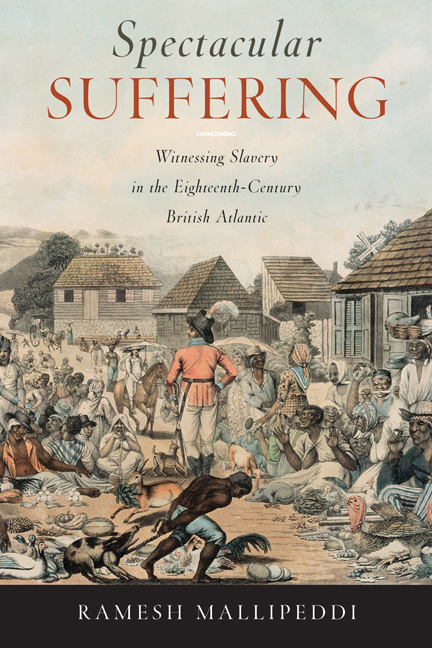
Professor Ramesh Mallipeddi’s course, ‘slavery and eighteenth-century literature,’ which I took a year ago, was an opportunity to consider questions central to slavery studies: What is the role of the critic in relation to the archive of slavery, where there are very few accounts of slave experience written by slaves themselves? Did the affective politics of sympathy actually ameliorate the suffering of slaves or did sentimental rhetoric simply validate the metropolitan observer? What was obscured and what was accomplished in abolitionist efforts to intervene in the slave trade and to reform plantation discipline? What role did slaves themselves play in articulating their losses and mobilizing against the institutions of racial slavery? Professor Mallipeddi tackles these questions among others in his book Spectacular Suffering: Witnessing Slavery in the Eighteenth-Century British Atlantic, which has just come out. Continue reading “'Spectacular Suffering': A Reading Recommendation”
Preface to Graduate School: Reading Hegel or learning how to read again
After an arduous year one of grad school I have come out alive. In anxious preparation for year two a few good friends and myself set quite the task this summer to read Hegel’s The Phenomenology of Spirit that haunted us all year. Given the complexity and reputation of the great man himself I find our “Adventures in Hegel” will entertain readers on how we successfully managed reading his “Preface” to the book. What follows is the affective and intellectual journey myself and friends Katy and Liz have embarked upon.
In lieu of actually trying to explain Hegelian thought or even relay my precise thoughts on the preface I provide some useful tactics we employed to “mastering”, well, getting through difficult texts such as Hegel. Now at the end of year one of graduate studies I can attest the most common nerve-racking question from new grad students to be “How do I read X?” Whether long novels, poetry, images, and of course theory/philosophy everyone has that one form they consider impenetrable to decipher. My fellow book club interlocutors agreed our reading of Hegel to be extremely enlightening and cleared up many conceptual gaps. It does help we’re all good friends but we actually had a great afternoon discussing Hegel? It was fun, and not soul-crushingly dark and intimidating? But how?! Our satisfaction shows such texts are indeed very approachable with just the right attitude.
Continue reading “Preface to Graduate School: Reading Hegel or learning how to read again”
The Poetic Word in Byron, Zaum, and Nabokov—and a Happy Birthday to the Latter
At the climax of the thunderstorm in the alps in Childe Harold III, Byron/Harold flashes some virtuosic self-aggrandizement:
Could I embody and unbosom now
That which is most within me,—could I wreak
My thoughts upon expression, and thus throw
Soul, heart, mind, passions, feelings, strong or weak,
All that I would have sought, and all I seek,
Bear, know, feel, and yet breathe—into one word,
And that one word were Lightning, I would speak;
But as it is, I live and die unheard,
With a most voiceless thought, sheathing it as a sword. (st. 97)
Byronism was always poised on the brink of self-parody, even if it waited until Don Juan to tumble gleefully over the edge. Here the verse inflates a Wordsworthian sense of psychic geography to alpine magnitude. Yet at its climax, the stanza dismisses the expressive power of its own vehicle—language. Wordsworth, predictably, was not amused by Childe Harold. He held the younger poet’s newfound reverence for nature an affectation, “assumed rather than natural,” and accused Byron of “poaching on my Manor” (3:394). The remark performs a fascinating inversion since, as Tilar Mazzeo notes, “the professional Wordsworth casts himself as the lord of the literary estate and charges the aristocratic Byron with crass appropriations that are figuratively beyond the pale” (144). Beyond the pale is right: poaching had been codified a hanging offense since the Black Act of 1723, which became both model and synecdoche for a “golden and sanguine” legal code that deemed nearly every offense against property a capital crime.
Byron tried to exculpate himself by claiming that Percy Shelley had “dosed him with Wordsworth physic even to nausea” (Medwin 237). In this spirit, let us consider Canto III’s thunderstorm episode a Wordsworth-induced fever that ends in purgation. Byron/Harold begins this “classic piece of rodomontade” (Hodgson 379) by wishing he could “embody” and “unbosom” what lies within him. Even in the prefixes, these verbs do the work of synthesizing and then negating—the former a making and reifying, the latter an unloading, a jettisoning. These nearly contradictory transformations operate on “That which is most within me,” which is then detailed in a parenthetical inventory that ends up spilling out over five lines. This messy catalogue of the interior—thoughts, feelings, desires plus their objects—might seem random and spontaneous, but it lands squarely and deftly within the meter, such that it can be gathered “into one word.”
Continue reading “The Poetic Word in Byron, Zaum, and Nabokov—and a Happy Birthday to the Latter”
Spinoza with Wordsworth: substance and “the life of things”

Like many readers of this blog, I’ve been spending a lot of time with Wordsworth lately. As all who’ve read the “The Prelude” know, “nature” is really important to the developmental trajectory that Wordsworth traces in recursive manner throughout the various versions of the poem. It’s hard to say, however, what exactly Wordsworth’s concept of nature is. The relation between the speaker’s mind and “nature” is configured in different ways, and “nature” is continually being lost, subordinated to the poet’s creative impulse, and recovered. Continue reading “Spinoza with Wordsworth: substance and “the life of things””