Advice: Five Scholars on Comprehensive Exams

Constructing comprehensive exam lists is no easy feat. A friend of mine compares the process to building a personalized obstacle course and then having to master it; after all, the texts that appear on your exams are texts that you have personally chosen. Another friend compares constructing exam lists to building a wish list; here are all the books and articles that I wish I had time to read (or re-read) earlier in my career. Whether you view exam lists as friends or foes, one thing remains certain: you must be aware of yourself as a scholar.
Several weeks ago, I read Renee Harris’ thoughtful how-to on running the comprehensive exams gauntlet. Harris’ article offered the very comforting reminder that even while we construct (and take) these personalized exams, we are never alone in the process. Beyond our supportive departments, committees, and mentors, there are always other people going through similar neuroses, struggles, and victories. And, consequently, there is a vast group of established scholars who have already gone through them.
In an effort to extend this conversation of how to approach such a daunting task, I’ve asked five established scholars across North America about their experiences taking and preparing for exams. What did they wish that they had known? What were they glad that they already knew? Below are their words of wisdom:

Dr. Brandy Schillace, Case Western Reserve University

I was standing in the stairwell, waiting to be called up to the defense. It’s hard to capture the tumult of emotion and anxiety… I felt I had dueling octopi in my stomach. I was terrified I’d say the wrong thing, or nothing at all in a fit of brain freeze. Then I remembered something. I’m Anglican, and coming from my studies of theology, I suddenly remembered the early charge that disciples ‘not worry’ about what they would say in advance. When the time came to speak, speak they would.
In that moment before defense, we are  ‘disciples’ of English studies and about to stand trial. But remember–we are also masters. We know our subject better than anyone, and possibly even as well as some on our committee. They are not judges; they are peers. We are not going to prove we belong; we are going to show we’ve belonged all the time.
I breathed a sigh of relief as I climbed the stairs… And I entered the room as a colleague. That’s what you are–colleagues in the making. Don’t be paralyzed by the exam. Don’t be cocky, either, but just remember: this is our job, it’s what we do. When the time comes to defend, defend you shall.
(Though I confess, praying never hurts)

Dr. Anne Stiles, Saint Louis University

1. Study several contiguous time periods. When I took my exams, I decided to focus on the Victorian period and the 18th century, but skipped the Romantic era. I definitely regretted it afterwards, especially since many jobs in my field are geared toward the “long nineteenth century.” If you’re studying two different time periods separated by a decade or more, remember that the meat in the middle of the sandwich is important, too!
2. Always carry around a book with you in case you have a few spare minutes for reading (while waiting in lines, for ex.).
3. Remember to read secondary criticism on the primary works you read, even if you’re not required to do so. This secondary criticism can help you tie together and better understand the works on your list, so you have more to say about them.

Dr. Richard Menke, University of Georgia

One of the questions I’m asked most frequently by students approaching their comps is whether they should “focus on breadth or on depth” in their preparation and in their exam answers themselves. My answer may sound glib and unhelpful, but it’s really intended to be neither of these: “Both.” What I mean is that they should be ready to frame their deep, specific answers in terms of a broad sense of genre, history, context, ideology (and so forth). But they should also make sure that when they find themselves articulating their broad understanding of the field, they offer a sense of how they could add details to flesh out and add nuance to their responses.
This dual focus can help students offer successful exam responses that set up useful follow-up questions, since examiners will often pick up on these suggestions in an oral exam, for instance. But I’m convinced that it can also do something more. Rarely in our careers do any of us have the chance (or the obligation) to read extensively and promiscuously across our fields, as we are asked to do for our exams. So preparation for the comprehensive exams represents a chance to charge your intellectual batteries in a special way, to gather some of the knowledge, the theories, and the hunches that can help propel years of thought. As students are studying for their exams, they should work from specific texts and problems, to patterns that link them into networks of relationship, to larger themes and ideas. They should see their own knowledge and understanding in relation to the shape of their field, and should be ready to articulate the significance of their ideas by discussing their connections to these wider intellectual contexts. After all, that’s just what they’ll need to do in their own scholarship, as they present their deep research and argue for the breadth of its intellectual significance.

Dr. Anne Mellor, UCLA

The only suggestion I have is to know everything that is in my anthology, Mellor and Matlak, BRITISH LITERATURE 1780-1830. That will familiarize you both with the canonical and the newly-added-to-the-canon texts, as well as their historical contexts.

Dr. David Sigler, University of Idaho

The exam year is the best experience you’ll ever have in this profession, and probably in your life. If the listmaking and reading and examining feel traumatic to you or even merely stressful, be comforted to know that this is the least traumatic phase of your whole long career to follow, and that the memory of its pleasures will compensate you during the decades of anxiety to come. Just by doing all that reading all day every day for about ten months, and reading super-carefully so as to file away all of the details, you really do become an expert in the field and begin making connections, text to text, that spark a million ideas. Everything begins to relate to everything else, like you’re Coleridge or something. I read for months with a kitten, Eloise, often aloud—and when I see Eloise today, ten years later, we both know that we read a whole lot of stuff, very intensively, together. It’s solidarity and belonging one is building, then. Reading for the exams was, no doubt, the best intellectual experience I’ve ever had.
Making the lists is like making a mixtape, and thus when they’re poorly constructed one’s deficiencies are exposed. Mixtapes were a technology of the late twentieth century. I worry sometimes that scholars of the most recent generation are at a considerable disadvantage in the list-making, having never made anything but playlists. You want to show that you appreciate some delightful neglected corners of your field and also aren’t afraid of the greatest hits. Everything should be selected to demonstrate one’s immaculate and capacious taste. I had all kinds of Joanna Southcott on there, and Mary Prince, and The Writings of the Luddites, and the Marquis de Sade, and some early Felicia Hemans from before she sold out (The Domestic Affections). I went with The Last Man instead of Frankenstein like it was no big deal. I know that none of those are obscure at all, but it felt that way to me at the time because my frame of reference was expanding so quickly. One covers a lot of ground and gets smarter. The experience was exhilarating for me, and it always is. My point is that mine was a really great Romanticism list, and I’m not sure anyone else really appreciated it properly. My advice, if you’re doing it now, would be to use an earlier, shorter version of The Prelude, as early and short as possible, because that’s a lot of time-spots to remember for ten months. Don’t put Night Thoughts or Political Justice on there, either—seriously just read them after your exams, or during your exam year on your own time if you must. You don’t want to be pressed on those hundreds of details. Finally, don’t argue with the DGS when s/he insists that you include Manfred on your list—it’s simply so delightful that you should definitely include it, even if you’ve already got Don Juan and Beppo on there—it’s not a burden to include it, I promise, and the arguing just makes you seem timid and unimaginative. I know you know that already.
 

After the Exams … Writing and Defending the Prospectus

Reading and preparing for the comprehensive exams feels like the most daunting task we undertake as doctoral students, but what happens after we take the exams? What happens after we spend months, sometimes a year, on edge, full stress, constantly questioning if we are doing enough, reading enough, are we ready enough to pass our exams? And then—we do. We pass; we hear the congratulatory statements from our committee members and our peers. But what happens next?

“Noon – Rest from Work (after Millet)” (1890) by Van Gogh

All I wanted to do when I finished the comprehensive exams was breathe. Breathe air that wasn’t tainted by the constant nervousness or questions of whether or not I was prepared enough. I wanted to sit down, change my email signature to PhD Candidate in English and move on to the dissertation. But at Arizona State University, our exam process is three-part and the oral comprehensives is only part two. The exams start with a written exam, once you pass the written with committee approval, you move on to the traditional oral comprehensive exams. The last and final portion of the three-part exam process is the prospectus defense. Before we receive the final stamp of candidacy and ABD, we have to defend our dissertation prospectus in a two-hour colloquy.
Writing the prospectus after the high of passing the comprehensive exams was incredibly difficult for me. I wanted to celebrate and enjoy the success of having completed the most difficult and daunting task that I had faced as a PhD student. And I tried, but the nagging feeling that I wasn’t quite done yet kept me from being able to fully let go of the stress and anxiety. I still had one more step.
The dissertation prospectus by definition is a daunting document to write. This one paper is supposed to set up the next two years of research and writing. In one document, I am supposed to outline my dissertation argument and chapters, provide a literature review of my specific area of study, and prove that my dissertation will contribute to my field, all while proving that I am capable of completing the task in a specified amount of time. The other difficulty that I encountered with the prospectus is that the specific expectations for content, style and format were ambiguous. Everyone that I talked to that had completed the full exam process had different expectations for what the prospectus should do. Is it 10-15 pages? 15-20 pages? 25-30 pages? Should it be an informal discussion of my project ideas or a formal paper that easily can transition into an introduction? What portion of the project should be a review of the literature and scholarship? How long should each of the chapter descriptions be? Should the chapter descriptions be abstract length or should they be more detailed? These questions and hundreds more plagued my prospectus writing process. I let the questions and the uncertainties halt my ability to move forward and complete the document. I met with my committee members multiple times, but it never fully helped to clear up what exactly it was that I was supposed to do.
Hand Prospectus
“Hand Prospectus” (2014) by Kaitlin Gowan Southerly

One day, about two months after my comprehensive exam when I was so overwhelmed and ready to give up on my idea for my dissertation, I went in to talk to my good friend in the program, Kent, and it turned into me venting about my inability to just write this document. I frustratingly opened up about my struggle to overcome the block and anxiety associated with the document itself. I ended up sitting in Kent’s office for about an hour and we mapped out my project together. I bounced my ideas off of him (something we regularly all do together in our 19th Century Colloquium) and it finally hit me. I just needed to talk about my project out loud; I needed to share my ideas and get them out of my head. I needed to make my project something real rather than an idea or figment of my imagination. And once I did this, once I talked with my friends and shared my ideas and had an intelligent conversation about my project—I wrote my prospectus. Literally, over the next three days I wrote my prospectus. I frantically emailed my committee, miraculously found a date that everyone could meet, and two and a half weeks later, I walked out of a two-hour colloquy ABD.
Okay, I know that this story and process is unique to me, but here is the best advice that I received and learned throughout the prospectus process. Maybe some of it can help you…

  1. Breathe after your comprehensives. Take a specified amount of time to celebrate and relax and enjoy life without worrying about what comes next. I didn’t do this and immediately after the comps, all I could think about was what I still had to do and that really took away from my ability to celebrate the incredible accomplishment that passing comprehensive exams is.
  2. Don’t be afraid to tell your committee that you are struggling. As soon as I opened up about my writer’s block, my committee was incredibly helpful and understanding and supported me.
  3. Instead of worrying about what specific format the prospectus should follow, just write your ideas for your project down. As soon as you get your ideas down, the rest will come. And don’t worry, your chair (who will go over your document first before you send it out to the rest of your committee) will let you know exactly what he or she is looking for once you send the first draft. The most important aspect of this document is your project, your ideas, and your argument, so focus on that.
  4. Don’t worry that you don’t have all of the details figured out yet. Your committee expects your project to change as you begin to write, so it doesn’t have to be perfect now.
  5. And the absolute best advice I can give: SHARE. Share your ideas with your peers, with friends and family. Share with anyone who will listen. Share with the old man sitting next to you at the bar while you attempt to drink away the writer’s block. The more you talk about your project and ideas for chapters, the easier it becomes to write them down, even if you are sharing with someone who knows nothing about your area of study. When you share your ideas, you get excited about them. Harness that excitement and writing becomes easy.

The last thing to say is as cliché as it sounds, remember that you love this. You are putting yourself through a PhD program because you are passionate about what you study. I don’t think we could make it through programs like ours without a crazy amount of passion for what we study. But sometimes we lose that and forget how excited we are about these texts when we get stuck in the rut of jumping through the necessary hoops—especially when the hoops appear to be rings of fire. When I remembered that I loved what I was studying and was excited about what I had to say, I discovered that I was completely capable of writing the prospectus and finishing that last step of my exams. And I did. And if I can do it, you can do it too. And then you can hurry up and change your email signature from PhD Student to PhD Candidate.
Kaitlin Gowan Southerly
PhD CANDIDATE in Literature
19th Century Colloquium
Arizona State University

Interview: Dr. Judith Page and Dr. Elise Smith

Dr. Judith Page and Dr. Elise Smith’s article, “Writing a Book Together,” featured in The Chronicle of Higher Education, documents their experience working on Women, Literature, and the Domesticated Landscape: England’s Disciples of Flora, 1780-1870 across the disciplines and across several states. Page and Smith explain that from the beginning, they had two objectives: To bring together the disciplines of art history and English, and to find a topic that would yoke their “mutual love of gardening.” These two goals resulted in their brilliant argument, that “gardens provided women with a new language and authority to negotiate between domestic space and the larger world,” while it simultaneously “offered expanded possibilities that re-centered domesticity outward” (2).
Page and Smith’s friendship is partially rooted in gardening. In fact, one of Page’s first memories of their friendship is planting her first vegetable garden with Smith and her children. “Our children were also friends,” Page says. “They grew up together and thought of her as a second mother, so it made sense for us to want to do a book together.” In this way, Page and Smith’s book is more than a well-researched, fascinating study of women and gardens; it is a carefully constructed document between friends.

INTERVIEWER

How did you initially meet?

PAGE

We met each other as faculty members at a small liberal arts college, Millsaps College, where Elise still teaches. I taught for a long time until I moved to the University of Florida. I loved the kind of collaborations that can occur at a liberal arts college because you really are very connected to people in other departments […] We became good friends and realized that we shared a lot of interests. At first, we actually team taught together. […] We taught a couple classes on images of women in art and literature. We went from very early images through the twentieth century and mostly focused on European art.

SMITH

It was a big change for the two of us because although we already had a lot of teaching experience, at that point, it was always just us in our own classes, me, as an art historian, and her, as a literary historian. […] Thinking about women was the baseline for what brought us together from our various fields. Those courses were such fun to teach. I think it was marvelous for the students to have a way to see alternative perspectives, not just in what they read, but in seeing us with our different viewpoints there in the classroom. That really helped later when we came up with this idea of writing a book together. It was an important foundation for us in terms of thinking collaboratively.

INTERVIEWER

How was this project similar to or different from your other collaborative processes?

PAGE

I would say that the project is different from the collaborative project of teaching together because when you teach a course together, you have to sit down and shape the course and perhaps make changes as you go along. When you’re writing a book together, you really have to read the work, collaborate, change it, revise for each other, and we found that process worked really well. People joked with us and said, “You’re such close friends. Are you still friends after writing a book together?”

INTERVIEWER

How did you come up with your idea?

PAGE

I think it moved from that very early amorphous images of women to something that was much more specifically grounded in the garden and what we might be able to do with that […] I don’t remember what actually sparked the initial idea except our love for the garden and our interest in writing a feminist piece on the garden and our interest in women artists and writers, so it all just came together. […] This was after I had left Millsaps. I’ve been at the University of Florida for 13 years. We both had finished book projects. I had finished my book on Romanticism and Judaism and she had finished a book on the Victorian painter, Evelyn De Morgan, which was her first piece of work in the 19th century.

SMITH

One of the advantages of us not living in the same town anymore is that we’ve got a lot of emails that relate to the project. One dates back to August, 2003. I had written Judy an email at 1:16 in the morning. I started by saying that I had been trying to get to sleep and just wasn’t able to because my mind was full of thoughts about this book that we had begun to think about. Initially, we had been thinking very broadly and loosely about something relating to gardens and landscape issues in the 19th century.
In this middle of the night email that I sent to Judy, I was sort of moaning about this article that I was working on about Gainsborough […] and I said what was really getting me a lot more excited was the thought of working with her on 19th century women gardeners or rather women and gardens, since some of the women might not necessarily be gardeners themselves […] She responded that same night at 2:51 AM, which is kind of bizarre. And she said, “This is so strange because I’m sleepless in Gainesville and decided to get up with hot milk, dry cereal, and a computer check. I love the idea of focusing on women and gardens although we might find that pushing back in the 19th century could be interesting too.”
The time framing of the book—that may have been one of the hardest things for us to figure out, because, of course, there was only a certain amount that we could do. But, any time we got ourselves a tentative beginning and ending date, one of us would kind of stretch an elbow out and say “Oh, but you know, if we just go ten years further or ten years earlier, I could include such and such.” It really was not until late in the writing process that we finally settled on the framing device that we had.  I think it was, in part, some of the frustration that both of us felt at having to leave out some of the later 19th century stuff that got us going on our second project that we’re working on now.

INTERVIEWER

Can you tell us more about working between the disciplines? Within “Writing a Book Together,” you touch upon the clash of verb tenses and working together to achieve a seamless writing voice–a “we” rather than an “I”.  What were some of your other struggles or victories? How did you approach them?

PAGE

We found it a very congenial process and almost always took each other’s criticism and felt that it was right. We’re coming from different disciplines. Elise is a trained art historian. I’m trained, of course, in English. […] There really were some funny moments in sharing our work where we would see different conventions that would guide us. For instance, in my previous books that were not collaborations with Elise, I had illustrations, and some of the illustrations were what she might consider to be decorative. In other words, I did not engage the illustration in the text. Elise’s ground rule was if you have an illustration in the book, you have to engage with it in the text. Of all the 75+, or however many it turned out, nothing was just gratuitous. We talked about each one of them. There was a purpose for having them. That is something that I really had not thought about before. When I wrote my book about Wordsworth and women, I had illustrative illustrations […] and I didn’t necessarily engage them. […] Some of the pictures of the home places I did talk about, but I didn’t have such a strict guideline that I was working with. I liked it. It makes a lot of sense and it’s a good way to justify the illustrations to your publisher.

SMITH

I was also particularly concerned about being sure that we incorporated images in all of the chapters, not just in the chapters that I was working on, and that we incorporated them in what I thought was a substantive rather than a relatively cursory or merely illustrative way. I wanted significant analysis as much as possible to be done with all of the images, rather than just having them there as an illustration on the page.

PAGE

There was that issue, and another one, which I also think is a disciplinary difference that we had. I’ll give you an example: I am the primary author of the chapter on Dorothy Wordsworth. That chapter had even more in it when I first shared it with Elise that was very speculative about Dorothy Wordsworth and her relationship to her brother. Elise wanted evidence. […] On what grounds are you making this statement? What can you point to? What evidence is there? I took it out when it was purely speculative and I didn’t really have the evidence. I worked according to that and I think it was good for me. It certainly made our writing more compatible because she is devoted to really careful scholarship and all of her evidence and references are very precise. It was a good discipline for me to have that because I think that we, as literature scholars, perhaps tend to have more flights of fancy and things that we can’t absolutely justify [with hard evidence], but that we still think we’re right.

INTERVIEWER

Can you tell us more about your collaborative process?

PAGE

We were collaborating from the very beginning. As soon as we would write a chapter, we would share the chapter. We agreed from the outset that each of us would write four chapters. The book has eight chapters, plus an introduction and a conclusion. One of us drafted the introduction—I did—and one of us drafted the conclusion. Then, we each revised them, so they were all truly collaborative.
I also think that our voice is pretty close. […] Maybe someone who analyzed the chapters with some kind of technological program could tell there are certain ticks or ways of writing that are distinctive, but I think we’re actually quite close in our writing styles and I think that it made for a greater harmony in terms of the voice.

SMITH

We assigned ourselves key chapters to draft up and then we would send that draft to the other person. I’d send my draft to Judy and would get all kinds of responses from her and vice versa. Often, something that I might have been working on, for example, related to images, I realized didn’t really fit in my chapter anymore but could easily fit into one of Judy’s chapters as additional visual material […] or a literary passage could really fit well into one of my chapters, so that worked well in the later stages of drafting.

PAGE

We were also both committed to the “we”. We were committed to writing the book together, so it was something that we accepted. I know at one point, Elise said, “I feel really funny using the word “we” in the chapter on Dorothy Wordsworth. It’s so clearly your chapter. You’re the Wordsworth scholar.” There were moments like that where we both chuckled a little, but even the chapters […] where one obviously wrote more of that chapter than the other, at the end of our process, we ended up taking some things out of one chapter and putting it in another with no regard for who wrote the chapter originally. I would say our process, if I had to have a metaphor for what it was like, was like making a quilt. We got the parts, we thought of the chapters, and then we pieced things together in them, so it’s quilt making, if you think of quilt making as an organic process.

INTERVIEWER

In your book, you mention collected specimens, exotic flowers, and how “the microscope suggested a hidden life rich with possibility and meaning” (58-9). If we consider female botanists collectors, can we compare them to famous male botanist and collector, James Banks? Could they be following his example, set in 1771, when he returned from Captain James Cook’s first voyage to South America with samples in tow?

PAGE

Some of the women that we wrote about, for example, Agnes Ibbetson, who is a very accomplished botanist, did have an interesting system of categorizing and collecting in that sense, but we didn’t find this grand design of women as collectors in the sense of Banks or some of those great collectors and adventurers. […] It’s almost a kind of gendered distinction. Male adventurers have a strong desire to conquer and collect and to bring it all back as a part of the empire and put it on display in Kew and other gardens in Britain.
We found less of that in women writers and artists. We found more of an interest in teaching that a lot of this knowledge goes into an educational function […] That educational interest that is very strong, so that you find women who have great knowledge of different parts of the botanical world. That knowledge takes the form of dialogues between mothers and children and various kinds of scenes of instruction in books, so that the botanical knowledge is often put toward that kind of advancement of intellect.
That said, I just read Elizabeth Gilbert’s novel, The Signature of All Things, which was published a couple of months ago. The main character is a woman botanist who has an amazing collection of moss and becomes an incredible expert. I was fascinated by the portrayal of this character not just because she was a collector and wanted to get to the heart of it, but because of what she saw when she studied the moss really closely under the microscope. Gilbert’s character demonstrated this notion that we see in Chapter Two, this discovery of this interior world, an amazing world that was represented when you could actually see into the life of this species, this plant. I think there was this sense of wonder in the world. A lot of women botanists write about wonder, often putting it in a religious perspective too.

INTERVIEWER

Interesting! You discuss the garden as a liminal space of education and exploration, especially for girls before they become women. Did the garden have the same erotic connotations as other well known liminal spaces of education and exploration, such as boarding schools?

PAGE

We do indeed focus on the garden as a place of exploration and education, a place where women and girls can extend their sense of themselves. […] The garden for both men and women always has this erotic charge. It makes me think about the Garden of Eden and all of those kinds of metaphors that go with that. The book is not comprehensive and we didn’t talk a lot about that, but if I had added another chapter, […] I would’ve loved to talk about writers in that context—one of them is Austen. I did a paper for the Cambridge Companion to Pride and Prejudice that just came out last year on the landscapes and estates and gardens. One of the things I talk about there is not the garden narrowly defined as a garden per se, but certainly the outdoor space and the outdoor world in Austen’s novels is a place of freedom. It’s a place where many of the really important scenes and activities take place and discussions between characters that are highly charged and couldn’t take place in the drawing room. They take place out of doors.
Think about the moment in Emma, at the end of the book, where Emma is described as hurrying into the shrubbery. She’s overcome in that moment. She’s recognized that, “I’ve loved Mr. Knightley all along—Harriet can’t have him because I love him!” And she’s pacing the garden, the shrubbery. In that moment, Mr. Knightley appears. That moment can only take place out of doors. It’s highly erotic, and Austen handles it so beautifully.

SMITH

I think that you can particularly see erotic fears perhaps most prominently and ironically in children’s literature–this fear of the children escaping past the wall and the kind of punishment, the literal and metaphorical fall, that these children might have if they climb up on top of the wall. And, of course, the idea of the fall takes on so much resonance symbolically. That could be read as sexual metaphor. I have not made that explicit in the chapter that I wrote, but I think it’s a really neat way of thinking further about that work.

PAGE

We describe this in the beginning of the book that we use the term garden very fully and loosely and we take in botanical writings, landscape, and a whole range of ways that people can engage with the natural environment in the book.

INTERVIEWER

Can you tell us more about your next project?

PAGE

We decided that we loved writing this book together so much that we’re going to write one more book together. […] If critical books could have a sequel, I suppose it’s a sequel. […] What we found looking at the later 19th century is that if in this earlier period, we talked about the way that so many women writers and artists negotiate their relationship between the public and private, in the newer project, one of the things we talk about is an increasing professionalization of the way that women writers and artists talk about the garden, the garden as a potential profession. If women were amateur gardeners in the 19th century, and many of them did move into professional garden writing […] at the end of the 19th century, you have women thinking of themselves as professional writers, professional gardeners, and that there’s a kind of conjunction between women and the garden and women who worked in the city, New Women, if you will. The whole notion of the New Woman fits into this.
Some of the figures, for instance, that I’m interested in, begin to write important gardening histories. They see themselves as historians of what has taken place in the garden not only over the last century, but going back for many centuries. […] There are examples of women who have university educations and see themselves as historians of the garden. We’re going to look at some of those writers.

SMITH

Mostly, I’m working on the time between the very tail end of the 19th century through World War I. That’s where most of my stuff is leading right now. […] I’ve drafted a chapter on garden memoirs written by women who were gardeners themselves and were really thinking about how to create a space for themselves outside of the city. The city/country dichotomy is very important because many of these women travelled back and forth between their country retreat and the city. In fact, I’ll be giving a talk at the 19th Century Studies Association in Chicago in March, which is a conference centered on the city in the 19th century. I’ll be talking about these women in the country and the way in which they contrasted what they valued about their lives in the country, in their gardens, as opposed to what they saw as really problematic about the city, the noise, the dirt, and also the city as standing for some of the violence that they associated with the war torn years.
One of these garden memoirists wrote in defining this contrast between the city and the country, “Asphalt or turf? Pose or repose?” She was referring to the idea of the pose, the sort of artifice of the poseur life in London, as opposed to being able to let that all go when one is rooted in the countryside. That was a lot of fun for me to write. I hadn’t heard of a lot of the women before, but very few other people now have heard of them either. As an art historian, I’m finding myself pulled into text based writing and text based image making, because there is very little imagery involved as I dig into these memoirs and write about them. My other chapter, so far, is about an artist from the Bloomsbury group who knew Virginia Woolf. Her name is Dora Carrington. She was working in the 1910s and ‘20s before she committed suicide. She did a lot of paintings of the land around the three homes that she lived in. One was her childhood home and two were houses that she lived in with the Bloomsbury writer Lytton Strachey. I argue that these landscapes that she painted are really a way of attempting to make a psychological home base for herself because of the way she felt increasingly removed from friends and lovers, and even the actual homes themselves, which she didn’t own. […] She was afraid of being a hanger-on with Lytton Strachey. […] My next chapter will be on children’s stories and illustrations centered around Frances Hodgson Burnett’s Secret Garden, but I will also look into other children’s books written by women that deal with children in the garden in some way, which will be an extension from the chapter that I wrote about children’s literature in the last book. I’m not sure what my fourth chapter will be. That is sort of giving you an indication of how Judy and I are feeling our way into what we might want to write about.

 PAGE

I’m very interested in figures like Beatrix Potter and Vita Sackville-West, women who saw themselves in terms of a kind of mission that they had to revitalize the English landscape. Beatrix Potter is an example of someone who is best known as a children’s author. She wrote the Peter Rabbit books that we all grew up on. However, after she wrote the Peter Rabbit books and settled in the Lake District, she became a conservationist and someone who dedicated her life to the restoration of the countryside. […] Sackville-West wrote books where the garden features very importantly, but she also developed and designed with her husband and then worked in one of the most important gardens of the 20th century, Sissinghurst, which is still regarded as one of the great gardens in England. I’ll be looking at what the relationship between her life as an actual gardener and what she wrote about her gardening life. In this project, we’re also going to be very interested in looking at the effect of the First World War, but we’re going to take it through the Second World War and the effect of the war on the sense of the landscape, the place of the garden in the landscape, and women’s relationship to it in particular. One of the things that developed during the First World War is the Women’s Land Army, and women increasingly took the place of men as workers on the land as men were drafted into the army. Many of those women became committed to those skills and to that life, even after the war. Looking at those kinds of changes in how women contributed to the land and the landscape during the war years is something that we’re going to be very interested in.

INTERVIEWER

Do you have any advice for scholars interested in collaborative work?

PAGE

I would say that productive collaborations arise from shared interests and passions, and when each contributor brings a different knowledge or disciplinary perspective to the mix. Once you get going on the collaboration, think of it like other relationships that always require give and take—and compromise.

SMITH

I think my main advice would be that you have to give up turf possession. That’s a good metaphor to use when we’re talking about gardening. You have to give up the sense of, “Oh, I’m an art historian, and thus what I write has to be situated in art history.” I learned long ago by coming to Millsaps and being the only art historian here for many years, to give up turf ownership of any particular period in art history because I teach from ancient all the way up to contemporary. […] Now, by working with Judy collaboratively, I’ve had to broaden out beyond being just an art historian to being a thinker about the world, open to all kinds of questions, and then following those questions to whatever kind of evidence might come to bear on those questions. I think about texts as well as images. That advice is important advice for any scholar in whatever field, whatever they’re doing – go where the questions lead you.
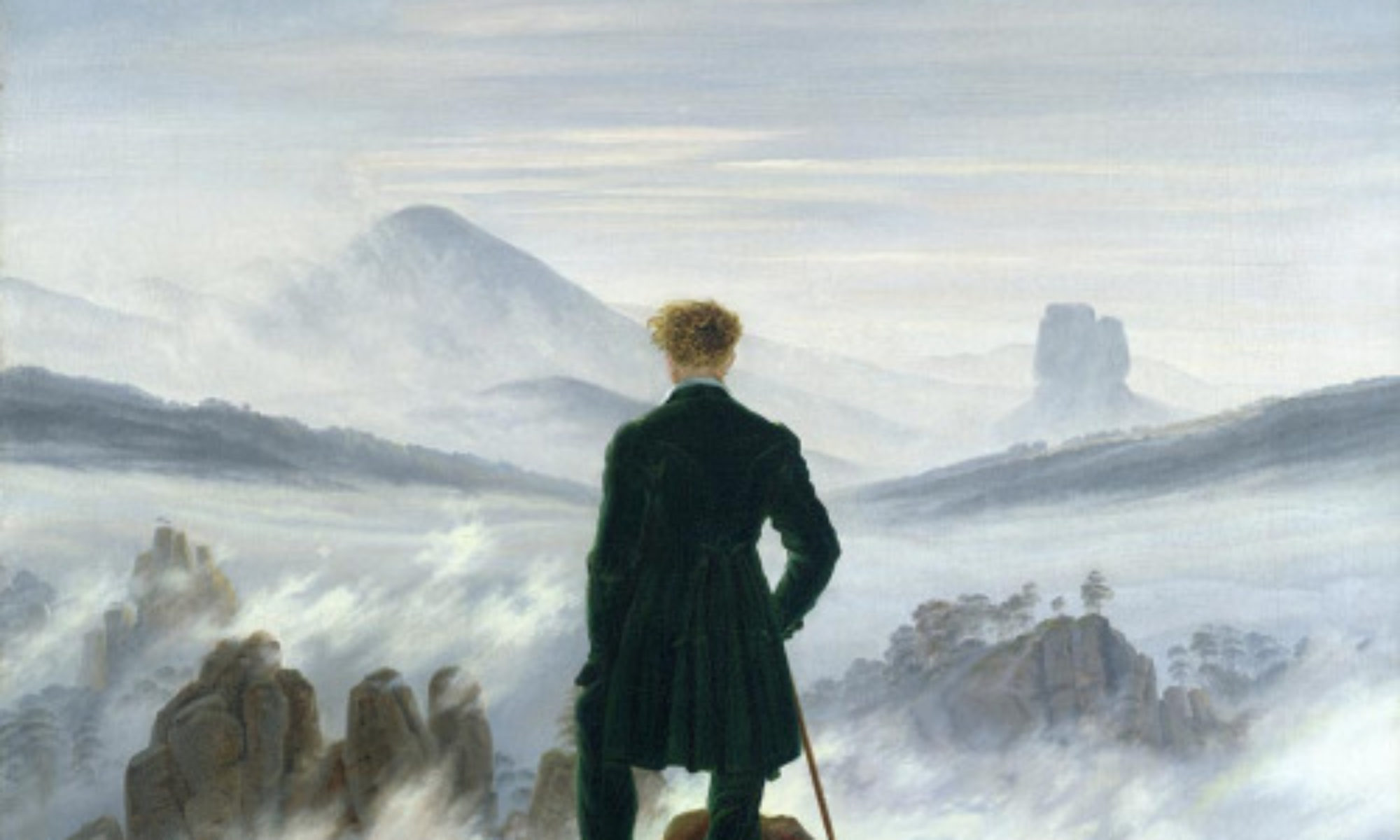


Humanities questions as inspired by Sherlock Holmes, Reading, and Undeath

Greetings from the Valley of the Sun and happy 2014! The Colloquium extends its warmish wishes to everyone, especially those who were (and are again) in the path of the Polar Vortex. We hope you are all doing okay in what sounds like very challenging weather. Our weather here is mild, in fact it is too mild, uncannily mild. So, while the West Coast might not be suffering the chill I’d be willing to bet this summer will be destructively hot and dry for us, especially the southwestern states, unfortunately.
Off the (depressing) topic of weather, I hope to bring some of the discussion the colloquium had this past week to you all. At our meeting we examined a few book chapters. Specifically, Chapter 13, “The Age of the Novel,” from The History of British Publishing by John Feather. And also the Interlude Chapter, “Necromanticism and Romantic Authorship,” from Necromanticism: Traveling to Meet the Dead by Paul Westover. And also we had a brief digression on Sherlock Holmes (as you do) which is where we will start.

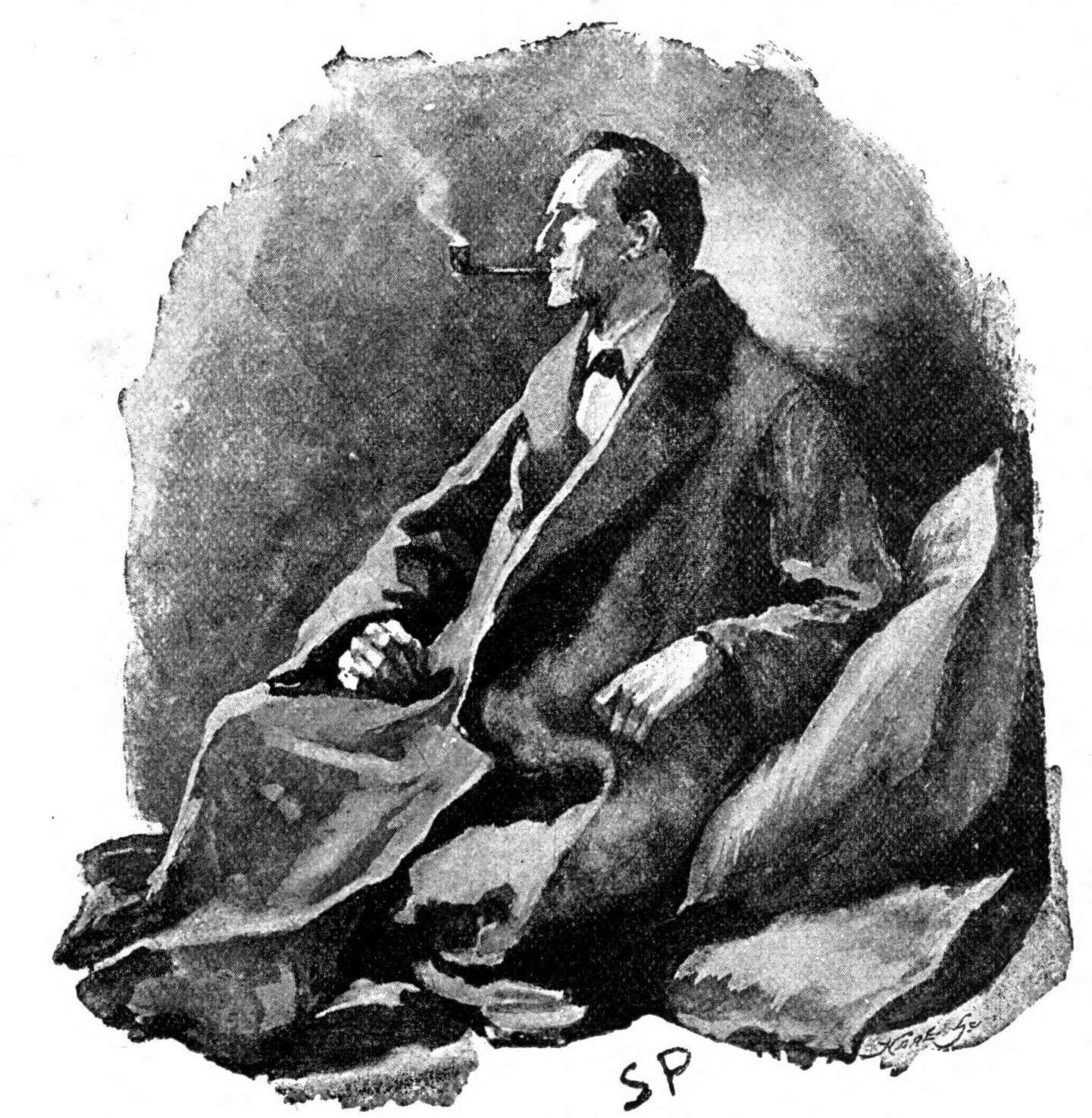
“The Pipe Was Still Between His Lips.”

Perhaps unsurprisingly most of the colloquium is fan of Sir Arthur Conan Doyle’s character, and the various current iterations such as Elementary and Sherlock. And some of us have seen the PBS documentary “How Sherlock Changed the World” [http://www.pbs.org/program/sherlock-changed-world/]. This documentary, which is trying to channel some of the popular enthusiasm into historical knowledge, roughly claims that Doyle’s character impacted forensic science more than any actual forensic scientist. The argument demonstrates innovations from the stories and then discusses the way Sherlock Holmes inspired people to become forensic scientists in the latter half of the 20th century (and these people use knowledge they derived from or that was inspired by Holmes).
You all will have to watch the documentary yourself, but we were not especially impressed. Perhaps the error that was the gravest was that the documentary never talks to literary historians or any cultural historians.  Mainly they use current forensic scientists with a smattering of evidence from the stories. The one speaker that was related in some way to the literature was a writer of popular fiction who had also written a few novels using the Sherlock Holmes character. None of us thought that these people were ‘bad’ speakers per se, but were somewhat miffed that a documentary that focused on the influences of literary character on history did not talk with researchers who dedicate their time and energy to understanding that relationship. More than anything this method seemed to be merely a data point in the larger question of the role of the humanities in the public sphere. PBS, one would guess, is no doubt a largely sympathetic audience when it comes to the humanities. But, at least in this case, the humanities researchers were largely left out of a discussion on humanities; a troubling situation to say the least.
One of the other problems was the surprisingly graphic nature of the documentary, where they used actual crime scene photographs. The one that we found the most disturbing was of Marilyn Reese Sheppard. She was bludgeoned to death on July 4th of 1954. The documentary used a photo of her, uncensored with all the physical manifestations of violence, the gore, visible in stark black and white. But, the show did go to the effort of censoring her exposed nipple. (As an aside, someone else might have edited the photo before, then the show used it, but it still seems an odd choice). Whatever the case maybe, the use of these photos definitely raised questions of violence and bodies: what bodies can and cannot be displayed doing or being and how violence is received by the larger audience.
As you can see this innocuous documentary raised some perplexing conundrums for us: how we portray violence to bodies and whether the humanities needs to try and be more aggressive with its public face.
Three Volume Set of ‘Quentin Durward’

Eventually, though, we turned to the articles which dominated the majority of our meeting. We started with John Feather’s work, which provoked a question about research: how we (scholars) read and whether that should or should not be like the way the text was read (or at least as close as possible). According to Feather novels in the romantic period, especially post Waverly by Scott, were published in the popular ‘Triple-Decker’ format (Feather 144), for a variety of reasons, but mainly because it meant that the publisher got to sell the novel three times (Feather 147); arguably it also made it better for the lending libraries because three people could be reading the ‘same’ book at one time. But, especially as graduate students, we do not typically read works like Waverly in three volumes over a period of months; we have maybe a week (or two) to devour the book while also reading one or two other books (plus a variety of other work and research). This is not to say that the system needs to change, but we were wondering what it means for us as researchers and the arguments that we make that we do not read the novels in the same way that they were historically. This discrepancy increases in the Victorian period with serialization: many readers read chapters from magazines while presumably fewer read the novels as one unified whole (due to the cost of the unified novels). We were unsure whether this mattered at all: does reading one way or another dramatically influence one’s reception of a novel? Especially considering the periods people had time to discuss the developing plot with each other, after a household had finished the first volume of a work and how that might change their perception. Should we strive to read as the people did, so that our claims are more ‘accurate’ or is accuracy merely a facade because meaning does not change that much between varieties of reading?
There was one statement that generated a great deal of discussion. At the very end of the chapter, Feather claims that “there was a brief period in the middle of the nineteenth century when literary merit and popular success coincided” (Feather 152). Most of us agreed that this statement did not seem to fit well with the rest of the chapter and that the statement was worrisome. For example, the conversation drifted over to the idea of the Romantic Canon, i.e. the big six of Blake, Coleridge, Wordsworth, Byron, Shelley, and Keats. For a long time those six (and sometimes only really five) have been the writers of ‘literary merit’ at the exclusion of other sexes, races, classes, forms, genres, and so on. Thus, we thought that the particular statement was obscuring a few other important discussions. But the idea of ‘literary merit’ also drew out another question: what are English Scholars? Are we art critics? Are we cultural historians? Are we theoreticians and philosophers? Are we all things or none? There were good arguments for all positions, well except ‘none’ no one argued for that, nevertheless we debated for a bit. I apologize for all the questions, and especially our lack of concrete answers, but we pondered that particular idea for a while with no particular conclusion.
“Wordsworth on Helvellyn” by Haydon

At that point it seemed wise to switch over to Paul Westover’s chapter before we lost our entire weekend to the previous question(s). Westover argues that even if an author is living, especially the Romantic authors, because of their literary success they become ‘dead’ (Westover 93). Somehow the author becomes both dead and alive, which is obvious in the various descriptions that Westover cites. For example, people would visit William Wordsworth but ultimately be surprised because the being they encountered did not match up with their vision thus they would exclude the material body from their vision and description,  and so as Westover states “Wordsworth had become an artifact and a ghost in his own house” (Westover 95). In part this un-dead-ness appears to result from the disconnect between the image of the author in the reader’s head and the material reality of the author. Perhaps most interesting to us was the focus on the author. Everyone is aware, of course, that the Author died a couple of decades ago and that we do not talk about them. But, Westover’s book is in part about authors and their existence.  Humor aside it certainly does not seem like a poor trend for literary scholars to also incorporate the author into their analysis but obviously the author cannot be overriding because texts live apart (as Westover and others show) from their creators.
That did lead to one concern: are we as scholars also victims idolizers of authors? And if so, might that impact our ability to be clear-eyed when making arguments? Or, phrased another way with a greater focus on undeath: if you could resurrect an author and speak with them would you / should you? While a few names were thrown out for ‘yes’ to resurrection (like Mary Shelley) and ‘no’ (like Edgar Allan Poe), we decided that the literary scholar’s enthusiasm for certain authors was probably a good feature because it allows us to keep going even when we encounter research dead-ends and conundrums.  Although, being on guard against over idolization of course is never a bad idea.
Anyway, these are a few of the items that we discussed. If there is anything you would like to add in the comments, please do! Otherwise, good luck with your work in 2014 and we look forward to many exciting discussions as inspired by this graduate caucus!
Kent Linthicum

Quarterly Editor's Note: Collaboration & The Rush of New Insights

From one of the colder sites of the “Polar Vortex 2014,” I write to wish everyone within the orbit of romanticism (and beyond) a very happy, healthy, and successful New Year. The concluding months of 2013 brought with it the installation of a highly engaged and innovative new cadre of writers, with established authors Aaron Ottinger and newly elected NGSC Co-chair Laura Kremmel continuing to publish on the blog, making the autumn season an incredibly exciting one. There were no fewer than sixteen pieces generated in the better part of the last three months of the year. Writers explored a range of topics from the formation of scholarly collectivities, the importance of self-reflexivity regarding the possibilities and limits of reading practices, to new imaginings of cross-disciplinary approaches to romantic literature. An immediate and special congratulations goes out, as well, to blogger Renee Harris, who was selected to present new work at the Keats Foundation Conference, “Keats and His Circle,” at the Hampstead House this spring.
In my first editor’s note, posted in October, I made the proposition that this blog comprises a space where the “rush of new insights” might be most immediately felt (especially with respect to the sharing of concepts driving work-in-progress). This was most certainly the case across the autumn’s trajectory. In what follows, I highlight what I found to be some of the more interesting and important new threads of inquiry that appeared in the last few months. I’ll also make some suggestions regarding what is to be expected going forward, into 2014.
Deven Parker’s introductory piece “Towards a Tangible Romanticism” holds out the promise of very important work to come. In it, Deven outlines a new resolutely materialist approach to the interpretation of Romantic culture based on what she critically terms  “an archaeological hermeneutics.” Taking a disciplinary point of origin in Deven’s initial undergraduate training in archaeology at Penn, the proposed method pivots, as Deven puts it, on the notion that a book retains “a relation to all other objects of the same type” with strata of meaning retaining the potential to be excavated on the basis of things like choice of verse. This comes in comparative relation to other literary texts, but with a vocabulary that significantly breaks from well-worn tropes and idioms in literary studies, with the result that books come into view as simultaneously “local and transhistorical artifacts.” At its core, Deven’s method—as it seems to me—offers myriad illuminating directions for shifts in focus and understandings of relations that comprise the materiality and conditions through which the texts and objects we study are generated, received, used, and redeployed.
Arden Hegele’s November blog publication—“Romantic Geologies and Post-Organic Forms”—represents some of the very best new thinking I’ve encountered as of late. Her ability to collegially engage with, and synthesize, work by the caucus graduate authors was as enlightening as it was inspiring. By highlighting the “fundamental” as a core concept connecting the blogging being undertaken by other caucus members, Arden brings out the ways in which our group is returning to the cornerstone issues upon which Romantic studies is constructed—and it is this thread that I hope other authors will continue to draw out over the next year. Arden directs our attention to vexing questions so often taken for granted: what represent the fundamental principles with which we define the scope and body of materials we study? What are the methods we use to pursue this, and what are the temporal and theoretical limits and possibilities for Romantic studies, with respect to the nineteenth-century and beyond? Arden’s pointing to geology was crucial in this regard—and her luminous turn to look at the ways the “instability of Romantic geology shook the foundations of the period’s poetry” generates a vital potentiality of thought. Just as well, I was grateful for Arden’s bringing genre into our continuing conversation on the blog—in a reading of Group Phi, whose writing on the topic as both “sedimented” and “metamorphic” Arden nicely highlights. I was especially compelled by the way Arden amplified the importance of Phi’s theorization, arguing that thinking about genre in geological terms endows the interpretive act with a particular urgency given the politics of our own contemporary moment. It’s connected, as Arden so memorably contends, with “the ethics of geotechnical excavation, and particularly the problem of violently appropriating formerly organic structures, now metamorphosed into inorganic matter (oil).”
More recently, Nicole Geary and myself, in conversation with Arden, took this thinking as a point of departure for considering how the field of geology represents a rich zone for thinking through our own respective practices—artistic, literary, and art-historical. This led to the first collectively written post on the blog, with the broader purpose of exploring the relation between romanticism and contemporary visual culture. Ultimately, it is my wish that multiple authors collaborate in the new NGSC “Dialogues” series to produce one jointly-written post per quarter.
Further, on the collaborative front, we saw three illuminating posts by different authors belonging to the Arizona State University 19th-C Colloquium. In their first piece, Kent Linthicum spoke to not only how their scholarly collective was formed, but also to the logic defining its practices, which hinges upon an ever-present “focus on professionalization.” It struck me that this is precisely what the caucus community is doing as well, and am convinced of the importance of getting clearer on precisely what professionalism and the process of becoming professional means within the context of our field. Also, on the point of collaboration, and interdisciplinary on another axis, Jennifer Leeds published her recent interview with the political scientist and author of Jane Austen, Game Theorist Michael Chwe in December. Jennifer and Professor Chwe’s discussion proves absolutely exemplary for locating the ways in which texts produced by a figure on which many of us work can represent a field through which we might re-think a range of issues at the nexus of different disciplinary frameworks, practices, and values. This, of course, is to say nothing of the brilliance with which Jennifer approached the interview, bringing into play her own crucial investments with respect to gender and the challenging of heteronormativity on the basis of the pervasive configuring force of homo-social and –sexual relations in the nineteenth-century novel. Jennifer’s including these concepts in the interview yielded highly productive results, which I found thrilling.
In short, I am pleased that the state of the Romantic studies blog(e)sphere is very strong entering 2014—and I enthusiastically look forward to reading the critical mass of writing that will appear in this forum in the coming months.

Interview: Dr. Michael Chwe

Emma Woodhouse reflects upon notions of truth and strategy, stating, “Seldom, very seldom does complete truth belong to any human disclosure; seldom can it happen that something is not a little disguised, or a little mistaken.” Famous for being the only one of Jane Austen’s heroines who “no one but [herself] will much like,” Emma reveals a dangerous fact that we all know instinctively: the complete truth rarely exists without some sort of agenda.
But, sometimes, an interpretation of Austen’s agenda is inspired by complete coincidence. Dr. Michael Chwe explains that finding the children’s book Flossie and the Fox at a garage sale was the beginning of his project, titled Jane Austen, Game Theorist.  Much has been said about our Austen in the past several years—we’ve asked questions about her sexuality, questions regarding her censored letters, and questions about her publication history, but we’ve never considered her a game theorist until now.
Chwe’s book Jane Austen, Game Theorist supports Emma’s assertion, and argues that “Jane Austen systematically explored the core ideas of game theory in her six novels, roughly two hundred years ago” (1). Chwe looks at how Austen’s characters negotiate the main principles of game theory: choice (a character does something because they want to do that action), strategic thinking (a character does something based upon how they think others will perceive and respond to it), and preferences (a character does something because they prefer it over another option). The result is an interesting, interdisciplinary analysis of Jane Austen and her work.

INTERVIEWER

You mention in the preface of your book that this project started when you found Flossie and the Fox at a garage sale for your children. You used this experience and paired it with all the years you spent teaching and reading folktales and Austen to create Jane Austen, Game Theorist. Can you tell us more about how you came up with your idea and how it changed over time?

CHWE

The original title of the book was called Folk Game Theory, which revolved around the idea of people who use game theory who are not traditional game theorists. The examples were folk tales, and I actually had a whole chapter on Rogers and Hammerstein’s Oklahoma, the musical. But, most of it was Austen.  Seventy, eighty percent was Austen. So, one of the [manuscript] reviewers said, “You should just say that this is about Austen.” It was a good choice. The original idea was to say that this book is many instances of people who are developing game theory, not necessarily in a theoretical way, but through narratives […] In my teaching, I use examples from movies and other things to show students, so I’m always on the lookout for more examples […] I got interested in Austen after I saw the movie Clueless. Then, I started watching Austen movies. And then, I started reading her books. That’s how the whole Austen thing came about.

INTERVIEWER

That’s incredible. So, Clueless was your gateway into Austen.

CHWE

It was indeed. Yeah, I never read Austen in college or in high school […] In college, I never took a literature class, so I didn’t read Austen until I was like forty. I’m glad because if I had read Austen in my twenties, I wouldn’t have understood a lot of it, to be honest.

 INTERVIEWER

Was Emma the first of Austen’s novels that you read?

 CHWE

I originally thought the book [Jane Austen, Game Theorist] would talk about Emma as just one case because it is so clear that Emma is about manipulation and meddling […] I thought I’d focus this book on Emma, but then I wanted to read the other books and see what I could say about them […] I think that if Austen had written twenty or thirty books, I wouldn’t have been able to read all of her books, but because she only had six, I thought I’d just go ahead and do it.

INTERVIEWER

Do you have a favorite Austen novel?

CHWE

No, I really like them all.  Pride and Prejudice is a little shallow to me in the sense that most of her characters are fully formed at the start. To me, Mansfield Park is better because it’s about the development of a human being. People change more. Persuasion, I also like a lot. So, those are my favorites, but, of course, I like them all.

INTERVIEWER

In terms of your book, what was the publication process like?

CHWE

I was lucky in that I had already published a book with Princeton […] back in 2001.  So when the time came around to think about writing a book again, I sent it to Princeton. I also sent it to Oxford University Press. Neither place had problems with the idea being a little bit non-standard, but it was hard to find reviewers on the literature side […] Everyone talks about how important it is to do interdisciplinary work, but it is harder in a sense because people have a harder time judging it.

 INTERVIEWER

What do you make of EverJane, the online role-playing game based upon Jane Austen novels? Have you played it? What might it say in terms of your argument?

CHWE

I haven’t played it, but I think that it’s a great idea and that it has potential. I saw the Kickstarter page. I think, potentially, it is a great way for people to get into Austen and I think Austen’s world view is very much about the decisions you make to get ahead and how important a single decision can be. I think that Austen’s literary worlds are worlds where […] you think about yourself in terms of decisions. Other people’s worlds might think in terms of visuals or characters or history, but when you think about Austen’s worlds, it’s about […] what would you do? What would you think about? What connections would you make?

INTERVIEWER

What I’m wondering right now is do you see EverJane as a physical representation of your argument? Or, I guess, a virtual representation?

CHWE

I haven’t worked with the game, but maybe. I’m not sure how they structured the game […] I think because Austen emphasizes decision making so much, maybe her novels are most suited for this kind of thing…For example, if I made a game out of Virginia Woolf’s To The Lighthouse, I’m not sure what that game would look like.  So, some novels don’t necessarily lend themselves, but I think Austen’s do.

INTERVIEWER

I understand your argument as an interpretation of Austen, herself, as a game theorist, as well as the notion that she portrays her female characters as game theorists—that is, Austen extends her own strategic thinking to her characters, which is demonstrated through their culminated marriages. How might readers navigate your argument if we don’t view Austen’s novels as strictly heteronormative? How might Austen’s game theory change?

CHWE

I don’t see Austen’s novels as all that heteronormative. There’s a whole thing with Henry Tilney […] [and] gender roles. There’s the discussion with Catherine Morland and Henry Tilney, where he says that women have so much talent that they don’t need to use more than half…I think its representative of the questions: Are women better at strategic thinking than men? What are the social determinants of that?
When Henry Tilney buys the muslin for his sister, that’s like him being in drag or being gay or bisexual…But back to marriage—I’d say that you can think of [game theory] more in terms of social advancement. I think that Austen is trying to be general and is saying: this is how you can understand human behavior […] Marriage is just one of those possible objectives, so [game theory] doesn’t hinge on the idea that marriage is the final goal. For example, in Northanger Abbey, if you think of Henry Tilney as not as stereotypically masculine as other characters, maybe he could have been in touch with his feminine side. He’s one of the better strategic actors in the novels. He doesn’t make huge mistakes like Mr. Darcy does. I think Henry Tilney, more than any other male character, explicitly says things about strategic thinking. He talks to Catherine Morland and says,  “When you think about other people’s motivations, you think about them in terms of what you yourself would do, as opposed to what a person of their age or their status would do.” That’s a very clear explication of the problem of strategic thinking. We always tend to think of people in terms of ourselves. We’re not necessarily good at putting ourselves in the mindset of others. Henry Tilney says that. He has a definite feminine side. He’s not as stereotypically masculine as some of the other male heroes […] I don’t think [Austen] takes heterosexuality as necessarily as a given.

INTERVIEWER

So, the game theory wouldn’t necessarily change at all, even if marriage wasn’t the end goal.

CHWE

No, not at all.   Austen thinks getting married is important to their world, but she doesn’t necessarily see [marriage] as a sacred life goal. Her interest is more about the process. She’s not interested in what happens to people once they’re married […] She’s interested in how people get to that goal.

INTERVIEWER

You argue that Austen, herself, was a game theorist. How might considering Austen’s own strategic thinking complicate traditional ways of viewing her work as domestic narratives?

CHWE

I’ve never myself been concerned with the critique that just because she talks about five or six people […] that somehow her work is not significant. All game theorists and a lot of social scientists realize that you can explore interactions amongst a handful of people. Those can have applications to a very large group of events. When I teach game theory, the most interesting parables are those between two people and then you generalize them. A parable or story about people deciding whether to cooperate or fight each other over painting a fence […] can be a parable for international relations or war. The very fact that Austen doesn’t talk about historical things or a huge world event has nothing to do with whether her ideas are applicable or generalizable. Any social scientist would say that.  There’s no reason to think that just because it’s a domestic narrative that the insights there may not apply to lots of other things. I think that we shouldn’t think necessarily of a narrative or novel in terms of its subject matter but in terms of its vision for how people interact with each other. Those insights can apply to many different cases.
It’s like slave folktales. Slave folk tales are tales about animals, but they’re not about animal behavior. They’re used to talk about uprisings or strategic techniques that slaves can use against their masters […] They tell narratives about rabbits and foxes—it’s obvious that these slave folk tales are about, in terms of their subject matter, animals. But what’s relevant about these specific strategies is that they express techniques that these animals use against each other.

INTERVIEWER

Interesting! How does game theory apply to scholars in Romanticism? How might game theory be used to enhance literary criticism, appreciation, or cultural study?

CHWE

I think that the obvious thing is to use game theory to illustrate aspects of novels. Game theory might come from a situation like a prisoner’s dilemma—these are situations where people can gain if they all cooperate, but no individual person wants to cooperate–so [scholars in romanticism] might say, “In this novel, I’ve found an example of a prisoner’s dilemma and this is how they solved it.” You could do that. With Austen, I did something a little bit different, which is to say that we’re not using game theory to understand her work, but rather, we’re trying to understand her as a game theorist herself. This won’t be the case for every single author. Some authors may be more interested in emotions or social context or irrationality or self-perception or delusion […] If you’re aware of how people in the social sciences try to make explanations for things, you can maybe use them to understand how certain authors seem to be expressing theories of human behavior. It might be another way of analyzing their work.
For example, since I was working with game theory, I was really monomaniacally thinking in terms of choices and in terms of purposeful action […] so I was really sensitive to those issues. […] People who are interested in psychology or how we constitute the self can also take that to literature. Some people have taken that to Austen.
It can’t hurt to be aware of certain [social science] ideas and where they come from […] If you’re sensitive to these things, then you might find another avenue for reading other people’s work and understanding their objectives […] In Austen’s time, there wasn’t anything called social science or a systematic discipline for understanding human behavior. If you were interested in human behavior and wanted to analyze it, probably, you ended up going to the novel. That’s what you did back then. If we think of understanding human behavior, we shouldn’t think of this as a specialized thing—it’s something that we all do. It’s not surprising that if you’re a novelist or a writer and thus you have to think about human behavior, part of you develops some sort of theory about it.

Inaugural Post to the Artist in E-Residency Position

Something From Home Nicole Geary intaglio, collagraph, chine collé 11" x 14"
Something From Home, Exhibited 2013. Intaglio, Collagraph, Chine Collé, 11.00 x 14.00 in. (27.94 x 35.56 cm.

 
I first want to thank the NASSR Grad Caucus Board for such a warm welcome to this blog and, also, to the NASSR community. I am thrilled about the many ways in which my role as an active artist can contribute to conversations about, and in response to, issues in Romanticism, illuminating both historical frameworks and existing political or ideological currents. I’ve been provided such energetic feedback to all of my initial questions that I now feel I am ready to tackle an initial post. To do so, I’ll introduce myself more thoroughly. I recently graduated with a Master of Fine Arts in Printmaking from the University of South Dakota and I am currently living and working in San Antonio, Texas. I teach printmaking, make prints and sculpture, and also involve a good deal of geological and art-historical research in my practice.
To more fully explain my work, I need to talk about where I’m from and what I’ve studied. I’m going to take some latitude to go into a little selected personal history and write at some length about what drives me to make work.
I grew up in North-Central Florida for most of my life, born and raised in a swampy and green part of the state that informed most of my understanding about nature and animals. The idea of mountains, snow, desert, or indeed of other spaces, is foreign to me. I am captivated by the idea of travel while at the same time am imbued with a sense of desire for “home.” In many ways, the work that I make is about exploring the feeling of longing for two places. As a young art student, Jean Baudrillard’s “The Precession of Simulacra” always resonated with me, perhaps because I grew up in Florida, and he most briskly takes Disney down to a mere order of infantile fantasies. [It should be noted that Baudrillard is referencing the Disney Land in Los Angeles, but I hold that the same is true for its own iteration in Orlando, again the simulation of itself.] I believe Baudrillard’s writing on simulacra also held sway with me. I felt that a place could hold a fantasy, a wonder, significance – and be in reality nothing more than a swampland.
By the time I reached graduate school, I’d found that my attention to land and the impression that certain areas had upon me were developing into a research-based artistic practice focused on maps and geology. I was interested in understanding more thoroughly, on a scientific and rational basis, why land was so important to me. I specifically wanted to take emotion out of the equation. It was my point of conjecture that my feelings of homesickness, anger, pain, or regret were, to put it logically, contaminating my results. In an attempt to dissolve those feelings into a solution of metaphor, charts and graphs balanced sensitive marks. It was tricky at first, because old anger and severe homesickness didn’t want to be dealt with. I looked for ways in which I could talk around these feelings without being too blatant. The more I read about maps, the more I realized that signs and signifiers wouldn’t work for me anymore. Replacing emotion with a symbol was too simple an answer; the reality of emotion goes deeper and is felt more thoroughly than any pocket-size road atlas could contain. To go forward and really grapple with emotion I must nod to the oft-referenced Jorge Luis Borges fable and say , “the map is not the territory.”
Geology seemed to have all of the answers. As a printmaker, I work in layers and stages naturally, and the process of observation and investigation is something of a peek into history. I had been slowly growing more aware that to know what my work was about in the present, I needed to know where it came from. I desired to be able to read the strata of my own history. Geologists can do a wonderful thing: they can walk out into the world and, using careful observation, tell you what kind of environment used to exist there thousands or millions of years before. They see the world as it is now and as it was then, peeling back the layers of time before them like the blankets on a press bed to slowly reveal the surprise beneath. Geologists and printmakers both work in strata.
My prints are often akin to a journal page or even a field note, a place for working out internal thoughts or recording events: poetry of inner questioning and curiosity. Formally I tend to be drawn to the work of artists that utilize their own handwriting or found items into prints or drawings, like the pages of a well-loved diary or sketchbook. To me, this is part of the process of knowing. Scientific diagrams are beautiful and clean, as they are meant to be effective teaching tools. What tends to be forgotten is the disarray that went into the collection of data to get to that well-prepared and perfect outcome. I’ve become more interested in the mess that came before.
I welcome any comments in response to this evolution and to these thoughts as I’ve outlined them. As this is my first post, I’d like to share more as I go along, diving into more diverse realms of pedagogy, practice, and specific areas of research.
 

Introduction to the Arizona State University 19th Century Colloquium and Our Structure

Greetings!
Let me first say that it is an honor to be able to web-log along with other members of the caucus this year. My name is Kent Linthicum, and I am one of the Graduate Coordinators of the Arizona State University 19th Century Colloquium. The ASU 19th Century Colloquium is a group for graduate students to discuss their own work and consider other important developments in the field of literature. Throughout the course of the year our colloquium hopes to further provide voices for the NSGC blogs as we will be having various members of the colloquium contributing entries. My particular interests are literature, science, and the environment in the 19th-century. My desire in this first post is to describe the process by which our colloquium was created and hopefully provide any tips for folks who might want them.

So, returning to 2011, when I arrived at Arizona State I was pretty excited, minus the heat.
As a digression, I had experienced culture shock before, but not temperature shock. That first summer in the Valley of the Sun was quite intense. This being said, subsequent summers have been fine and even enjoyable, one just has to acclimate. If it gets to 50 degrees Fahrenheit though, now I have to get out the jacket, hat, scarf, etc…I know my more cold weather colleagues will snicker lightly, but come talk to me when you can walk around in pants when it is 105 degrees and think to yourself ‘this is nice’.
Nevertheless, that first summer the new graduate students had a month long Teaching Assistant training, which was quite comprehensive. Eventually, the semester began and the first few classes I had were exciting, covering research and theories of teaching. And even my first batch of freshmen were intriguing as I tried to guide them through the writing process. But something was missing, and I realized it in my Old English class. Every other Thursday, in Old English, the medievalists would always be talking about their colloquium which occurred on Friday. They would talk about whose paper they were going to read and where they were going to get dinner afterwards. I was envious, because I did not get to meet with my colleagues except for our classes.
I talked with my peers about forming a colloquium, that we might meet and talk about each others’ work. It took a bit of organizing, but by the next year we had our first few dates set. Starting out, we met once monthly on Fridays, where we would meet to discuss one peer’s writing: either a seminar paper, conference presentation, section of a thesis. I would ask for volunteers who wanted to have their work reviewed, and then would send it out to our e-mail list the week before the meeting. Then on the third Friday we met for an hour to talk about the paper.
The very first peer review involved my paper on Mary Shelley’s The Last Man and ‘slow violence’ and Kaitlin’s paper on Frankenstein and The Island of Dr. Moreau. The review was a success, helping make the ideas contained in the papers that much more clear and persuasive. So when Kaitlin and I presented these papers at conferences they were well received. And the colloquium continued smoothly: I would e-mail everyone once a month, reminding them of the meeting, Kaitlin secured a room for us, and we would meet. At a very basic level that was all the logistical work that was required, but of course there is more than just that.
If there was and is one item that I want to stress as essential to our success it is enthusiasm: our colloquium lives through our own energy. Were I able, I would tell everyone how to grow enthusiasm, but unfortunately I cannot, which is frustrating. For us, it seems that our willingness to commit to peer-reviewing and to meeting is key to our success. So, we have made it an aspect of community for 19th scholars at ASU.

This year we have moved to bi-monthly meetings, with a somewhat expanded scope (after a contingent of us met over summer too). Here is a list of what we are currently doing:
  • Peer-review: this is the core of our work together and remains so today. Half of our meetings are dedicated to discussing each other’s work. Roughly we read and comment on a colloquium member’s work and then talk about it in the meeting. We are very flexible about what we read: for-class essays, conference papers, portfolio papers, articles to be published, or dissertation chapters, always with a focus on professionalization.
  • Article discussions: Also a core element to our work, we discuss either cutting edge or foundational work in the field of 19th century literature, like M.H. Abrams or recent articles on New/Neo Formalism. What we do is ask one person to lead our discussion and then we spend the meeting discussing the text and placing it in context with our work and the field.
  • Mock Examinations: This is a new addition for us this semester. To help prepare each other for our comprehensive examinations (or Oral examination or Field examination) we hold a mock version of it before hand. The student sends us their reading list(s) and the colloquium generates questions. Although individually we might not have all read the works (because of varied specializations of interest within the field) collectively we cover the lists fairly well. Then we sit down with the student who will be examined and we ask them questions, and then afterwards give them feedback. Our November post will go into more detail about this process!
  • Pedagogy Workshops: Lastly, we ask one of the faculty members to visit us and cover an aspect of teaching in the literature classroom, like syllabus design or classroom management, etc. We try to plan this for the end of the semester to make it a bit easier on everyone.

So, in a blog-shell, that is the system and mechanics of our colloquium. More interestingly, in the coming months we will have various voices from the colloquium writing entries to talk about themselves, their work, or other items. I hope that this insight has been valuable. We are looking forward to an excellent set of discussions on the blog and are excited to be a part of the conversation!

Quarterly Editor’s Note: Interdisciplinary Idea(l)s & Graduate Studies in Romanticism

It’s been an exhilarating and frenetic start to autumn, not least because I’ve been entrusted with managing this extraordinary blog in addition to taking up my first position at Northwestern in the capacity of graduate fellow at the Mary and Leigh Block Museum of Art. There, I’ve been—and will spend the better part of this year—gearing my energies towards the organization of an exhibition of William Blake’s art in relation to his reception into the literary, musical, and visual cultures of the long-1960s. In many ways, it’s a dream year. Yet, the first five weeks of the quarter—serving as both a curator and editor of sorts—have become cause for new meditations on new possibilities. Convening a group of accomplished scholars working on romanticism and re-constructing Blake as an artist whose work becomes an impetus through which further acts of artistic production became catalyzed has led me to consider the role our blogging community plays in the generation of new approaches to both research and teaching. At its core, it seems to me that the blog represents a space in which our experiences are shared, best practices are disseminated, the rush of new insights are felt, and that new directions in scholarship become swiftly circulated so that others might immediately benefit. To my mind, it is when this dialogue takes place at the nexus of differing disciplinary practices that it proves most effective. These commitments inform how I’ve gone about organizing the blog for the coming academic year. As a result, in what follows—my first “editor’s note,” an exercise I hope to repeat quarterly, not as a point of privilege but as a means to synthesize and highlight certain aspects of the blog’s discussion from time to time—I introduce this year’s new authors, discuss my launching of a contemporary artist in “E-Residence” position with the blog, and present an imagining of how these matters might play out. Moreover, I invite comments and suggestions as to how others feel about the goals and objectives of the blog, and specifically about what others might wish to see addressed in the coming months.
At the center of all this is how truly excited and elated I am with respect to the Romantic Studies graduate blogging team joining the community with the advent of the 2013/14 academic year. Perhaps, it is because I am the resident art historian of the NASSR Graduate Student caucus, but what I enjoy most about this collective of emerging scholars is the dazzling array of interdisciplinary work that—to my mind—comprises the very best in scholarship presently being undertaken in our field. In this regard, I am extremely delighted to welcome the graduate students who will begin writing for the blog, all of whose work stands at the interstices of romanticism and a veritable range of disciplinary practices, from economics and gender (Renee Harris), to the medical sciences (Arden Hegele), to the digital humanities (Jennifer Leeds), and all the way to archaeology (Deven Parker). Given the critical mass of perspectives and viewpoints this fall’s new cadre of bloggers represent, the discussions that take place here promise to be important, insightful, and vital ones. Just as well, I am thrilled to welcome the first scholarly collective to be featured on the blog—the highly enterprising Arizona State University 19th Century colloquium. In principle, I believe it’s crucial for us to chart, not only the ideas and practices that we come up with on our own as romanticists (and/or as scholars of the long eighteenth- and nineteenth-centuries generally), but also the advances that necessarily come about through the social networks with which we identify. After all, it is my contention that when we do our best work, we often do so when we operate neither in scholarly isolation nor in seclusion, but when we combine minds and efforts taking part in robust scholarly communities.
Further, I am ecstatic that Nicole Geary (Printmaking MFA, 2013) has accepted the caucus’s invitation to join the blog as this year’s Artist in (E-)Residence. Because Nicole’s work as a printmaker and sculptor intensely engages issues of contemporary ecology, geology, and memory—and does so within the artistic key of a research-based practice predicated upon on a scientific methodology—I thought Nicole a particularly well-suited artist to take part in the NGSC. Her art grapples with a set of social/environmental problems and critical and aesthetic possibilities resonant with the scholarship presently being taken up by a number of caucus members. While the idea is an experiment on my part—though not entirely original, in that other communities have sought out insights that might be gleaned from scholarly/artistic collaboration—I am eager to see how an artist’s perspective will illuminate our own work as scholars in new ways. Also, I find myself enticed by the prospect that our community might contribute to the production of art within our own social/cultural horizon. Ultimately, it is my hope that the Artist in (E-)Residence caucus post might prove sufficiently viable so as to alternate in succeeding years between a poet and an artist working in visual or other media (musical, architectural, or otherwise).
In any event, I enthusiastically anticipate a quarter, and year, for this graduate student caucus wrought with brilliant possibilities for intellectual revelry, debate, and jouissance at every level. Indeed, posts have already been proposed taking up a range of topics from thinking through contemporary issues of fracking with Percy Shelley, to issues of gender and sexuality as they pertain to Michael Suk-Young Chew’s recent book, Jane Austen: Game Theorist, to the critical issue of the contingencies, risks, and rewards associated with open-access online scholarly engagement.
The year promises to be lively. The state of graduate studies in romanticism is strong. Therefore, I say, please join in the discussion, either by way of comments or as a guest blogger. We look forward to your participation.


The Day After Payday: Graduate Students, Gleaning, and Apocalypse

Jean-François_Millet_(II)_-_The_Gleaners_-_WGA15691Finally after a long, cold summer, payday finally arrived! It was yesterday, the tenth of October. The frost has melted and the money has blossomed. It is for some the first payday since school ended in June. Sure, it was a glorious summer, sitting everyday in a library, reading and writing. After all, as long as you “do what you love,” the conditions in which you live do not matter. So I’ve been told.
One point of reference for this frugal summer has been Agnès Varda’s 2000 documentary, The Gleaners and I (Les glaneurs et la glaneuse). Varda’s film covers the history and contemporary practice of gleaning in France. Gleaning is the agricultural practice of gathering scraps leftover from the harvest, such as grain, potatoes, or whatever is available. It is a practice largely reserved for indigent peoples. While I initially picked up this film for the short interview with psychoanalyst, Jean Laplanche, since viewing the whole documentary, I have thought much more about gathering scraps.
Historically, gleaning has been considered a common practice, recorded as far back as the Bible, at least. It was often conducted by women and in groups.  But in 1788, gleaning was criminalized in England (collecting dead wood on the property of someone else was made illegal in the same year, which informs the plot of William Wordsworth’s “Goody Blake and Harry Gill”). In many court cases involving gleaning, it was actually the land-owning farmers who were the accused, namely for assaulting gleaners.[i] But regardless of who brought charges against whom, according to the “law,” there was one less way to survive.
Today—or at least thirteen years ago—Varda observes that gleaning has become somewhat of a solitary practice. Not only do gleaners search farmland for leftovers, but also the markets, garbage bins, and alleyways. Largely urban dwellers, Varda discovers that a good gleaner knows which grocers, bakers, and even which fishmongers throw away food before it has spoiled. It is striking how many of the people Varda meets glean out of repulsion to the capitalist culture’s insistence that consumers continuously purchase commodities. For some, their commitment to glean is very much a moral issue.
In Seattle, where I live, it is illegal to forage in public parks, another form of gleaning. Over the summer I heard a news broadcast about how foraging is illegal here but that the Seattle Parks department is becoming more tolerant and actually teaching people how to forage for things, like nettles, without destroying ecosystems.
I am simultaneously pleased and troubled by this decision. I am pleased because it seems wise to use these spaces to also grow and harvest food so that urban dwellers are not limited only to imported products, which cost more money and require more fuel for distribution than locally grown products.
But if gleaning is given a bit of a (neoliberal, hip, west coast) shine to it, in the same move we become complacent with regards to very real things that cause some people to glean out of necessity, for instance, corporations and governments that rely on interns, or universities that rely on adjuncts and graduate student teacher assistants.
In a “roundabout” way, such complacency is already recognized. Shifting attitudes with respect to foraging in public parks (in other major cities, as well) follows from fears about an “uncertain future,” namely: “Climate change, extreme weather events, rising fuel prices, terrorist activity.”[ii] The reason that cities are softening up on gleaning is not because the poor have suddenly found a place in the proverbial hearts of middle-class Americans. Rather, gleaning needs to be appropriated by the so-called “creative class” in order to survive the next 9/11, tsunami, or cosmic collision.
Here I am reminded of Slavoj Žižek’s now well-circulated quote concerning apocalypse: “we are obsessed with cosmic catastrophes: the whole life on earth disintegrating, because of some virus, because of an asteroid hitting the earth, and so on…it’s much easier to imagine the end of all life on earth than a much more modest radical change in capitalism.”[iii]
In other words, rather than make it so that a real majority in the world has access to basic health care, clean water, safe food, warm shelter, as well as access to a quality education—and thus possibly diminishing the desires of some to destroy the planet or large sums of it—we are learning how to identify and cook nettles, and openly admitting that we are doing so in preparation for the next big catastrophe.
Perhaps there is no solution. Perhaps the damage is too great. But too great for what? Yes, climate change is real, its current trajectory is being driven primarily by human actions, and its effects will be profound, and most likely, profoundly bad.
And yet, this past weekend at the Society for Literature, Science, and the Arts’ annual conference (this year’s theme was the “Postnatural”), I heard about another approach. One of the keynote speakers, Subhankar Banerjee, an artist and environmental activist, spoke about “long environmentalism.”
The concept itself is still being worked out, but I would contrast it to assumptions that technological innovation is going to suddenly fix that whole climate change problem. Likewise, governments, corporations, and universities are not going to suddenly care about the needs and welfare of the displaced, the underpaid, and the overworked. I would say that these two seemingly disparate issues both require a similar “long” solution. For any problem humans and other species face today, the solutions require drastic changes to our ways of living: no quick turnaround is to be had. It’s great that cities are legalizing foraging and the colleges are starting recycling programs. But these are paper towels on a massive oil spill.
I do not promise organic unity in the conclusion of this post. That would be perverse. Instead I conclude with an anecdote:
Walking through campus after the English department’s annual reception during the first week of classes (that is three weeks ago), a number of my fellow graduate students and I came across a box of cookies left on top of a trashcan. One of us grabbed the box, to the horror of some and the ecstatic glee of others. As hands reached into the assortment of cheap, sugary treats, I announced to my cohort, “We’re gleaners!” At least one of them looked at me and understood my meaning. We smiled our intoxicating smiles and forgot for a second that we were really gleaning.


[i] King, Peter. Crime and Law in England, 1750-1840: Remaking Justice from the Margins. Cambridge: Cambridge UP, 2006. 281-338. Print.
[ii] McNichols, Joshua. “Urban Food Foraging Goes Mainstream In Seattle.” KUOW.ORG. KUOW News and Information, 1 Aug. 2013. Web. 10 Sept. 2013.
[iii] ŽIŽEK! Dir. Astra Taylor. Zeitgeist, 2005.