Reading Suggestions for Grad Seminar

New Graduate Course Help entry on Romantic Circles Pedagogy Blog. Dr. Katherine Harris asked for our help recommending reading for her graduate seminar. Respond on her blog post at http://www.rc.umd.edu/pedagogies/pedagogies_blog/?p=264.

This Fall, I’m teaching a graduate course in Romanticism. The last time I offered a graduate course(2 years ago on William Wordsworth), it was cancelled for low enrollment (only 7 signed up; I needed at least 10). This means that an entire generation of our MA graduate students haven’t had any Romantic-era literature for their comprehensive exams. (The last class I taught in the graduate program was in 2008 and that was on Madness & Romanticism, based on an article I wrote for an Alexander Street Press database.) Most of the time, I hear them say that they had a Romantic-era survey in undergrad and don’t need a grad course in Blake, Byron, Keats, Shelley, Wordsworth, or Coleridge to pass the exams. Grad courses specifically do not cater to the comprehensive exams, but it’s been difficult erasing this culture from our program.  They will take a Victorian course and read all of Middlemarch and 3 or 4 Dickens novels, but Romanticism falls flat. For the Fall, I have no shame; I will resort to bribery and pop culture-isms to attract students to this course.
Yes, dear Teaching Romanticism Collection, I am asking for your help. I want to teach a course on the development of aesthetics in Romantic-era literature — based on the summer NEH seminar with Stephen Behrendt. The readings will be based on those from the seminar plus any travel diaries, travelogues, ships’ manifestos, letters that involve this idea of travel. The title:
Eat, Look, Go”: Romanticism, Aestheticism, and the Sensualism of Travel
All of the usual suspects appear in the primary reading (MWS, PBS, STC, WW, DW, MW) but who else? Any suggestions? Perhaps we could create a map of their travel (staying with the digital theme that I typically incorporate). Or maybe I should kick it old school and just have them read, interact with the literature.  I’m not quite sure how to get eating in there, too.
Any suggestions?


Against Standardized Curricula, or Romanticists Un-Bound

One thing I’ve noticed in Romantic studies is that most romanticists seem to have some interesting interdisciplinary bent to their work. From Romanticism and dance, to Romanticism and science, sociology, psychology, philosophy, and women and gender studies (to name just a few iterations of the interesting work some of the colleagues I’m closest to here at the UofO and elsewhere engage), there seems to be something wonderfully multivalent about the work romanticists tend towards. However, I’ve found that relative to my own work, existing on the (however well-tread) margins of Art History and English, I nevertheless find myself constantly pressing against limitations imposed by graduate curriculum requirements. Perhaps it’s because I’ve been thinking a lot about independence as of late, but I’ve found that breadth requirements, particularly in graduate school, tend to follow like a tedious argument of insidious intent. What curricula say to me is that I’m incapable of creating an effective, efficient, and—perhaps above all—enlightening trajectory of course work, for myself.
Like most graduate programs in established academic departments in American universities, my Art History program up in Eugene is designed around an extensive list of requirements. Specifically, we take: (1) A first-year seminar in the theories and methods of the discipline, (2) two first-year seminars on special topics germane to the research of the professors leading the seminars (offerings for my cohort included “text and image” [a definite ‘win’ for me!]  and artistic  “intention and interpretation”), (3) three first-year practicums (first, library research methods in Art History, then a faculty works-in-progress lecture series, and third a workshop geared towards expediting thesis proposals), and (4) four breadth requirements, satisfied by taking a course in the areas of ancient, medieval, Renaissance/Baroque, and modern art.  As one might imagine, when one’s entire program (as is the case at the University of Oregon, where graduate studies in Art History are almost entirely geared towards the M.A. level) essentially consists of twelve-courses, with seven of which needing to be geared towards program requirements, and practicum work absorbing a number of hours per week plus teaching responsibilities on top of all that, one might end up feeling like “Time’s winged chariot” is constantly encroaching on one’s studies.
I definitely do, particularly when the most applicable coursework for myself might be offered outside my department when dealing with the long nineteenth century, new media studies, critical theory, etc. Yet, I’m inclined to believe this problem may pervade Romantic graduate studies, in general, when we might otherwise be able to create a most effective and more richly transdisciplinary trajectory for our studies, were we less concerned with fulfilling requirements than exposing ourselves to the most diverse and provocative ideas and methods possible.
This isn’t to say there’s no elasticity available here for the “picture-people” at Oregon (for instance, in my program our advisors can approve a specific term paper project for a general class as a means to satisfy an area requirement). But, it is to say that perhaps as graduate students, we ought to be afforded extensive—if not total—liberty in planning our individual curriculums, particularly if it takes place in close consultation with an advisor within our respective fields.
Loosening up curriculum requirements, moreover, has the effect of helping to ameliorate the never-ending feeling of being time-crunched that characterizes the work we’re up to as graduate students. When curriculum requirements are reduced to the greatest extent possible, students become able to gear their course work to their own interests, professors teach to their strengths, and I’d argue the likelihood of productive academic dialogue occurring becomes much increased. A criticism of this thinking, however, would of course have something to do with how required course work brings students into an engagement with a standard canon of knowledge that—however slippery the definition necessarily becomes—is always at play (e.g. if the student of Art History hasn’t learned to fully appreciate Michelangelo’s work, or if the student of English hasn’t taken a course in Shakespeare—with what has their education endowed them?).
Yet, I’d respond that the assumption underpinning such a response would be that course work is where—at least before a certain level I’ve yet to hear adequately defined—development takes place and that this development can then be neatly documented/packaged on a transcript. I maintain that by disbelieving students will find their individual paths to the images and/or texts that define an academic discipline and field of specialty, is to show a lack of faith in students’ own abilities that, if they’re well-taught, they’ll have already cultivated.
In conclusion, I think the general idea here, that curricula should be individualized and self-directed, gestures towards the fact that across the arc of my academic development, I’ve become increasingly of the opinion that people thrive on freedom—particularly when it comes to academia (wouldn’t this be a truism in any other context?). Allowing people who do good work already to be cut loose so as to exert their brilliance in whatever ways best reflect themselves potentializes cascading flows of change and transformation, stemming both from ourselves in our own work and from the way we interact with others in similarly liberated intellectual positions, across paths of students’ own choosing. The student becomes best able to take ownership of her or his own learning as she or he assumes responsibility for the course of study. From my point of view, the existence of curricula, particularly in graduate education, moves to predictably map out and contain, thereby curtailing, forms of intellectual growth that are necessarily indeterminate and always self-directed. All of this being said, I’m definitely excited by the way so many of my friends in interdisciplinary studies are stepping out of, and pushing against, institutional boundaries in their research and am eager to see how the field’s terrain shifts in coming years.

Bankrolling Education

I began my first post as a member of this blogging community as a reflection on course organization, but as the week progressed it has been impossible to ignore some of the larger issues facing higher education—Romanticists and non-Romanticists, faculty and students, graduate and undergraduate students alike. Public institutions around the nation are asking if they will have state support next year—support that (although less substantive than it was in the past) most state colleges and universities rely on.
Faculty members at various state institutions have made a stand this week, protesting the massive state budget cuts affecting education. For example, as reported by Slippery Rock University’s newspaper, The Rocket , students and faculty at Pennsylvania State School of Higher Education’s Slippery Rock University rallied together in protest of the proposed 51.4% budget cut. Meanwhile, in New York, thirty-three people were arrested during a non-violent protest. The proposed budget cuts in New York will reduce the budget of CUNY’s senior colleges by $95.1 million and community colleges by $17.5 million. Why should we all be concerned with the finances of these state institutions, you ask? Well, because these seemingly isolated incidents help to create a narrative about the importance of education in America. Educational funding is often framed as party politics or treated as an investment in some imagined future (raising/teaching the next generation, forming a future America). Perhaps those are both true but as a graduate student who learns with and teaches nearly 150 students a year, I’m most interested in how such changes dictate who is and is not able to attend college. State (and federal) funding opens or closes the doors of higher education for many Americans. If states’ education budgets are slashed in the ways proposed, universities must find a way to stay in the black. Who will bear the burden? How will our classrooms be affected by such changes, if at all?
I was recently asked a set of questions meant to provoke interesting material for a banquet introduction. One of the questions asked, “If you could rid the world of one thing, what would it be?” I thought through all of the typical answers: violence, bigotry, misogyny, hunger and disease. I even considered the entirely selfish answers: deadlines and comprehensive exams. In the end I decided my answer was college debt. Not only because I’d love to relieve my credit report of this particular burden but because I believe that education should be accessible for those of us who would like to learn. Education should come at a price—the loss of ignorance, some serious intellectual exercise– but it seems unjust that the cost of education should be a lifetime of debt. Many of us excuse such debt by calling it “good debt,” but deep down we know there is no such thing. If college loan debt were good debt then it wouldn’t prevent my cousin from qualifying for a home loan, especially since he works a full-time job that he is qualified for because of his college education; but that isn’t the case, he cannot buy his first home because his educational debts make it impossible for him to do so (and he attended a relatively low-cost state institution). The Chronicle of Higher Education recently reported on the Pell program, which provides “need-based grants to low-income undergraduate and certain postbaccalaureate students to promote access to postsecondary education” (which means that unlike loans, they do not have to be repaid). Even though the Pell program, through Congress’s continued support, has been able to

keep up with both inflation and a surge of new college students…low-income undergraduates are actually much worse off than equivalent students were 30 years ago. A student without a Pell Grant in 1980 paid less out of pocket to attend a public four-year university than a student with a Pell Grant pays today. That’s because between then and now, the cost of higher education has grown far faster than inflation. As a result, the federal government has gone from bit player to major investor in the educational part of higher education, to the point that it’s starting to rival states in the magnitude of support.

As state budget cuts continue, the reliance on federal support—through programs like Pell, FAFSA, and so on—will increase (as will educational debt). Students will be forced to make difficult choices about the financial viability of education. Whether we are (graduate) students and/or teachers at state funded universities or not, it is important that we advocate for education’s financial accessibility. None of this is new to those of us who annually navigate(d) those annoying, tax-like FAFSA forms in order to pay tuition bills. Even more familiar and heartbreaking are the pleas from students, “I just need a B in your course or I lose my (often state or federally supported) scholarship!” Robert Reich’s recent article might best summarize the importance of education, “Over the long term, the only way we’re going to raise wages, grow the economy, and improve American competitiveness is by investing in our people — especially their educations.” The ways that our governments approach, support, and finance education does and will continue to shape our classrooms.
Finally, hello! I am Teresa Pershing, another new NGSC blogger. I’m a proud member of the Mountaineer (West Virginia University) community and am happy to spend the next several months learning with all of you!

Pandaemonium in the classroom

Pandaemonium, a 2000 movie directed by Julien Temple, sounds like it should be about Milton’s hell. It isn’t. It’s actually about the inside of Coleridge’s head—which, according to the film, is pretty much the same thing. Pandaemonium tells the story of Wordsworth and Coleridge’s friendship from the latter’s laudanum-doused perspective, tracking the pair from their imagined first meeting at a rally in 1795 to Coleridge’s implosion at Southey’s Happy Laureate party in 1813. (Byron, for the record, looks on bemusedly). Along the way, it spices things up by adding a romance between Coleridge and a cleavage-bearing Wollstonecraftian Dorothy, prophetic visions of fighter jets and oil spills, and a reading of “Tintern Abbey” as a poetic walk-of-(incestuous!)-shame.
I love terrible Romantic biopics, so for obvious reasons, this film has a special place in my heart—right next to Ken Russell’s Gothic, Ivan Passer’s Haunted Summer, and a recent Movie-That-Shall-Not-Be-Named starring a coughy Ben Whishaw. But does it have a place in the classroom?
Showing movie clips in class, to me, always runs the risk of seeming gimmicky. For all their glee at a mention of Lady Gaga, students dislike feeling pandered to, and in-class movies can sometimes feel like a bone tossed by an exhausted instructor who needs an easy “in” to a resistant text. But in teaching “The Ancient Mariner” this term, I found that Romantic biopics—even crazy ones—can be useful when students are encouraged to critique them as if they were marking one of their own essays. Case in point: Pandaemonium’s very insanity provided a solid jumping-off point for grappling with the problem of anachronistic readings. The movie bluntly argues for Coleridge’s early poems as prophetic ecocriticism. Its long “Ancient Mariner” sequence features multiple shots of birds drowning in oil spills (“slimy things did crawl with legs upon the slimy sea”) and burning oil rigs (“the hell-fires danced at night”).
I asked my students whether they found this a legitimate reading of “Mariner.” Their answers varied: some scoffed that “Exxon didn’t exist in the 1790s”; others leapt to the reader-response extreme of pronouncing the film “totally valid, because it’s their [the filmmakers’] personal interpretation.” We eventually negotiated a middle ground that recognized the oil-choked albatrosses as a contemporary symbolic language for wider issues “Mariner,” in its own way, already examines: humanity’s place in nature; collective guilt; exploration and colonization. Students’ evaluation of the film made them more conscious of their own critical self-positioning—of the baggage we all bring to texts and the extent to which it influences our criticism. This includes authorial baggage; one obvious use of biopics is their privileging of biographical readings in ways that are easy to point to as a specific interpretative approach. Pandaemonium, though anachronistic, certainly falls into this category: Coleridge’s laudanum-fuelled excursions into the “wide, wide sea” of his own imagination are as much metaphors for his increasingly-estranged friendship with Wordsworth as they are warnings about humanity’s responsibility to nature.
More importantly, examining Pandaemonium as jointly biographical and eco-critical heightened students’ awareness of the various “uses” to which literature can be put, in their own work and in published scholarship. Movies can realize the difference between critical positions that might be tricky to introduce in the abstract. Pandaemonium’s filmmakers clearly have bones to pick with both oil companies and Wordsworth (cast as the hovering harpy spoiling Coleridge’s poetic feast). Next time I use the film to teach “Mariner” I will do so alongside an actual piece of ecocriticism/biography to hammer this point home.
I want to end this post by asking those of you out there who have used movies in teaching to share your experiences. What sort of movies do you show, and why? What are the pitfalls you’ve encountered in using them? The successes? I look forward to hearing—and cribbing (with attribution of course!)—from you.
PS: Oh, and do go rent Pandaemonium. The credits feature Coleridge wandering around contemporary London to a techno version of Olivia Newton John and ELO’s “Xanadu.”

The "Play" Within the Play: A Sample Assignment

Today’s post represents the ripening of an idea I pondered in the first post I ever made to this blog, way back in September.  (Sigh… how young I was back then…)   I had been pondering the concept of “emotive reading” as a way into understanding literature—and lucky for me, I got assigned to teach a whole semester’s worth of Shakespeare this spring, the perfect lab for testing my ideas!  (Just this morning, in fact, one of my students caught on to the game, stating grimly, “so we’re your guinea pigs, huh?”  Bless his heart!) Indeed experimentation is, in my world anyway, a big part of the process through which I learn how best to reach my students, and recently I experimented with an unconventional assignment (i.e. not an essay) that I would consider a success.  I thought I’d pass it alongContinue reading “The "Play" Within the Play: A Sample Assignment”

The Critic as Genius?

In a recent edition of English Studies in Canada, Margery Fee writes that “we often talk about the importance of good writing without explaining what it is or how we know what it is… our knowledge of what makes good writing is tacit.”
I’ve found this rings true for me on both sides of the classroom. As an undergraduate, I mucked my way though my university’s English department, aping the conventions of scholarly writing well enough to get into grad school; as a grad student, I’ve TA’d classes in which the professor’s advice to me—after I asked what my students needed to do to achieve a good mark on a final essay exam—was a shrug and the words, “Be smart.” I was annoyed, but only because it rang uncomfortably true. All the rubrics in the world can’t do justice to “smartness,” that je ne sais quoi. It’s the ineffable quality in writing, both our students’ and our own, that can tip good into excellent or nudge mediocre to good—and whose only recognizable hallmark is that we’ll know it when we see it.
I study Romantic theories of genius, and the critical consensus seems to be that while genius was a key concept for an age obsessed with artistic originality, we academics no longer “really” believe in it. I’m not so certain. Continue reading “The Critic as Genius?”

Belated Blog: What I've Learned This Semester

At the end of each semester, I tell students that any class worth its salt should give them something they didn’t have before they began it.  Since I ask them to think about and name a few of those “somethings,” I figured I would ponder and write about a few of my own!
I was supposed to post more than a week ago, but it’s been one of the more hectic Decembers in recent memory; something that definitely affects the subject matter here.  If you’ve ever seen the fabulous Disney movie Meet the Robinsons, there’s a recurring line: “I’m just not sure how well this plan was thought through.”  Well, no matter how well I feel I have planned my semester and prepared for every contingency, there are always a few snags that bring that line to mind!  Thankfully, those snags generally balance out with a few pleasant surprises I hope to repeat.  So here, in no particular order, follow my top ten.  May you avoid my mistakes, and have a few pleasant surprises of your own! Continue reading “Belated Blog: What I've Learned This Semester”

Putting Literature to Work

The traditional literature class does much to perpetuate the image of a hermetic system.  The student, in almost every instance an outsider to that system, is to read a text whose value has already been established within the system, whether by a traditional canonically-centered ideology or by the myriad political or historical ideologies that variously motivate literary study.  The obligatory reading practice to be adopted relative to this text is one that is oftentimes foreign to students.  We demand: the value with which someone has imbued these particular pages exerts an occult-like control over the method of your engagement.  This is not a text that can be read from afar, or casually; it requires a scrupulous, an active, a restless and a difficult attention.  Close-reading demonstrations and exercises become the incantations that manifest the space of literary analysis.  Students enter into this conjure room, having struggled to adopt that practice, and unload the fruits of their labors in discussion.  They leave.  They refocus.  They return.  They pour their energies out into the open air.  Meanwhile they produce documents, exercises in literary analysis that are presumed to be of great value within the system, and of almost no value outside of it (the rarity with which students will return to claim end-of-semester work the following semester speaks to the degree to which they know this to be true).  At the end of the semester they are awarded a grade that evaluates their capacity to accommodate themselves to the expectations of the system.  They are sent on their way.  They are not asked to return, nor is it suggested directly that they take anything with them.   Continue reading “Putting Literature to Work”

"But when in other habits you are seen"

It is late October, and despite my academic commitments, teaching and reading which persist in intensity even as the season is dying down, I cannot help but think of Halloween.  I still afford it no small measure of priority.  Surely, my fondness for ghouls and ghosts as entangled with gourds and cider partakes of some nostalgia.  I recall the youthful enticements of sweets and neighborhood sociability, and the thrill of becoming, for an evening, a licensed hellion.  But I suspect the appeal of the holiday has grown along with me.  Perhaps, in a profession for which self-branding is such a dominant and ever-present concern, one night a year of masquerade is a welcome, even a necessary diversion.  Though I may, in fact, recite “Tam O’ Shanter” at a Halloween party, or in a mellower moment “To Autumn,” on October 31st I need not be a Romanticist.
But what shall I be?  What an agonizing decision this can be for us self-fashioners.  We cannot merely decide what we will seem like on Halloween, we also must decide what we will be.  We decide upon the costume based on what it says about the submerged identity.  I find myself torn between several possibilities.  First, the Sublime.  In this costume I dress as normal, except I wear a cap with a lime glued to the bill.  I am sub-lime.  But who am I sub-sublime?  Clearly I’m intellectual: I’ve dressed as a concept for Halloween.  But I’m also flippant—I’ve reduced a complex philosophical idea about the limits of perception and expression to a fruit pun.  Don’t worry about me; I don’t take things too seriously.  It appears I have a wry sense of humor.  And there’s more than a little exclusion to this costume; depending on what Halloween party I’m going to, I must expect that there will be some who don’t get the joke.  But I’m comfortable with that; in fact, I wouldn’t mind having to explain the joke.  Perhaps this costume also says: “I’m fairly casual when it comes to Halloween.  You’ll not confuse me for a Halloween enthusiast.”
Or there’s Jareth, the goblin-king, from the movie Labyrinth.  This one’s primarily nostalgic and a bit more earnest; it gazes fondly on the same childhood that engendered my love for the holiday.  It took some assembling and, unlike the sublime, is not dismissive of the festivities.  With its revealing tights it’s also a bit more daring—a flamboyant statement of personal bodily comfort.  Or there’s Bill Compton from True Blood: pop-culture savvy, less exclusive than the sublime and less nostalgic than the goblin-king.  This one announces, “I participate in my own cultural moment.  I am not too cloistered to Pop.”  There is also a whole host of possibilities already discarded for the undesirable personas (undesirable at the present time) they manifest.  The perennial dead celebrity costume is too callous and may gesture towards an unoriginal sense of humor.  Ditto, the ironic disaster costume.  And while historical, literary, or political personas are not off the table for Halloweens in perpetuity, each would announce affiliations I don’t currently feel compelled to own.
This year the problem is complicated by the fact that I’ve invited my Shakespeare class to attend on Thursday in a Shakespeare-themed costume.  I’ve devoted some time at the beginning of the period to having a costume contest, judged on cleverness and creativity.  And I should probably participate, for what kind of person wears no costume.  Now I must fit the costume to a new context: the classroom.  It will not merely generate an identity, but an identity-as-instructor.  The possibilities repeat themselves: do I go as a character (perhaps Malvolio cross-gartered), an absurd detail (Titus Andronicus’s disembodied hand), a genre (comedy).  So many possibilities.  How will I ever settle upon one?  Have I properly considered the pedagogical repercussions of each?  Beset by such a plethora of identities, how could I not despair?
Except, it occurs to me, I have already worn costumes to teach because, in some degree, this is what the “teaching persona” always is.  And as assiduously as we focus on the “seems” of the persona, we take for granted the “is” that we are constantly constructing.  Underlying each in-class tic and foible is an out-of-class phantom identity.  Have you ever gone to class dressed as the “wise fool”?  This persona is often characterized by a self-deprecating humor that never spills over into buffoonery.  The fool’s prerogative is the juxtaposition of gravest truth and levity, and as such the fool often pitches its voice into mock gravity when reading, or transports high literature into foreign contexts to absurd effect.  This persona announces an identity capable of unserious engagement.  It attempts to bridge the various gaps between students and instructors by transmuting all concepts into their least-threatening forms.  The out-of-class fool must be approachable (because harmless), lighthearted, jovial, a committed ironist.  At the same time this persona secures its self-assuredness by asserting, in a move surely crafted to anticipate the myriad ego-battering dangers of teaching, “you cannot make light of me, for I have already made light of myself.”
A related but distinct persona is the “comedian.”  Also operating by humor, but relying less on the diminishment of seriousness and more on a carefully crafted comic timing, the comedian is more charismatic than the fool.  Then there is the “lover of literature.”  In class this persona will sometimes be overcome by the course texts, even to the point of being (strategically) unable to articulate how impressive or important the text really is.  Sometimes too this persona allows the effects of textual sentiment to play upon its countenance.  All of this is a calculated performance to establish the passion of the out-of class identity, as well as its seriousness.  Also worth considering is the “authoritarian,” who makes much, in class, of the rules and expectations of the course.  Conspicuous about the authoritarian is that, rather than communicating an out-of-class identity, this persona assures the students that such an identity exists, but that they will have no access to it.  Another fairly common persona is the “molder of minds” who demonstrates a strategic disregard for the stuffy conceptual detritus that accompanies literary formalism.  This persona communicates to the students that it is less interested in filling their minds with literary facts and more interested in activating their potential.  As such, in-class conversations wax philosophical or broadly cultural.  As with each other instance, this persona creates its corresponding identity: one approachable for its worldliness, for its broad range of ideas, for its commitment to spilling outside of the boundaries of the traditional.  In each case, the implied identity serves as the truth-of-personality that allows for today’s student to identify with an instructor he or she knows almost nothing about.
No doubt, I have not exhausted the list of possible personas.  And I suspect that very rarely does an instructor or professor pass even an entire week dressed solely in one or another pedagogical costume.  Where Halloween lasts only one evening, teaching is most often a lifetime commitment.  It may be tempting to presume that the personas we adopt in-class arise from our innermost personal convictions, but it is far more advantageous to consider that the identity comes after the persona, a means of backstopping the complex of rhetorical and pedagogical decisions that we make every day.  One class may respond better to the assured confidence of the comedian, while another warms to the affable stumbling of the fool.  In a moment of weakness any class (and perhaps many instructors and professors) may need the alienating distance of the authoritarian.  Considering these personas, and even the communicated identities underlying, as so many interchangeable strategies helps to keep us from being entranced by our own costumery.  It is, after all, when we believe that the failures of any given persona to connect in the classroom arise from an inborn character flaw, rather than a rhetorical or performative misstep, that we fall into pedagogical despair.  It is when we assume that a persona has blossomed from some incontrovertible aspect of our stable selves that we are deprived of the fluidity necessary to good teaching.
Such a mistake would be tantamount to imagining that my Halloween costume reflected who I was, rather than who I had decided, for the evening, to be.   That would in turn mean dressing in the same costume year-in and year-out.  And while I have, in bygone busy years, over-relied on the at hand ease of the cowboy costume, I would hate to be doomed to the poncho and Stetson for all eternity.
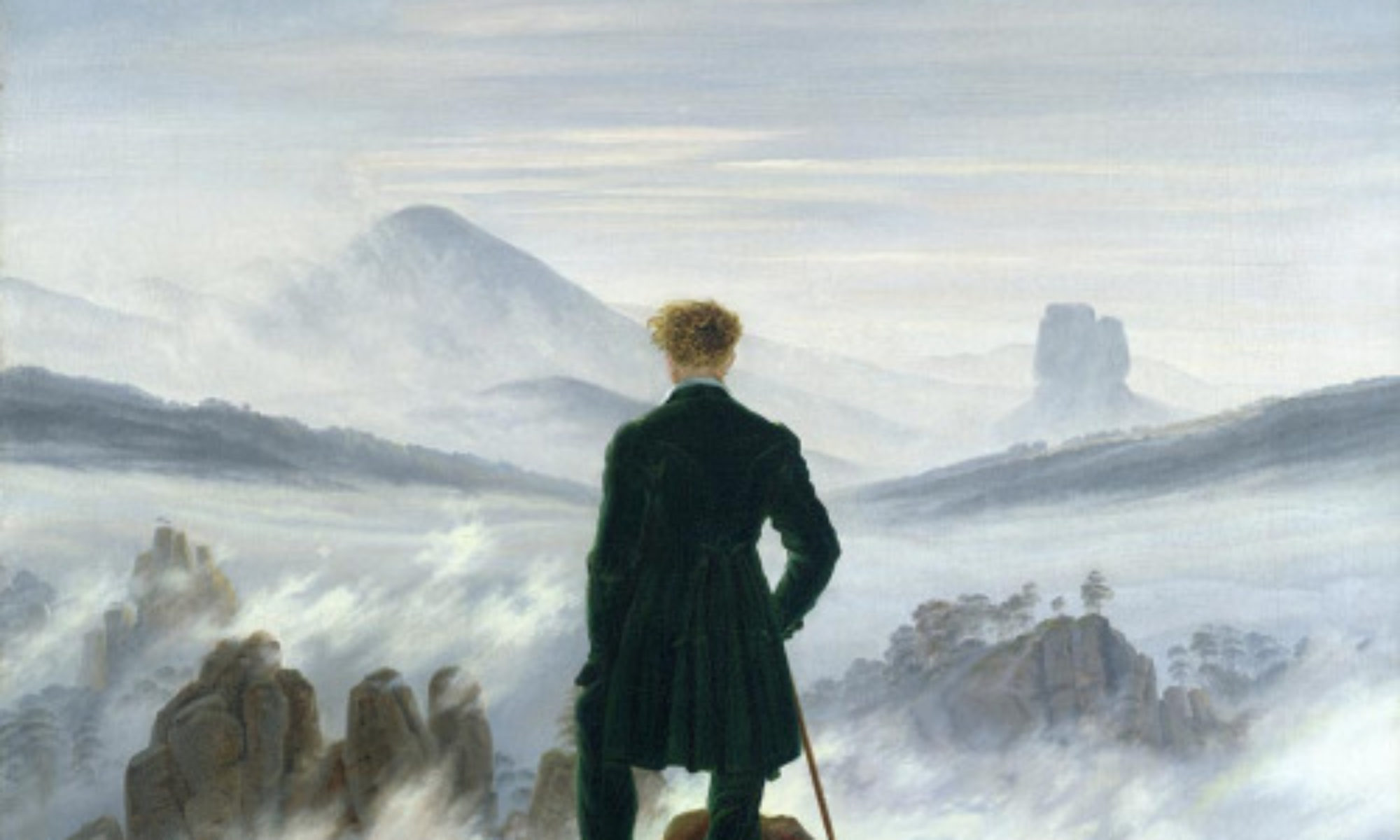
Entrancing the Soul: a Call to Teach Emotive Reading

Hi.  This is Kelli T. Jasper, secretary of the NGSC, checking in with an only slightly self-indulgent reflection on the vicissitudes of teaching literature.  My regards to all of you out there who, like me, are still figuring it out!
-K
It’s Monday, and the end of September. The euphoria and excitement of starting new projects begins to wear off, and tiredness starts to kick in.  I return my first round of graded essays to students, and along with my lengthy critiques sinks in the reality that we’re going to be together for a long, long time.  For me, at about this point every semester doubts appear. Perhaps I’ve been too ambitious?  Perhaps I’ve assigned too much work?  I begin to notice my own teacherly rollercoaster—exultation at gorgeous moments of discovery in class; reservation about the structure I’ve set of for the course; discouragement over the students I can’t seem to reach or who already hate my guts; frustration at the disconnect between short class periods and rich, lengthy texts; and gratitude for those students who flatter me with their enthusiasm or their compliments on my shoes.  I take comfort in the regularity of this crisis, and solace in the way it prompts me to reflect—constructively, I hope—on where we are now, and where I want us to go.
This is a semester of firsts for me: first time teaching a literature course, though I’ve taught composition and humanities in the past; first time teaching Milton and Shakespeare, as required by the course; first time reading Paradise Lost, a risk I took alongside my students; first time preparing to take my comprehensive exams; first time contributing to a blog.  All things considered, I suppose it’s only natural to feel a bit unsure of myself.  And the upshot is that, as sometimes happens with steep learning-curves, I feel some of the various planets of my academic life aligning—or if not aligning, then at least constellating into something as yet ineffable, but still awesome.  I’ll do my best to explain.
For my comprehensive exams, I’ve been reading Frankenstein—another first, though how I got to my third year as a PhD candidate without ever reading this book is a mystery.  I’m struck by how much of the story revolves around the transformative power of reading: after a failed career as a poet, R. Walton’s reading prompts him on a voyage to the North Pole; reading Agrippa, Paracelsus, and Magnus sets Frankenstein on his path toward animating life; the creature discovers Volney, Plutarch, and Milton, producing in him “an infinity of new images and feelings.”  As I try to define for myself what exactly it means to study Romantic Literature as well as what it means to teach literature at all, I wonder how to help my students access this kind of transfiguring reading experience.  Have they ever, like Walton,  “perused […] those poets whose effusions entranced my soul, and lifted it to heaven”?  More importantly, have I?
At times I feel that my own reading experiences have become so focused on analysis that I forget to feel transported.  I’m told that as an English teacher it’s my job to teach close reading, and while I agree, it’s so often a tough sell!  But today, I had an epiphany.  Perhaps in order to teach close reading, I first need to teach active, performative reading. In my class we have been performing short scenes from Richard III. I borrowed the lesson plan from a friend, and had the students break into small groups, choose a scene of about 100 lines, and then stage it for the class—handing in to me about 500 words’ worth of “director’s notes” explaining their interpretive choices.  We worked quickly, and having no drama training of my own, I gave them none; I simply asked that they read their parts in a way that conveyed a clear sense of the meaning to the audience.
The results have surprised and inspired me—not because the students were all amazing readers, but because so many of them were not!  They could pronounce most of the words correctly, and could pause when they came to periods (that is, they’re certainly literate), but very few of them seemed to read with intentional, interpretive emotion.  What a fascinating disconnect! When I read in my head, the characters take on voices in my imagination—they intrigue me with their personalities, and I delight in the visions of their rages or reveries that are somehow conjured in my mind from the words on the page.  Having felt relatively comfortable with Shakespeare for many years now, I forget that such conjuring does not happen automatically for most students.  Lacking practice in active, performative reading, it’s no wonder they prefer more obvious writers like Stephanie Meyers, Dan Brown, and Nicholas Sparks.  While students seem to have no problem connecting emotionally with plotlines (thank you, Sparknotes), it seems to me that the average non-English-major needs training in order to connect emotion to written language—particularly the slightly archaic language found in pre-20th-century texts.
In pondering these ideas, I find myself rethinking the philosophy of my course, and planning future courses exclusively around reading, writing, performance, adaptation, and interpretation.  According to Thomas Tanselle in A Rationale of Textual Criticism, written texts provide only the blueprints of a “work” that must be reconstituted by the reader.  “Close reading” is simply the term we’ve given to the process of analyzing our own acts of reconstitution—but if we lack the skill or practice to reconstitute effectively, then what is there to analyze?  I therefore commit myself to helping students become emotive readers as a means to becoming close readers. Richard III obviously lent itself well to performance, but now as we move on to reading Fanny Burney’s Evelina, I’m envisioning much more reading aloud, and much more discussion about how we as readers might perform these characters.  These discussions might propel us toward an exploration of writing as performance, whether it’s the author writing the work, or characters within the work writing/reading/performing.
I know that none of this is headline news.  Reader-response theory has been around for a long time, and I’ve learned in pedagogy classes how useful it is as a framework for teaching literature.  Yet still, somehow, these concepts have gained substance this week in a way I’ve never experienced before.  For the moment, my own “soul is lifted to heaven,” and I think I catch a glimpse of how to help my students rise above the clouds as well.  So off I go to make a lesson plan and design a new unit project.
Take that, September blues.