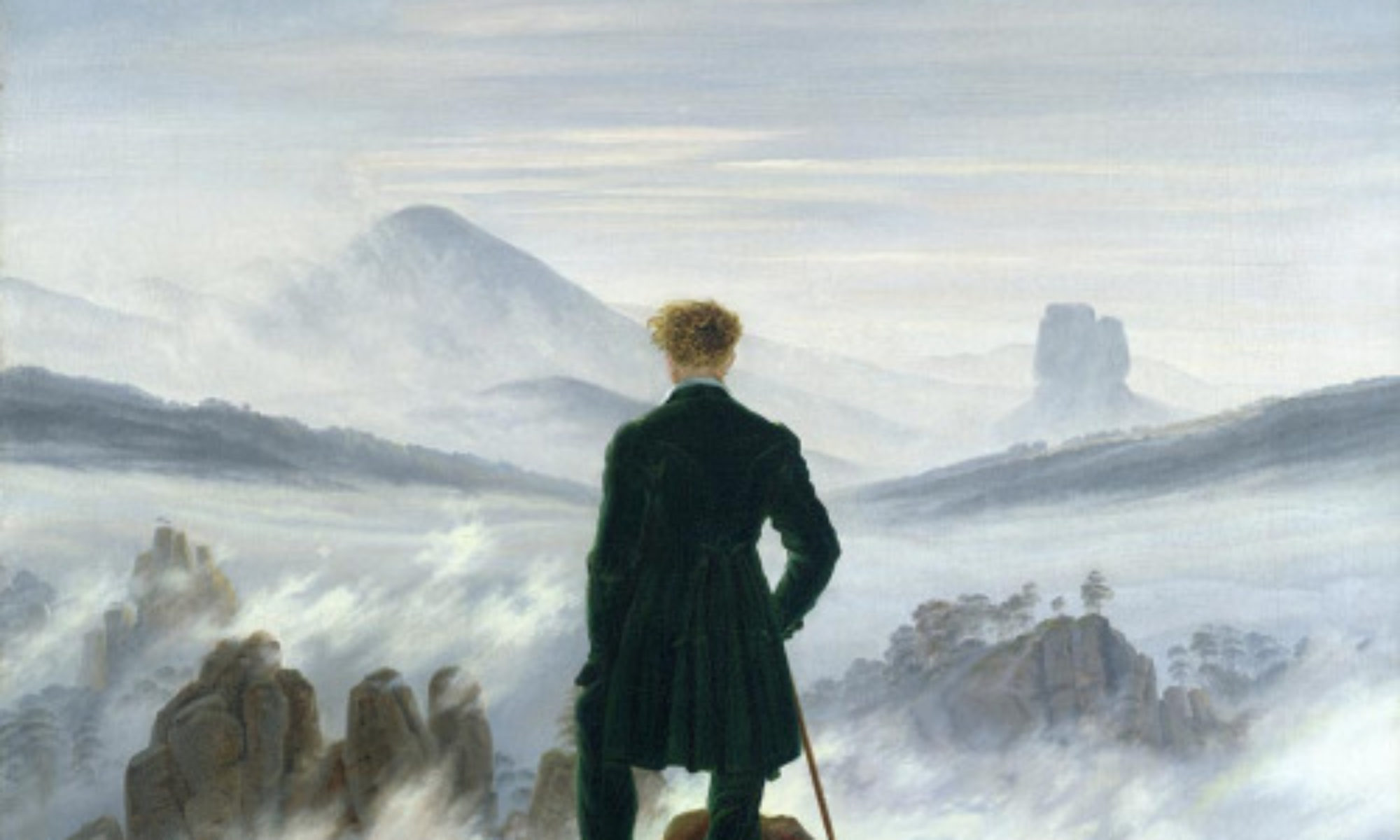

In Edmund Burke’s attack on the “metaphysic rights” (152) of men that inspired the French Revolution, he urged Britons to look to their “breasts” rather than their “inventions” for the source of liberty. Burke deployed the language of sensibility to naturalize a political system organized around the idea of heredity. The argument goes that inheritance binds English citizens to their constitution with the instinctive force of a bond of kinship. But Burke has to admit that the awe-inspiring aspects of the state –its “pedigree and illustrating ancestors” (121)—are just so many “pleasing illusions” that make “power gentle, and obedience liberal” (171). Psychologically, however, Britons need these institutions because they have so thoroughly internalized the principles that they represent that those principles have become second nature. What keeps property and political representation in the hands of the few is what ties Britons to a shared past and future. Burke’s logic would be like Foucault’s if Foucault had wanted to celebrate the panopticon. Continue reading “Ancient Pedigrees, Old Trees and Numinous Rocks”
The Story of Death
In its “List of Deaths for the Year 1750,” the Gentleman’s Magazine included one
Mrs Reed of Kentish Town, aged 81. She had kept a mahogany coffin and shroud by her 6 years, when thinking she should not soon have occasion for them she sold them, and dy’d suddenly the same evening. (188)
There’s an elaborate art of dying premised here. We can start with the articles of burial, at the ready, signaling Mrs. Reed’s vigilant preparation. Coffin and shroud are inmates, given the privilege of domestic intimacy, and death too will arrive like an intimate relation returning home. By disposing of the accoutrements of burial, Mrs. Reed presumed she would live. The unstated conclusion: her lapse in preparation invited the very thing she had ceased to fear. And it caught her, cruelly, without the benefit of last rites. (As Philippe Ariés explains, it is only recently that we have come to desire a quick death.) Death may be unknowable, but it seems to have an eye for formal irony and narrative resolution. Where we nod, it comes winking.
Continue reading “The Story of Death”
Charles Dickens vs. Leigh Hunt: Charity, Social Reform, and the Problem of Hell
My sister and I have two very important holiday traditions: 1) we always go to a haunted corn maze before Halloween, and 2) we always watch The Muppet Christmas Carol before Christmas. We don’t often admit to the second tradition (and when we do, we kind of pretend that we only enjoy the Muppets “ironically”), but it’s something we’ve done for as long as I can remember. It just doesn’t feel like Christmas until Katie and I are sitting on the couch, singing along to the song “Marley and Marley” while two enchained muppet ghosts rattle around the TV screen, bemoaning their eternal punishment.

Continue reading “Charles Dickens vs. Leigh Hunt: Charity, Social Reform, and the Problem of Hell”
Felicia Hemans and the Brow
Felicia Hemans is doubtless one of the most important writers of the early nineteenth century. Yet one of her signal achievements remains, to my knowledge, unremarked: Hemans is the most committed and innovative practitioner of the poetics of the brow. To wit, observe the doomed Antony at his last supper.
Continue reading “Felicia Hemans and the Brow”
Walter Scott and the Raiders of the Lost Honours
Historical events that reveal authors as encountering the world in ways other than through their pens add a dimension of intrigue to their personal stories. In Walter Scott’s case, a particular treasure hunt in Scotland blurred the lines between the thematic content of his fiction and his personal love for Scottish folklore.
This story starts around the time when Oliver Cromwell was Lord Protectorate of England. During his reign, Cromwell sold some of the English crown jewels in order to raise money for his new government. Scotland—which had yet to be unified with England (that happened in 1707)—feared that Cromwell and his armies would invade them and steal the Honours of Scotland, their royal regalia. The Honours consisted of three pieces: the Sword of State, a gold crown that predates the 1540s, and a silver scepter, thought to be a papal gift and topped with a large crystal stone. According to local legend, Cromwell wanted to melt the pieces down; for him, they stood as a symbol of the monarchical system he opposed. The story goes that the treasures were smuggled away before he could find them. They remained missing for a century. Over time, people began to believe the Honours were simply mythical objects.
Continue reading “Walter Scott and the Raiders of the Lost Honours”
Romantics as Rappers, Superheros, Real Estate Tycoons, and Immortal Allusions of Power
 There’s a scene in an episode of the animated series Samurai Jack where the Scotsman encounters an old man in the port who wishes him to tell him a tale. When the Scotsman asks what it is there’s a long pause before the old man cackles out, “The Rime of the Ancient Mariner!”
The Scotsman then bellows, “Heard it!” and shoves him out of the way. Continue reading “Romantics as Rappers, Superheros, Real Estate Tycoons, and Immortal Allusions of Power”
Thomas Gainsborough, Jane Austen and Fashionable Society

Thomas Gainsborough is best known as the painter of rustic, sentimentalized scenes like The Harvest Wagon and of ultra-stylized portraits like The Blue Boy, which has achieved iconic status. A year after Gainsborough’s death, Sir Joshua Reynolds chose to celebrate Gainsborough’s “portrait-like representation of nature” and noted that Gainsborough’s excellence was “selected by himself from the great school of nature” (qtd. In Bermingham, 58). Since then, the critical consensus hasn’t much changed; it’s Gainsborough’s innovations in landscape painting that make him the proto-Romantic artist who paved the way for JMW Turner. One could look at Gainsborough’s Cottage Door with Cowper’s “The Task” or Wordsworth’s “An Evening Walk” to get a sense of the perspectives, affects and fantasies that shaped the early Romantic pastoral. This being said, I’m interested in aligning Gainsborough with the writings of the Romantic period along a different axis: it may be productive to read his portraits alongside Austen’s domestic realism. The thinking here is part of a larger project on the two artists that I’m trying to make-work. For now, what compels me about the Gainsborough-Austen connection is not their shared preference for the countryside but their ambivalent representations of fashionable people and places, often associated with the urban. Continue reading “Thomas Gainsborough, Jane Austen and Fashionable Society”
Reading Romanticism Today: Artistry of the Sublime
By Talia Vestri
In my last post, I previewed my newest introductory-level literature course, “Reading Romanticism Today,” where my freshman writing students and I have just wrapped up a unit on “Nature and the Sublime.” As Seth Wilson recently reminded us, the concept of the “sublime” can be a wily one to pin down, even for (or maybe, especially for) scholars who study authors that were themselves fascinated by this aesthetic and philosophical notion.
For the purpose of this course, we’ve been exploring the “sublime” by mashing together some of Romanticism’s greatest hits—Wordsworth’s “Tintern Abbey,” Shelley’s “Mont Blanc”—with contemporary media pieces, such as a recent documentary on the Cosmos hosted by astrophysicist Neil DeGrasse Tyson (discussed in September’s post). The paper assignment that culminated this unit asked students to find their own example of the sublime in an artwork they would choose from Boston’s Museum of Fine Arts. The pieces could be from any historical moment, but each one had to connect to a Romantic poem. Here, I offer some of the students’ fascinating finds: Continue reading “Reading Romanticism Today: Artistry of the Sublime”
The Persistence of Goethe’s Herbstgefühle: Finding “Autumn feeling” in Instagram feeds
While on my way to class the other day I was stopped by the familiar smell of Autumn, collected within fallen leaves, uninterrupted air blowing through bare branches, and the seasonal flavored lattes of a nearby group of sorority sisters. While our Romantic poets experienced a slightly different set of scents, Fall has seemingly always been marked as an oddly favored season, butting against consideration of the abundance of decaying leaves, cold fronts, and harvests. Keats reminds us of the morbid aspects our current season in “To Autumn”,
Thy hair soft-lifted by the winnowing wind;
Or on a half-reap’d furrow sound asleep,
Drowsed with the fume of poppies, while thy hook
Spares the next swath and all its twined flowers:
And sometimes like a gleaner thou dost keep
Steady thy laden head across a brook;
Or by a cider-press, with patient look,
Thou watchest the last oozings, hours by hours. (ll. 15-21)
“Monumental” Ghosts: The Spectral Statesmen of 1813
It was a dark and stormy night, less than a month before Halloween, when the leading story in The Examiner volleyed the first chilling claim of the morbidly resurrected: “It may startle our readers to advance such an opinion, but really the most vivacious persons, now living, and making the most noise in the world, seem to be dead men” (561).
Indeed, in the frosty days of fall, dead statesmen were top news for England’s press. It seemed that nary a dead man could refrain from leaving his grave to wreak new havoc on the world. Louis Alexandre Berthier, for example, was reported dead by the Dresden newspapers, only to reemerge a week later as the Major-General of Napoleon’s French armies. Napoleon himself, The Examiner declared, “was assassinated many years back, since which time he has more than once met his death in a similar way, and is now, with a want of sympathy hardly to be expected in a dead man, preparing for new scenes of slaughter in Germany” (561). Continue reading ““Monumental” Ghosts: The Spectral Statesmen of 1813”