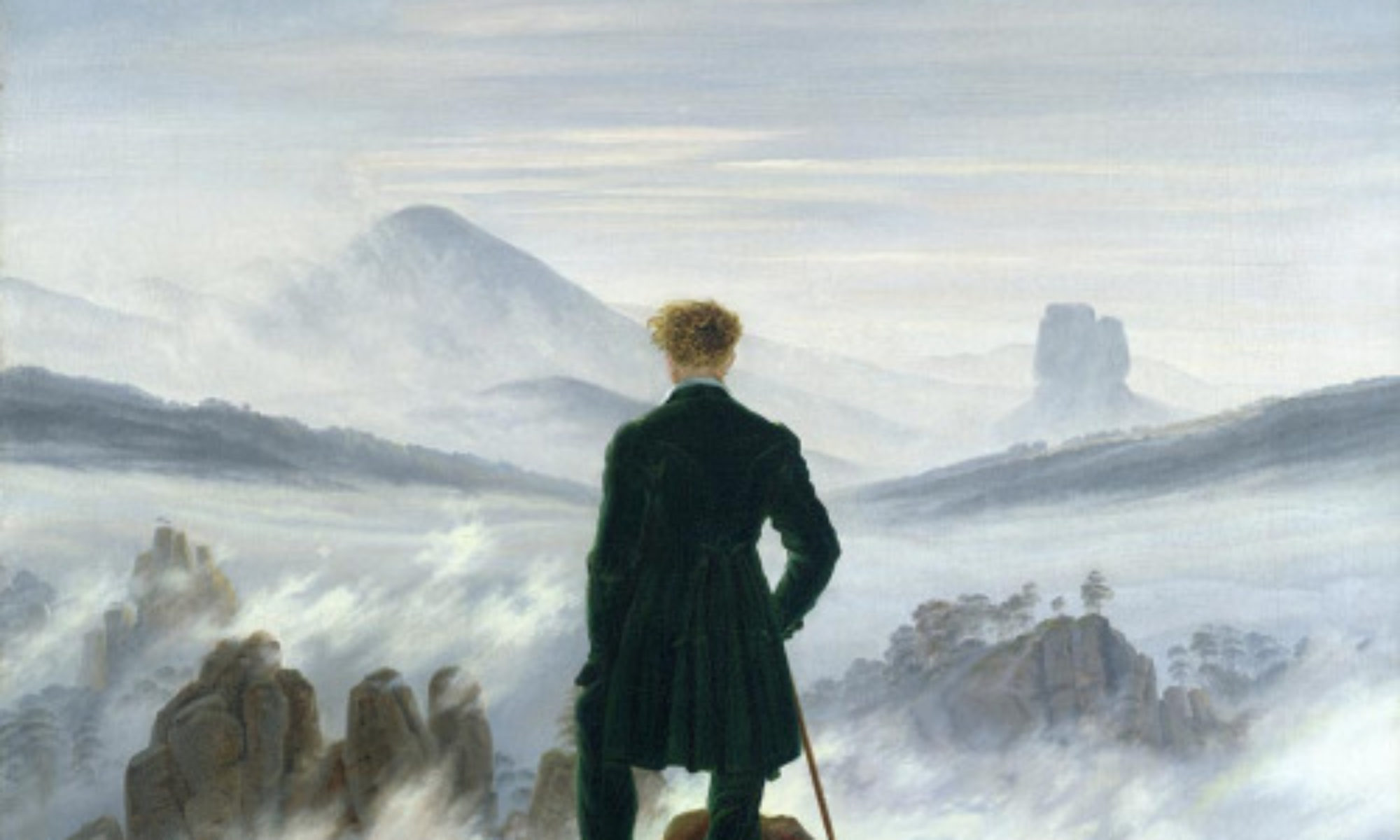
Happy new year Romantics and all readers alike!
The promises of the title carry the weight of a dissertation title rather than a blog post, so to focus such reflections I write in response to an exhibit I recently visited at the Institute of Contemporary Art, Boston. “Leap Before You Look: Black Mountain College 1933–1957” has recently and consistently been hailed as one of the best exhibitions in 20th century American Art of the 2015 museum season, however throughout the various reviews I’ve yet to see the word “Romantic” spring up yet despite my thoughts. Continue reading “Romanticism & the Abstract: Finding the Sublime 20th c. American-Avant Garde Art”
Teaching “Intro to Women’s Literature” as a Romanticist
Last semester I got my first taste of teaching an “Introduction to Women’s Literature” course at CU Boulder. As winter break now comes to a close, I’ve been pondering the revisions I’ve made to my syllabus this month – revisions that have prompted me to analyze familiar questions: What is women’s literature? How does one teach a survey of women’s literature as a Romanticist? What are the desired outcomes of such a course? Continue reading “Teaching “Intro to Women’s Literature” as a Romanticist”
Poem: Outside a chapel
Another older poem (although revised for this blog) – in the Romantic tradition of reflecting on older buildings! The chapel I had in mind is at Trinity College, University of Toronto: http://www.trinity.utoronto.ca/about/chapel/chapel_history.html
Outside a Chapel, the Windows Are Dull
it is the bricks instead, the wall
a jagged ladder –
sandstone scraping itself
up to the prayerful slope
of slate rooftiles that cling
to copper,
broad beam
corroded by contact
with the sky.
Power Over the Land
One major aspect of Romanticism that draws me to it over and over is the deep and ever intense experience of we feel at the vast and powerful places in our landscapes that leave us feeling in awe of nature and – perhaps – at the whim of it. This quality is called the sublime, and is a feeling of some perpetual study in aesthetics and, whether it be spiritual or artistic, I find myself returning to works over and over that tangle with the immensity of nature.

Crystal River Nuclear Plant, Morning, Crystal River, Florida (January 1982)
Continue reading “Power Over the Land”
Guest Post: Reading, or Ardor
By Andrew Welch
Rereading Keats’s Poems of 1817, I’m struck by how many pieces belong to the noble & distinguished tradition of poetry that frets about its own inadequacy. Keats begins “To My Brother George” in accordance:
Full many a dreary hour have I past,
My brain bewilder’d, and my mind o’ercast
With heaviness
What’s wrong, dear Keats?
I’ve thought
[…]
That I should never hear Apollo’s song
[…]
That still the murmur of the honey bee
Would never teach a rural song to me:
That the bright glance from beauty’s eyelids slanting
Would never make a lay of mine enchanting,
Or warm my breast with ardour to unfold
Some tale of love and arms in time of old.
Continue reading “Guest Post: Reading, or Ardor”
Blake in Song: Interview with Composer Ben Scheer
In this post, I have the very great pleasure of interviewing the contemporary composer Ben Scheer about his new artistic production. Ben, who studies composition and violin at the Eastman School of Music, has just written and released a new work for voice and piano based on William Blake’s poem “A Poison Tree,” from the Songs of Experience (1794). A recording of the piece, which features the soprano Rebecca Herlich and the pianist Forrest Moody, is available on Soundcloud here. Ben answers my questions about his contemporary setting of Blake’s poem after the jump.
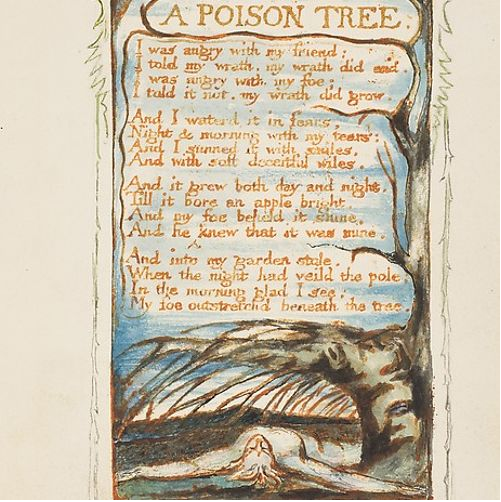 Continue reading “Blake in Song: Interview with Composer Ben Scheer”
NGSC E-Roundtable: The Pedagogy of Romanticism
INTRO: Renee Harris, Emily Zarka, and Daniel Nutters will focus their roundtable discussion on pedagogy around two essays by Mark Edmundson included in his recent book Why Teach? In Defense of a Real Education. The essays are entitled “The English Major” and “Teaching the Truths” and were previously published in The Chronicle of Higher Education (June 29th, 2013) and Raritan (23.1) respectively.

While Why Teach? contains a polemic against the bureaucratization of education and the corporate logic of professionalism that governs academia, it also offers a vision of a “real education” that rests upon many assumptions inherent to what we now call “romantic ideology.” What makes this book, and especially the two essays we will consider, such an appropriate text to consider for a roundtable on pedagogy on the NASSR Graduate Student Caucus blog is the manner in which it demonstrates the continued relevance of such highly charged categories as “genius,” “imagination,” “truth,” and all the motifs of a “natural secular” theology of art. At the core of Edmundson’s thinking is not just a familiar and clichéd humanist vision, but one that has survived the culture wars (see Edmundson’s edited volume Wild Orchids and Trotsky), the apparent anti-humanist theory (or as he puts it anti-literature philosophy) of the 1970s and 1980s (see his Literature Against Philosophy). Absorbing these consequential intellectual events has allowed Edmundson to assess our current academic scene and argue for a vision of education that builds upon his own experience of the changes witnessed and occurring in higher education. Continue reading “NGSC E-Roundtable: The Pedagogy of Romanticism”
Geology, The Sleeping Giant
Geology is ever-present and abundant in the most expansive and also the most microscopic ways. I’ve been asked to serve on a panel next month at Southern Graphics Council International with three other printmakers who also incorporate geology as major themes in their work, and I’ve used this post as a research opportunity to develop my opening remarks. There are many ways that we use the history of the earth, rocks, and the crisis of the Anthropocene to make artistic statements. Some artists approach the work through the realm of the story teller. Others realize that our societal and economic structures depend on geological resources. Still others are interested in the multitude of phenomena that shape our world to create the landscapes we see before us. In all these ways we become thinkers that overlap artistic training with scientific thought and experimentation.
Continue reading “Geology, The Sleeping Giant”
Concert Notes: Byron's Hebrew Melodies at 200
Last night, I performed five of Lord Byron and Isaac Nathan’s collaborative work of music and poetry, the Hebrew Melodies (1815), with the lovely and talented soprano Catherine Hancock at a private home in New York City. This was the New York premiere of Byron’s songs: there’s no record of the Hebrew Melodies being performed in American nineteenth-century periodicals, and although the musical settings were popular in the early decades of the nineteenth-century, the score was out of print from the 1850s until 1988, when Paul Douglass and Frederick Burwick produced a scholarly edition to coincide with the bicentennial of Byron’s birth. So, though we were working with music that was exactly 200 years old, the material was very new for our listeners. Theodor Adorno once said that the second-generation Romantics were “the locum tenentes of nonexistant great English composers.” But what was the music that was being written and played during English Romanticism? Our concert sought an answer to this question. Continue reading “Concert Notes: Byron's Hebrew Melodies at 200”
The Dream of Art in Batman
“Thou art a dreaming thing, / A fever of thyself” – Keats
https://www.youtube.com/watch?v=sQn-vulThcY
Jack Nicholson’s the Joker is the Romantic Visionary artist in extreme. His version of the apocalypse emerges from his diabolical imagination and his scheme to poison Gotham’s commercialized vanity. This is, to recall a quote I used in a previous post, the Romantic Vision on steroids: Continue reading “The Dream of Art in Batman”