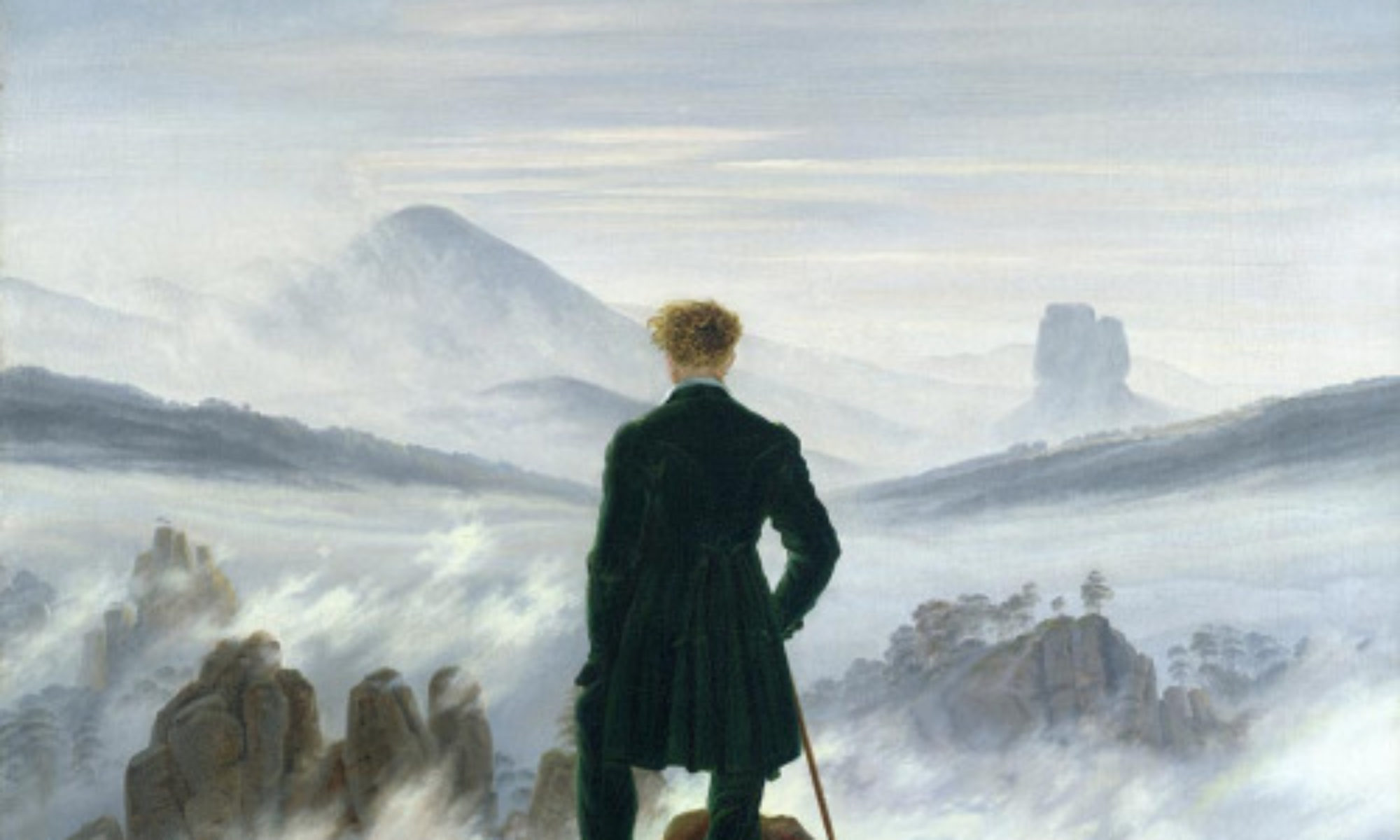
 During the hours that I assigned for my dissertation yesterday, I had a bit of a genre-identity crisis. I was editing and revising parts of a chapter in the morning when I discovered that I have been following no more than an idea *in my imagination* of what a dissertation should look like. Of course my prospectus outlined my chapters and my proposed argument, and has already been approved by my committee, but that piece of writing did not require me to think about the dissertation from within its draft or its guts.
I sought a model to consult — a concrete finished dissertation product to admire, toggle/flip through, and to orient my work in both form and content. Though I have read a small library of books and articles on the path to where I am now in my PhD, I have yet to read an entire dissertation. In fact, I haven’t even read a full dissertation chapter. In other words, yesterday I felt as though I was trying to compose a genre I knew nothing about and was not prepared to write. (Not true, I’ve since learned!)
The genre-identity crisis manifested in a swarm of questions. How much space should I allow to record the current critical conversation in which my argument intervenes? What belongs in a footnote and what belongs in my body paragraphs? Should my chapters be about 50 pages long and framed as long arguments/explorations of a single topic, or divisible into two articles of about 25 pages each, in order to make it easier to (try to) publish diss chapters as articles (the latter was my plan)? But is it prudent to write chapters as if they are articles, or multiple articles sewn together? How long should the arc of each chapter’s argument and investigation be? Why do I feel like I’m spelunking? Can I get away with writing shorter chapters that are the length of articles that I might submit to a peer-reviewed journal? In other words, what should the genre of the dissertation look like?
To prevent prolonged worrying and inefficiency during this busy part of the semester, I wrote to my dissertation committee co-chairs right away and posted some related questions on Twitter. I have received a collection of thoughtful and useful responses that I think are important to share.
I’m not writing a dissertation; I’m writing a book. This isn’t as pretentious as it sounds, I promise–I have no illusions about being able to produce a publication-quality book quite yet. However, I was advised to see the dissertation as the incunabulum, so to speak, of my first book project. “The dissertation,” I was told, “is a dead-end genre” and my future as scholar depends on my ability to write a good book. Furthermore, many scholars revise their dissertations to complete their first book project as a tenure-track professor.
Importantly, I was also cautioned against trying too hard to actually write a book –that is, a book both in form and content quality — while finishing my doctorate (see my disclaimer in the above paragraph). Efficiency and timely completion of my degree and entrance into the job market are important to me. While I strive to write a beautiful, organized dissertation that offers new ideas supported by a wealth of research in my field, I am also realistic about the time it would take (not to mention the learning curve) to do so as a proper book project and I’m cognizant of that fact that my funding will not last forever.
Numbers: The statistics I was given are the criteria for a book published by a university press: 75,000 to 90,000 words in length, and 4-6 chapters in length in addition to an introduction. Each chapter in typescript should run between 35-50 pages in length — I will lose about a third of my manuscript’s length when the book is typeset.
Chapters: Each chapter should focus on one major issue. Thus, it is unlikely that I will be able to derive two articles from a single chapter. Building this book project draft by thinking about each chapter as one slightly long article is a good idea, I was told. The difference between a chapter and an article is that a chapter allows for more exploration of a topic (so this is why I’ve been feeling a bit like an explorer, which I love).
Models: Find published books for models, not articles, dissertation chapters, or complete dissertations. These don’t necessarily need to be the books whose arguments I admire most–though they may be. Rather, they should be books that I would like my own book project to resemble when it is finished. The big questions are how do I want my project to resemble these works and how will my project differ?
The Department/Committee Factor: Each department has its own unique standards and each dissertation committee has its own set of expectations and criteria for what a good dissertation will accomplish within that department. These factors are more palpable during revision processes but it will pay off to consider them in advance as much as is possible and pragmatic. The expectations and precedents set by of the dept. and committee are also important when considering how to include or align work with digital projects or components of the dissertation. I do a lot of digital work on electronic texts and archives and will be putting a lot of careful thought into how my digital projects dialogue with my dissertation and how best to treat those projects to convey my argument and work as well as meet requirements.
Audience: One respondent on Twitter who is finishing her dissertation wrote that “a dissertation is for 3 people, a book has an audience.” At first, I found this depressing to say the least, but after some thought I have decided that I disagree and am therefore no longer depressed by this idea. Though the dissertation committee is the first audience that this project will see, it is not the only audience. As chapters will become articles and the work as a whole is an early draft of a book project, the dissertation’s components all “cook” together and will emerge to a larger readership than those on the dissertation team within the department. Furthermore, dissertation chapters are also the groundwork, potentially, for insightful conference papers as well as job talks.
Having solicited and received such useful advice, I have some reframing and planning to do with my current draft and I am on the hunt for five or so books that I hope to model my project on. What books would you pick as your models? How have you been conceiving of the form and content of your dissertation? As our department chair so cheerfully says, “Onward!”
Maze Image: By xOneca (Own work) [Public domain], via Wikimedia Commons http://commons.wikimedia.org/wiki/File:Hand_made_dense_labyrinth.png
Comprehensive Exam Preparation
This is my exam semester. When I began my PhD in West Virginia University’s program “exams” existed in an intangible future; now, they are here. No matter the format, no matter the number of texts on your list, the comprehensive exams are one of the legendary hurdles of obtaining a literature PhD. Critical to your success, exams help prepare students to tame the beast that is the dissertation. At various conferences over the past 6 months I’ve discussed exam format with peers from Massachusetts, California, Illinois, Colorado and Oregon—all over the country in a range of programs and concentrations; each institution formats their exams differently. The exam narrative, however, is largely the same: a feeling of dread coupled with excitement about the prospect of reading the materials related to their project for those who have yet to take exams and for those who have completed exams: relief for having them behind them but a knowledge that the dissertation holds its own challenges and intellectual rewards. It is a rite of passage that seemingly few would ever choose to relive. As I’ve prepared for my exams the process has been incredibly educational—not just because I’ve immersed myself in critical discussions regarding the constructions of gender and sexuality in Romantic and Victorian England or varying theorizations of ‘error’ but also because I’ve (re)discovered a great deal about my work process and ability (and sometimes lack thereof) to deal with the anxieties and stresses of examination.
Here are a few things I wish I’d known beforehand or did know, but lost sight of in the process:
1. Keep track of how you spend your time. One thing I found frustrating about the exams was the absence of tangible progress. Yes, I could cross a book off of the list. Yes, each book I read helped me to further understand what I wanted from my scholarship. Yes, I now have a clearer idea of what kind of book I’d like to publish in the future. All of these things are well and nice but they aren’t very helpful today. Reading and taking notes for your exams can feel like running in place sometimes. I like the tangible outcomes of my work, and I am sure I am not alone. A seminar paper, an article, a presentation, a talk, a curriculum: these are all concrete productions of the work many of us do. The comprehensive exams are disconnected from their outcome: passing the exams, writing the dissertation. To help you see how much work you are doing and how you are spending your time, keep a work log. A spreadsheet in Google Docs is ideal because you can access it anywhere through your Google account. It has been helpful for me to see how many hours I’ve devoted to exam preparation (and to other things like course preparation, grading, publication, conferences, etc.).
2. Letting yourself down is not the same as failing. When I wrote my reading schedule last February my plan was to finish reading by late May. I poorly estimated how much time it would take me to read the texts for my exams; I found the reading process to be different than what I’d experienced in the past. I wasn’t prepared for the additional hours I’d spend taking notes, trying to synthesize the texts and write cogent summaries that would serve to refresh my memory months after completing the book. I couldn’t have known about the reading rut I would hit in April. When I crafted the schedule in February I was enthusiastic about reading 12 books on the history of England from 1789-1850…and the semester had just started. My enthusiasm waned around book 7 and mid-terms distracted me with a seemingly never-ending stack of grading. I didn’t meet my schedule. I had to learn that this was okay. I had plenty of time to finish reading; I had plenty of time to study before my exams. I had not failed (even if I felt like I had). I’ve discovered through this process that while knowledge of the material is certainly important, the knowledge gained regarding my own habits as a worker, reader, writer, teacher, and scholar has equally useful and important value.
3. Help yourself avoid distraction. When I first started reading I found myself wandering down various research paths inspired by my materials. Rather than finishing a chapter I would investigate a footnote or, curious about a possible gap in research, look for scholarship on the topic. In other words, I would find seemingly productive (even tangentially related) ways to pass the time without actually working on the task at hand (finishing the book, preparing for the exams). About half way through Susan Wolfson’s Borderlines, the third book I read for my exams, I decided to keep a “Distraction Relocation” journal. It is a just a spiral bound notebook but in it are all of the questions and future projects that I’ve identified during my exam reading. Rather than finding all of the scholarship on errata sheets, a distraction I full-heartedly considered while reading Seth Lerer’s Error and the Academic Self, I jotted down a note about how it might be interesting to investigate how errata sheets were used in Romantic print practices (and whether their use differed between literary periods). The thoughts I’ve labeled here as ‘distractions’ are important and I’m certain that at least two things that made it into my “Distraction Relocation” notebook will find a place in my dissertation project. My notebook helped me to keep track of these thoughts without allowing them to derail my progress.
4. Stay in touch with your community. During exam preparation it can be easy to excuse hermit-like behavior. Fight against the impulse to hole up in your office or house; instead, stay in touch with your community. Do not feel guilty for spending time at lunch with friends. Keep in contact with your director(s) and mentor(s). Talk to people about the process and find out what works/worked for others.
5. Find healthy ways to release the stress and pressure of exams. Exams can cut off your social life if you let them; they can also be a catalyst to putting you at the bottom of your to-do list. It can be easy to excuse poor health habits because you are so busy: skipping out on your exercise routine, foregoing fresh food choices for easier, quicker options. I learned to love running as I prepared for my exams. It gave me a place to clear my mind, to release any of my anger, frustration and anxiety, and reminded me that exams are not everything (which can be a difficult thing to remember in the middle of the process).
6. Schedule the exams. Concrete dates on your calendar and on the calendars of your committee are an effective way to keep yourself in check. The earlier you do this the better, for at least two reasons: 1) Once the dates are set you can’t go back, motivating you to stay on schedule, and 2) Your committee members have busy schedules; the earlier you schedule your exams the more availability they will have.
7. Your committee is on your side. You have selected a group of people to support you and your project, to provide feedback and offer critical suggestions to improve your scholarship. They are all rooting for you; they want to see you succeed.
I’m sure there are other things that should be added to this list. What do you wish you knew about the comprehensive exam experience before you took/take them? Do you have any bits of wisdom to share?
Spring Planning (before November!): Selecting Works for Teaching Intro. to Women's Lit.

I just received my spring teaching assignment in my mailbox, and am delighted to find that I’m teaching “Intro. to Women’s Lit.” for the first time. I am a little kid in a candy store (or a rock climber in a gear shop) when it’s time to select possible works to teach for the next semester’s course. I’ve also noticed a trend in romanticists’ online communities, in that we enjoy suggesting works to teach on a certain theme. For example, on Romantic Circles’ Teaching Romanticism blog, Katherine Harris requested suggestions for her Gustatory Romanticism graduate course, and Roger Whitson did the same for his Visualizing Nineteenth Century Poetry course. In addition, the NASSR-L recently saw a flurry of responses to Diane Hoeveler’s call for suggestions for her Romanticism and Religion graduate seminar, and she very generously collected all of the responses in this Word doc. I’m going to use our forum for a similar kind of request–please help me decide what to teach. And following Katherine Harris’ example, I plan to post my final reading list and course description to our blog as a follow-up discussion.
I’m especially interested in your suggestions for American authors and works to teach from earlier periods, within the romantic-era, and post-romantic periods. To date, I have been transatlantically challenged, so to speak, as far as including American texts in my teaching and scholarship. (Well, I’ve been specifically assigned to teach Shakespeare and surveys of British literature for the past 3 years.) Though I have chosen to specialize mostly in British romantic works for my dissertation, I see this course as a great opportunity to begin to fill in a gap or two in my reading.
Course theme: “Adventure.” I envision the theme of “adventure,” broadly, as one that will include the genres of travel literature, the gothic, experiments with form like those found in Edgeworth’s Castle Rackrent, as well as experiments with media, like Shelley Jackson’s electronic literary work Patchwork Girl. Namely, I’m interested in drawing attention to women writers over time who have ventured beyond society’s prescribed boundaries and who have taken risks that they convey one way or another in their authorship.
The CU catalog description requires that this course “[introduce] literature by women in England and America. Covers both poetry and fiction and varying historical periods. Acquaints students with the contribution of women writers to the English literary tradition and investigates the nature of this contribution.”
Initial brainstorming: I’m thinking of including the following authors/works (listed early to late): Sappho’s fragments (ed. Ann Carson), Julian of Norwich (med.), Mary Rowlandson’s captivity narrative (17th c.), Eliza Haywood (18th c.), Mary Shelley (rom.), Joanna Baillie (rom.), Ann Radcliffe (rom), Mary Wollstonecraft (rom), Isabella Bird (Vict.), Dickinson (Vict.), Woolf (mod.), Angela Carter (contemp.), Annie Dillard (contemp.), Jeannette Winterson (contemp.)
All reading and assignment suggestions are welcome, and I’m especially interested in your ideas for:
- 18th and 19th c. American authors and works–drama, fiction, poetry, essays
- I work on the gothic quite a bit — any American women gothic writers or works to recommend?
- 17th c works
- If you’ve taught this course, have you used a particular anthology that you would recommend?
- Assignment recommendations: I have been experimenting with my British Literature survey course with putting together student-made collections or exhibits that relate to works we’re studying in class. Any ideas how we could put together an adventure-themed exhibit for this course? (I’m thinking digital exhibit.)
Thanks in advance!
This Little Graddie Went to Market…
Preparing for and Navigating the Job Market: Roundtable from NASSR Conference, August 2011
If you were at the NASSR conference last month, and happened to attend the job-market roundtable organized by the NGSC, then this post will be old news…but we figured there are at least some of you who want to know all the good advice! For all their wisdom, pragmatic counsel, and encouragement, special thanks again goes to all our panelists: Alan Bewell, Julie Carlson, Frances Ferguson, William Galperin, Jonathan Mulrooney, and Juan Sanchez. To protect the innocent, I’ve detached their names from the information below; please note that these are MY interpretations of what was said, edited and rearranged for your convenience. May they prove useful to all those currently preparing to go on the job market, and to all of us hoping to get there soon!
-Kelli
Choosing between a postdoc and the job market
The Postdoc offers certain advantages over the job market. It is generally much easier to get than a tenure-track position. However, there are many kinds of postdocs, and you might find yourself with a kind of postdoc that you don’t really want; some will help you more than others to prepare for jobs. The best kinds of postdocs are the ones that allow you to do research and get out some publications (these are generally 2-3 year postdocs).
Postdocs are also more difficult to apply for than jobs. The job letter can describe your research and experience very broadly and can be used on several applications; postdocs tend to have very specified requirements that often result in more time and effort invested; you have to write several very different applications, rather than one that can be tailored to many. Second, postdocs often want you to describe a NEW project: they don’t want you to go and finish your book; they want you to work on producing something new. This means you will be pitching two book ideas. Of course, when you go into the job market, you CAN say that you used the postdoc to develop a second book project, and you will have something to show for it…and this puts you in a really great position.
With the postdoc market, you may have more success because host institutions are interested in you developing new ideas and projects however you want to. In a job situation, you have to fit in to the department, and you will need to fit your projects to the departmental needs.
Format of the Job Letter and the Dissertation Abstract
These are THE TWO MOST IMPORTANT DOCUMENTS YOU WILL EVER PRODUCE IN YOUR CAREER! They will absorb hours and hours of your time, but you should recognize that time as a worthwhile investment. Nothing will affect your future prospects so much as these two documents. There is a standard tripartite form in the job letter, and you should adhere to it. You don’t want anything quirky or grandstanding. The entire letter should NEVER, under any circumstances, be longer than two pages.
Part 1: Announce your application to the job, and make clear your suitability for the position advertised. Show that you can operate from the center, rather than the periphery. Show that you are aware of their needs, and indicate your suitability to meet those needs.
Part 2: Describe your dissertation. This will naturally be the most difficult paragraph, and you should be prepared to make 8-10 revisions!
Part 3: Indicate your teaching experience. Every school, whether they are a research university or a teaching university, will employ you as a teacher, and they want to know that you have experience and enthusiasm for it. (see “Teaching,” below.)
To conclude, your last few sentences should declare your availability for an interview.
Getting Help and Guidance with the Letter, Abstract, and Interviews
The placement committee at your university can help a lot by giving practice interviews, mentoring, pairing a job candidate with a faculty member who is NOT on their committee (who can thus see with fresh eyes, like the people on hiring committees). If you can arrange such a pairing, you should meet with this person on multiple occasions. From a student’s perspective, this can be a very irritating experience, and may seem pointless, and it might feel infantilizing. It’s alienating labor for everyone involved, but everyone needs to be cheerful and grateful for it… and it can make a HUGE difference!
When to go on the job market
When to go on the market depends on where you are with your dissertation. For the most part, you should NOT go on the market unless you are done with your dissertation, or very nearly done. If you are an exception to this, let your advisor tell you that you are! You need to be at a point when you can talk about your work with confidence, both in the broadest terms, and in the 11-second elevator conversation. It’s up to you to figure out whether you want to do a “trial year;” but recognize that this will take lots of time that can feel slightly arbitrary, and it might be a better use of your time to move forward with your dissertation. It is indeed a useful exercise, but it is more useful at certain times than at others. Be discriminate.
How to interview and give a job talk (at MLA, or a campus visit)
Interviews are formal moments, and you should dress up – but you should also be comfortable! You should not be distracted by your clothing, and neither should others. Poise is also important; sustain it as best you can through all events, but especially make sure you have at least 15-30 minutes alone before your talk to gather yourself and your thoughts.
Clarity and conciseness are your best friends. You must learn to articulate quickly and clearly what you are “about.” Learn who you will be speaking to, what the format is, and what will be expected of you (your advisor can help you find these things out.) Keep in mind that you will be talking to non-specialists in your field. You don’t need to dilute yourself and open yourself up to super-broad questions you can’t handle, but you want to give the broadest possible range of your work and its relevance. Show that you know the specifics, but that you can participate in the larger conversation. Your originality is most apparent in the CLARITY with which you articulate your ideas, NOT that you are the first person ever to think about them. Avoid vague sloppy verbs like “negotiate”, “through the lens of,” or “this is a moment where…”
The quality of your research will probably be much like that of other candidates. In the interview, the committee will probably not ask you much about your dissertation itself; they will want to know how it fits in with the larger academic conversation, the limits of your project, etc. Also, the committee won’t know anything you haven’t told them in your application letter, and in the interview they will want to know about your wider academic interests.
Have Fun!! We all got into this profession because we enjoy it! That’s not to say that you don’t act rigorously professional, but in an interview you should communicate not only what you know, but HOW you know! The people who are interviewing you want you to succeed; you don’t have to convince them that you have the intellectual goods; they already think you do because they invited you! You are a colleague. Keep in mind that it is a conversation! The more it becomes a conversation, the less it becomes an interrogation…you win! If the committee is having fun, it will make a difference. Be human. Respond to questions as they occur, but keep it natural. This isn’t Trivial Pursuit. It’s okay to acknowledge when you don’t know something; keep in mind that such times are opportunities that demonstrate how you think about new ideas. Don’t be afraid to risk some intellectual playfulness. You can go out on a limb and have conversations, and be willing to stretch yourself.
It’s not always all about you. There is a good chance that at least one person on the committee will be crazy, and not necessarily liked by their colleagues… there are dynamics going on, like when you go to Thanksgiving with your in-laws. J Not everything that goes on between the people there has to do with you.
Both research and teaching are important. Don’t assume too much about what a school wants, based on its reputation as a research institution or liberal arts college. Always be prepared to talk about both your teaching and your research, and how they integrate. This will serve you well no matter what kind of institution you apply to.
Teaching – It is SO important!
Different universities may have different degrees of emphasis on research, but they ALL will emphasize teaching! In order to get an interview, you do have to have a strong letter and strong research; that is, teaching will not get you the interview. However, once you GET the interview, your teaching experience will often get you the job. Make teaching matter to you as a graduate student, and make sure you get experience with it. Don’t treat it simply as a part-time side job that you put second to your research. Make sure someone writes a letter of reference that can say something about your teaching. Invite a faculty advisor to observe you, so they can write with real knowledge.
Make teaching important to you in the interview. YOU can bring it up! Ask questions about teaching. Take time to find out about the kinds of courses offered at the university. Put together some sample syllabi, and be prepared (and excited) to talk about them. When you are talking to the director of undergraduate studies, teaching will be particularly important.
At this point in your career, a teaching portfolio is not really necessary, but you may want to leave some samples of courses you have taught or would like to teach with the committee. However, don’t make the mistake of giving the committee too many papers before or during the interview…. You want them looking at YOU, not at the six syllabi that you have constructed. Try to focus on perhaps one course that you might teach, and talk about it.
How to demonstrate your teaching skills at a campus visit
The job talk will likely be your most important teaching moment. Approach it like a teacher. Imagine the talk like a seminar, in which a lot of ideas are discussed, and everyone feels they’ve been engaged in an important exploration. Then, think of the Q&A as a class about your paper, with you as the teacher! Keep in mind that many search committees are new to the process too, and they sometimes fumble. So, YOU are the teacher. Find ways to let them know the important things about you. Take control in a diplomatic way to make it work; find creative ways to engage with difficult people. You’re at the beginning of your career, and no committee is under the impression that you aren’t! They are looking for potential, for how you organize your thoughts and think on your feet, and how much you respect the ideas of others, and yourself.
It sometimes happens that interviewers set up a sort of artificial class in which to observe you. IF this happens, discuss interesting and relevant things, listen to and interact with students, and finish on time.
How to act once you might have an offer.
Don’t get ahead of yourself. A job offer is just a gleam in the eye of a department and a candidate until an official letter arrives from the university. Until then, sit tight and be patient; don’t start asking questions about employment benefits and all those details. You can do that later.
Once you have your official offer (and if you have only one), you should feel free to ask for some time to deliberate. This is the time to inquire about various policies, money issues, and to make it known that taking the job might complicate your family situation. Through all the discussions, stay focused on the most important goal: a good situation over the long future. Don’t compromise your future relationship with your colleagues by being a tough negotiator.
If you have more than one offer, you should inform the chairs of both departments, so they can talk to each other.
If you don’t get a job offer, makes notes about the process while your memory is fresh. Review your experiences and your materials. Take a little time to remind yourself that jobs are hard to come by, and that it may not be your fault…then read something fabulous to cheer yourself up. 🙂
Q&A:
How is the job situation in Romanticism particularly?
Sometimes, Romanticism can get swallowed up by scholars of 18th or 19th centuries… romanticism does seem still to be regarded as its own “thing,” and as a component of an expertise, it still has a lot of traction. The field seems to have been quite agile in adapting itself to academic categories, without losing its identity.
Should Romanticists spin themselves for 18th-century or Victorian jobs? And if so, how?
Most importantly, you should make your own intellectual center very clear and honest. You can speculate out loud in your letter about ways that you might pedagogically fulfill the university’s needs, but don’t fake it. Be yourself, and be honest. If the university wants 100 years, that’s probably a teaching mandate, not a research mandate. They just want to know if you can teach stuff from a full century. As long as your research is interesting and worthwhile, and you can teach about a century of stuff, you’ll probably be fine.
Do interviews really sometimes happen in hotel bedrooms at MLA?
There are some regulations trying to be put in place, but you may have to be creatively professional. Don’t underestimate search committees’ bad behavior; awkward things may happen! Make sure that you have enough time between interviews, even if they are in the same hotel, or in the same city. If you are late, the committee won’t adjust their whole schedule for you.
Some departments are shifting to phone interviews, skype interviews, or interviews that happen even before MLA?
For better or worse, MLA is losing its centrality and control over the hiring process, and this does make expectations much less clear. The “rules” set up by the MLA are voluntary, and universities can choose whether to participate. Videoconferencing offers many advantages: not everyone can go to the MLA, you can reach internationally much more easily, and whole committees can be present. We are moving into an era in which this will be more and more common, and more important to think about. Check into what videoconferencing options are available to you, and learn how to use them!
For those interviews/offers that occur before MLA, you can ask for some time to consider, at least until after MLA.
Skype interviews and phone interviews present a different set of challenges from in-person interviews, and you should definitely practice for them. Especially practice when to know you should STOP talking. Practice pausing 30 seconds into a response, to watch/listen for cues that others might want to redirect or jump in. Practice putting your thoughts in order, so that if you get cut off, you have communicated the important information! In a phone interview, it might be good to talk explicitly about the process, and invite the interviewee to break in, or to expect pauses from you. It might be good to call your own voice mail, and practice talking to a machine for a limited amount of time!
In Skype interviews, be aware of the background you set up in your screen shot…there are lots of possibilities, and you can give people insight into the kind of person you are (both good and bad). This is risky, though, and a neutral environment is probably best.
Should we devote our greatest energies toward publishing, or toward finishing and polishing our dissertation?
There’s no question that having a well-placed article will speak well for you. However, the main decision is based on a very careful and scrupulous reading of the writing sample that you send in. The published article can be very powerful window-dressing, and it puts you into a different echelon of candidates…but your submitted writing sample will be most important.
If your dissertation project is under revision, and you think of it more as a manuscript than as a dissertation, how do you talk about it – as your book, or your dissertation?
Committees want to know how close you are to finishing; they don’t want to see that your project is continually evolving into nowhere. Be specific about what parts are truly finished. (Did you finish the dissertation, and now you are beginning the book manuscript?) The committee might ask “what are your plans for your dissertation”? You have two options; you can turn it into a book, or chop it up into 3-4 essays. Once you graduate, your dissertation is finished and done. If you’re at that stage, talk about your book project, not your dissertation. Talking about the book project allows you to talk about the dissertation without actually saying it. Committees aren’t expecting you to have your book already accepted by a press, and even having a book may not always work to you advantage. It is just one of many, many factors. Just do the best you can to present yourself as honestly as possible. Keep in mind that when a university hires someone to tenure-track, they’re imagining hiring you for 40 years. The big picture is the most important. Keep your perspective.
If you’ve been NOT getting hired for a long time, and you’ve been adjuncting for ever, is there a point when you should cut your losses and consider other careers? Is there a point when you’re just going to look stale, compared to other candidates?
Because the job market is tough, you are not going to look stale as fast as perhaps in the past…but you should be honest with yourself, and decide what your own psychological stamina is up for. It is tough, and you will need to look inside yourself and decide what’s right for you. BUT, don’t make a quick decision and get down on yourself too easily; be realistic about the fact that it may take 2-3 years to find a tenure-track position. Recognize that such delays don’t necessarily mean that your work is not up to par. Stay focused on what matters, and what makes you happy about your work – the research, the teaching, etc.
What other sorts of academic jobs are available? And if you get an “alternate” kind of academic job, does it hurt your chances of going back on the market for a job as a professor?
In some ways, it depends on what you’re doing. Some “alternate” jobs are perfect fits for the particular professorship. And it IS important to think about alternate jobs too. We are multiply talented people, despite being very focused…and sometimes developing ourselves on other disciplines can make our minds more fluid and mobile in terms of how we envision ourselves.
The Itinerant Scholar and a Bit of Sage Advice
Prologue: Advisor to Student
Advisor:
“You should apply to do research at the Huntington next summer, or at the NY Public Library.
Don’t you have family in LA, and New Rochelle? Or was it Manhattan? Both?
The Huntington is an amazing place to get work done—not just research but also writing. Everyone goes to the BL [British Library] but the Huntington also has outstanding holdings for scholars working on Romanticism.”
Student:
“Yes, I do have family near LA, but they live in Orange County. And you’re right about my relations on the east coast, too. My great aunt has a place on the island and her son, Michael, lives in New Rock City with his wife.”
Advisor:
“Ok, great. Draft your fellowship application materials and send them to me this weekend. Let’s start with the Huntington. If you get money, perfect, you’ll go there; if not, let’s shoot for NY since residing in OC would mean a commute. That’d be a waste of your time.”
Actual Log: Goodwill Huntington
The advisor was right. The rare books I consulted during my time as a fellow and reader at the Huntington Library’s Munger Research Center have proved invaluable to my dissertation project. However, from my first day on the Huntington’s sweeping and gorgeously curated grounds, the congenial spirit cultivated by the reader services staff impressed me most. After hearing a handful of stories about graduate students enduring long waits or general disregard at renowned research institutions, the Huntington handedly dispelled this academic urban legend.
Given my enduring interest in both Romanticism and science and the history of science and technology, I punctuated my visits to the Ahmanson Rare Books Reading Room with trips to the Burndy collection. The Burndy Library and Dibner History of Science Program house fascinating historical documents and artifacts that allowed me to supplement my archival research with necessary secondary readings.
When I needed to take a break from the reading room, I walked through my favorite of the Huntington’s botanical gardens. Otherwise, I strolled through the many beautifully curated exhibits on display. True to form, I was captivated by the permanent exhibit “Beautiful Science: Ideas that Changed the World” now showcased in the newly renovated Dibner Hall of the History of Science. Additionally, during the month and a half that I was in residence at the Huntington, I was also lucky enough to explore various rotating exhibitions, many of which catered to my broader interests in the eighteenth and nineteenth centuries. First, I visited “Born to Endless Night: Paintings, Drawings, and Prints by William Blake Selected by John Frame” and “Revisiting the Regency: England, 1811–1820.” Just before my time there ended, I took special pleasure in frequenting the exhibit “Pre-Raphaelites and Their Followers: British and American Drawings from The Huntington’s Collections,” which was curated by my friend and colleague Matthew H Fisk.
All such glorious distractions aside, I’ll leave my reader with one very sage piece of advice. Returning again to borrowed words, I would like to share with you the most valuable and counterintuitive information my advisor imparted to me before I made my first foray into the Munger Research Center.
Epilogue: “Try not to spend everyday at The Huntington performing research”
Advisor:
“It will be tempting to spend your allotted time (in the Ahmanson Rare Books Reading Room, from 8:30 to noon, and more, from 1-5) on nothing but transcription, research, reading. I battle the same impulse myself. But I would never write a page if I left this impulse unchecked.
Break up each day. You have a dissertation to finish. Research is of course an integral component and necessary to the completion of your project, but keep in mind that mining the archive is only part of what you do, and thus should only be part of your daily routine during your 6 weeks on fellowship. This time will give you the opportunity to forge habits that will help you to remain productive and to lead a balanced life after graduate school.
If you still work well in the morning, settle into a schedule where you write in the productive atmosphere of the Huntington during the am, and then, in the afternoons, gather your documents as ye may.”
Using the Yale Center for British Art
This week marked my first time working with an actual William Blake manuscript, having looked at the sole complete copy of Jerusalem at the Yale Center for British Art in New Haven. As a result—following (the always-insightful) Kelli Towers Jasper’s post on visiting the British Library—I thought I’d do well to write my own post on an equally wonderful, although similarly daunting (for some of us, anyway), institution.
Conduct Research Beforehand: Gaining access to the Center for British Art’s collection is both surprisingly easy and astonishingly free. Their prints, drawings, rare books, and manuscripts collection encompasses some 30,000+ objects. So, you can be assured there’s something in New Haven for just about any anglophile. No appointment is necessary to access the collections, nor is it required to let the Center’s staff know which works you’ll be accessing beforehand. That said, in order to make the best use of the collection possible, you’ll do well to take advantage of the Center’s fabulous search engine, which includes a wonderful “subject” component that may allow you to find works associated with whatever primary object(s) you’re visiting the Center to take a look at, in the first place.
Arriving in New Haven: It’s no secret that New Haven is inconveniently located in terms of accessible nearby airports. While you can fly into New Haven Tweed Airport, served by U.S. Airways Express through Philadelphia, your best bet will likely be to fly into Hartford Bradley International. It’s served by Southwest, every grad student’s favorite airline—in Windsor Locks, CT, 50 miles north. While the Yale University website alludes to shuttle service that serves the institution out of Bradley, I’ve yet to figure that one out. Your best bet will be to either rent a car, provided your research budget allows, or cab it from Bradley to the nearby Amtrak station and take the train into New Haven (my fav). Once in New Haven, the British Art Center is a fairly straight-shot by cab and your fare should be low.
Once at the British Art Center: All you need to do is arrive at the Center during the Prints, Drawings, Rare Books, and Manuscripts Room’s open hours (Tuesday through Friday, 10.00a to 4.30p) with picture ID (a university ID or driver’s license will do). You’ll need to check your bag at the door, but will be allowed to bring whatever research materials you need (books/laptop or tablet/notes/etc.) with you. Once in the room you’re looking for—on the second floor—the wonderfully courteous staff will greet you and ask what object(s) you’ve arrived to see. From there, you’ll need to present your identification and complete a brief registration card. While the staff prepares the materials you’re after, you’ll need to wash your hands in the sink next to the front desk.
Working with Your Object: The Center’s staff, having prepared your study area, complete with an easel, will instruct you on how your object should be handled. In the case of Jerusalem, it was important not to hold any of the separate plates vertically, since not all of them had been matted equally. The staff will monitor your work closely, and gently coach you—should you start to do something wrong (which they assured me occurs almost inevitably when you’re working materials there for the first time). You’ll be able to take notes with a pencil and be free to search through materials you’ve brought with you or request additional items along the way. My advice is to plan your visit so that after an initial period of engaging with your object, you’re able to take a break for lunch in order to process what you’ve looked at thus far. The staff will keep your study exactly as you’ve left it and—at least in my case—I returned with a renewed sense of energy and clear mind to continue to wrestle with Blake’s art.
In Conclusion: Visiting the Center proved to be a great and astoundingly stress-free experience. I highly recommend seeing what their collection might offer with respect to enriching most anyone’s research. Cheers to any other NGSC-ers completing primary-source research this summer. I’d love to hear what you all have been looking at and what your experience was like, in the comments, as well.
See you all in Park City.
Jake
Using the British Library
I’m sitting in the Rare Books Room at the British Library, waiting for my book requests to be filled…and it occurs to me that this is the perfect time to record my impressions of my first time using this amazing, if somewhat intimidating, repository of the world’s knowledge. Six years ago I came to London to research for my MA thesis, fully intending to use the BL – but I chickened out. When I found a smaller, specialized library that met all my research needs at the time (and where I got well-enough acquainted with the librarians that they recognized my face the moment I walked back in their door last week), I ended up simply staying there; I just never mustered the gumption to face the gauntlet I knew lay between me and the books at the BL. This time around, though, I’m happy to report that I’ve faced my demons. I thought I’d use this idle book-awaiting time to give a brief crash-course on using the Library, perhaps to save you your own book-awaiting time, and definitely to help assuage the trepidation you, like me, might have felt about this imposing institution.
WHAT YOU SHOULD DO BEFORE YOU VISIT:
Before you ever arrive in London, there are many things you can do to prepare yourself, and streamline all the registration you’ll need to complete before gaining admittance to the books. First, visit the library’s website, and browse their catalogue. (Note that the catalogue is on a different site than the library’s homepage; it took me awhile to find it). Try to come up with a firm idea of what you’d like to look at (it’s helpful to make a list, so you can pace yourself when you arrive). Since your time at the library will probably be limited and valuable, you want to do your best to make sure you’ll be looking at things you can’t get closer to home.
Second, Register for a reader’s pass online. This will get you started on the process; you actually complete it after you arrive at the library. Keep track of your assigned reader number – you’ll be asked for it often.
Third, when packing your bags, make sure you pack the necessary forms of identification with you! You need two forms of ID validating your name and current address (like a driver’s license and passport, if they have your current address), plus something that indicates your affiliation with whatever cause (like a student card from your University that shows you’re a graduate student). If you’re using the manuscript library or some of the rarest items, a letter from your advisor on official university letterhead is also helpful. Online you fill out everything that the application asks for, and then, again, keep a record of the number they assign you, as well as the password you select for your account.
Finally, request the books you would like to look at, for the days you want to look at them. Do this through the catalogue page, after you’ve logged in as a registered reader. This will save you the trouble of waiting the minimum 70 minutes (or up to 48 hours) it will take if you request after you’ve arrived. You don’t need to do this far in advance; even a couple of hours will work… but especially for your first day or two, you might be happy to have a plan. Once you’ve made your requests, the books can be held for you for three business days (this includes Saturdays). When you request, make sure that you really have completed the requests; you’ll know because completed requests are highlighted in yellow. Anythong not completed will be lost after you log out.
When you request books, you’ll be asked which room you’ll be reading in, and which desk number. You can know which room by the category of materials you’re examining (see the library’s website for a description of each room), and you can just make up a desk number (98 is mine, today); they’ll ask you your real desk number when they actually hand the books over to you.
WHAT YOU DO WHEN YOU ARRIVE:
Bring the necessary identification with you. Bringing it to London won’t do you any good if you leave it in your hotel room.
Find the Library. Chances are, you’ll be coming in on the tube, from the King’s Cross/St. Pancras Station. This can be a bewildering station, since it’s really two train stations and an underground station all connected together. I’ve been here several times now, and this morning got turned around all over again. Look for the exits to Euston Road, and don’t be shy about eyeing the map at the station exit in order to get your bearings when you surface. If you’re like me, then you’ll (usually) exit right between King’s Cross and St. Pancras stations, facing Euston Road. Hang a right, and walk past St. Pancras station. Pause to admire its incredible architecture. The next building down seems rather nondescript, but it’s the outer circle of the BL courtyard. Turn right to enter it, and marvel at the oasis that suddenly exists in the middle of what seemed, at 10am, to be one of the noisiest streets on the planet.

Find the entrance to the library, stop to let the (very polite) security guard look in your bag, and proceed to the info desk to ask the way to Reader Registration.
Reader registration
This office will begin to give you an idea of just how many folks use this library, and how they oil the machine, so to speak, to regulate access to the collections. You wait in the queue (love that word!), and then if you’ve begun your registration online, you’ll be directed to a computer kiosk to complete a few final steps. Then, you get a number, and wait a few minutes for it to be called. When you’re up, you sit down with a library officer, who will check your driver’s license (or other document indicating current address), your passport, your student card (if you have one), and any letters of reference you might have brought with you. If everything checks out, you’ll have your picture taken for your Reader Pass. They print the pass out then and there, and you keep very good track of it! You will be asked to show it regularly.
The lockers
With your pass in hand, you’re now ready to proceed downstrairs to the locker room, where you can store all the things you’re not allowed to bring into the reading rooms: that is, pretty much everything but a pencil (no pens!), paper, a laptop, and your glasses. You will need a £1 coin to work the lockers, but you get it back when you leave each day. When you’ve secured your things, grab a clear plastic bag from the table, to hold all the stuff you’re bringing with you, and head to your reading room.
The rare books room (or whichever room you’re supposed to read in)
Show your reader pass to the security guards on your way in. Find a seat. Notice whether the desk allows personal computers. Sit down and (if you haven’t already), browse the catalogue and order your books (free wi-fi! Yay!) Note that it will take 70 minutes for them to arrive, so sit and muse over your research notes, or maybe work on your blog post for the week. Begin to feel awkward that you’re the only person at your table not actually looking at books. Wait a while longer. Begin to wonder if you actually aren’t supposed to wait for your books to come to you, but that you’re supposed to go get them. Watch other people around you to see what they do. See people walking back to their desks with their arms full of books. Go up to the service desk, see a queue labeled “Book issue and return”, and wait your turn to sheepishly confess your ignorance to a staff member and ask if your books have arrived. Accept gentle teasing with your armful of books, and return to your seat. You did it! Now, feel those butterflies madly swarming in your tummy as you gently leaf through your aged, musty-smelling, delicate books. EEE! This is so cool!! Wish that you could squeal out loud and shake your neighbor by the shoulders. Restrain yourself, and get to work.
Now that I’ve been using the library for a few days, I laugh at myself for being so intimidated by it. I’m still learning some of the ropes, but the daily basics are really simple: order books from home, get to the library, stick my things in a locker, and go to the reading room to pick up my books and read. “Easy peasy”, as my librarian friend might say. And beyond the books themselves, it really is fun to be here, to take a look at all the people poring over dusty tomes, and wonder what interesting things they all are working on. Plus, you just never know who you might run in to: while I was standing in line to collect my books a few days ago, the girl in front of me looked very familiar. I finally just said, “I think I know you. What’s your name?” Turns out we met last August at the Vancouver NASSR conference! Small world. So here’s a shout-out to Tara from Toronto, who probably was never nervous about using the British Library. Hope I run into you again someday soon.
And amid the myriad other things you are probably up to, I wish you all some happy summer researching! Feel free to share your own library recommendations and tips for research success.
Cheers,
-Kelli
Reflections on the First Weeks of Teaching Art History
At the midpoint of the spring quarter, my first term as a graduate teaching fellow (the ‘classy’ University of Oregon term for a TA), I thought it’d be wise to use my third piece as a way to reflect on my first weeks teaching Art History, detail an icebreaker that I will most likely be using in the future (having found it pretty effective), and to speak a bit to how I’ve experienced teaching primarily from images. I’m happy to report that from the beginning, while teaching has certainly been as—if not more—challenging than I thought it’d be going in, the experience has proved even more gratifying than I could have imagined. Playing the role of initiating many of my students into the humanities has been incredibly fulfilling.
Generally, I’ve attempted to proceed from what I’ve realized is a similarly student-centered course organization and teaching strategy to that which I think Teresa expressed so well in her most recent piece, albeit on a bit smaller scale since my first-year teaching is limited to discussion sections in support of the main History of Western Art: Baroque to Contemporary survey lectures. Walking into the classroom for the first time committed from the beginning to a occupying a sort of headspace where I’d be completely open to the direction my students wish to take the discussion in relation to the materials explored in lecture really helped to alleviate the nerves I felt before teaching for the very first time.
Given the broad transnational and transhistorical nature of the course, its pace is totally relentless. As a result, I recognized pretty early the necessity of setting up my discussion sections as contraries to the lectures, meaning to promote my students’ progression in ways that connect the material to their own personal interests—given that only a handful are actually Art History majors, with the majority coming from History, English, Philosophy, Environmental Studies, and Graphic Design. It was important to me, as I’m sure it is for most teachers, that I craft a classroom experience in which information could be engaged and connected to in ways students would find pragmatically applicable to their other passions and meaningfully relevant, generally.
To establish this from the start, I decided on an ice breaker exercise that would encourage students to both personally identify with the art they’d been lectured on and with one another. Knowing that I’d have to be creative in devising a good icebreaker—since in my own experience they’ve tended to be haphazardly thought out and ineffective—two days before our first discussion section (after about two weeks worth of lecture meetings) I sent my students an email asking them to select and print their favorite image encountered in lecture to date and to bring it to class. To begin the first class discussion, after being pleasantly surprised that the vast majority of my students actually completed the assignment, I asked them to take a moment to reflect on their individual selections and think about how it might exhibit one aspect of their personalities and/or interests in order to introduce themselves and share with the class. To my excitement, the students seemed generally thrilled by the prospect of connecting to the lecture’s material they had been all too rapidly moving through in a more personal way. Thereafter, my classes rarely have had extended moments of silence, and students usually arrive eager to actively engage with the art and each other in discussion. I’d like to think taking the time to craft an unusual icebreaker might have helped, in this regard.
All in all, teaching’s been an enjoyable experience and I have to say, while I hope to be in a better position to bring literary texts into dialogue with visual art in future classes I’ll design and execute on my own as I continue to progress through the trajectory of my graduate studies and—optimistically—beyond, I’ve really enjoyed the immediacy that seems to accompany teaching primarily from images. While in my own scholarship I’m still navigating what constitutes substantive differences between verbal and visual artistic media, I’ve become taken by the way I can throw an image into one of my powerpoints that the students have yet to see previously, and have them become quickly able to engage with and describe its formalistic qualities in comparison to other paintings, sculptures, or architectural examples. I’m wondering if this can occur as easily/spontaneously when working with texts. To cite one example, when we were looking at Baroque art, one of my students brought up a contemporary American artist who she’s particularly interested in, which I was able to locate on a Google image search projected in front of the class in real time, and catalyze a fabulous discussion where we used her artist as a means to draw out some of the germane characteristics of Italian art from the 1600s. Perhaps I’m essentializing my own experience as an art historian, but I’m wondering if this is one area where classroom experience in an Art History/Visual Culture program might differ from that of an English one. As a result, I’m interested in knowing whether or not you all think there is more of a sense of immediacy in play when teaching visual art as opposed to literature (since I know that some of you do use images in your classes, as well)?
At any rate, I’ve definitely enjoyed reading everyone’s posts over these last few months and am looking forward to meeting many of you in Park City in August. The NASSR conference schedule looks really fantastic.
Organizing 2,350 Minutes
For every single 3-credit course I teach each semester I spend approximately 2,350 minutes in front of the classroom. Like most of you, before I even step foot in the classroom or meet a single student, I sit down with an assortment of desk copies—anthologies, novels and the like—and try to decide on the content of those 2,350 minutes. Before I meet my students, learn anything about their interests or goals, I must guess at what materials will interest them and help maintain active thinking and discussion throughout the 16-week semester. As the end of the spring semester approaches and I prepare for my fall course assignment, I find myself once again asking, “What does it take to plan a course? What principles guide the choices we make? How do we, as educators and students, decide what to include and what must be forsaken in the interest of time, depth and focus?”
When I received my Spring 2011 course assignment in November 2010, I was utterly elated; my assignment was English 262: British Literature II (1789-present), the latter portion of two British literature surveys taught at West Virginia University. I was wrapping up the last few weeks of English 261 (beginnings-1789), which had gone better than I expected: the texts I selected were of interest to my students and a narrative about performance and “Englishness” emerged through the texts creating thought-provoking, intellectually invigorating discussions for my students and me. (My students claimed to love the metaphysical poets…I was shocked!) The text selections for 261 successfully produced a dialogue amongst my students in ways that I could not have anticipated. (I can’t take credit for this; I had a group of students who were willing to challenge one another’s ideas in the interest of a deeper, more detailed understanding of the texts. If not for this attitude in my students, the course might have been an entirely different experience for all of us.) Because of the successes (and lessons learned) in 261, I felt confident in my ability to plan a successful version of 262; plus, I had an organizing principle: selfhood! I could not wait for the calm of winter break to organize a syllabus bursting with texts in which my soon-to-be students and I could trace the construction of the self (a national self, a Seigelian self, etc.) in Romantic, Victorian, and Modern British literatures.
As I flipped through the pages of various anthologies in mid-December, I realized I had an unexpected problem (a desirable problem, I’d say): teaching 262 meant that I was more familiar with the vast selection of texts. I hadn’t felt this way when planning most of English 261, particularly the Middle Ages unit which began the course (as the Romantic unit would in 262). I was less connected to the texts in 261, unlike the texts for 262 which are on my mind regularly. Wollstonecraft, Hemans, Keats, Wordsworth, Coleridge (to name just a few) all have a place in what makes me passionate about Romantic literature. I glanced through the list of names and works in the anthology’s table of contents and wondered how I could possibly give my students everything they’d need to be “good” English scholars in a single semester. Could I, in good conscience, skip Lord Byron in favor of Joanna Baillie? The part of me which reacts against the traditional canon screamed, “Yes! Of course!” while undergraduate me, who ached for knowledge of “the classics” and sought out courses which prepared for me the GREs (since I had hopes for graduate school) urged me to keep Byron. All of a sudden, the weight of literary history was on my shoulders; I felt like it was my responsibility to show my students why the Romantic, Victorian and Modern periods were worthy of their attention and reflection. I created one reading list and then another but found myself asking the same question each time: How can I select (and ignore) particular texts for a course which claims to survey the Romantic, Victorian, and Modern periods? What makes for a “good” survey course? I began to question selfhood as my course theme and considered abandoning the project.
I learned the hard way (while teaching 261) that many of the undergraduate students find British literature un-relatable and prefer the offerings focused on American literature. I was baffled by this division—how could students write-off an entire literary canon? Then, I realized: American literature is more popular because students are better able to connect with it! They view American literature as part of their selfhood—whether they articulate it in such a way or not, reading the literary history of their nation means something to them. It helps them understand who they are (as Americans, as future fiction/poetry/nonfiction writers, as American literary scholars). I had to find a way to make British literature relevant in the same ways without devaluing the separate (yet connected) British identity it helps to articulate. It seemed that “selfhood” might be a way in after all– a way to make the connections I was so desperately seeking. I returned to the anthology’s table of contents and selected a list of texts I thought would help place American and British literatures in dialogue with one another–hoping to show my students that understanding one aids your understanding of the other. I then narrowed that list with “selfhood” in mind. As I stared at that list I again began to question my choices: Are these the texts that students want to read? Am I selecting texts that I am comfortable and familiar with because I am comfortable and familiar with them? Does this reading list prepare my classroom of English and English education majors for the exams many of them will take to continue on their career paths (PRAXIS, GRE)?
As teachers (and lovers of literature) we want to give our students all we can but sometimes doing so is just overwhelming (for them and us). If I forced Coleridge and Wordsworth into the same 50 minute class meeting, students would be introduced to both authors but would likely miss the depth each author’s works have to offer. In organizing our courses each semester we are forced to decide whose interests will shape the course. If we choose our own interests and the texts we prefer, then our students are likely to learn more about those particular authors and texts; our familiarity with the texts means we bring a deeper understanding to the classroom (as we will 10 years from now with a vast selection of texts [after we’ve taught a few surveys]). If we select texts that are only of interest to students then it is likely that we’ll overlook cornerstones of English literature; for example, few of my students would choose Felicia Hemans (if they’ve even heard of her). Most of us seem to find a middle ground; we teach the authors we love alongside the authors we wish we could skip right over in order to provide exposure to the various voices which compose the British literary canon and to allow our students to form their own opinions about the value(s) of such voices (politically, historically, aesthetically, etc.).
By using selfhood as an organizing theme for English 262, I made a decision about the focus of the course; there is a plethora of other themes (or lack of themes) which I could have selected. However, this particular theme fit my goals for the semester (which included showing students that British and American literatures are connected and can offer them insight into understanding themselves). Not only do we have to select which texts we’ll teach, but we must also decide which themes (or theoretical framing devices) will shape the way we teach those texts. No matter what we wish we could do, it is impossible to do it all; in a single semester we can’t offer all there is to know about genre, psychoanalysis, feminism, queerness, narrative, form, etc. in relation to the texts we finally decide to include in a syllabus. Oftentimes, class discussion in English 262 ignores selfhood entirely in favor of debate about how much we trust a narrative voice or what a particular lines or phrase “means.” More often, my students begin discussion with their ideas about the role of class, nationality, race, religion, gender, and so on in a text and by the end of said discussion, they’ve linked those ideas to selfhood. Theming English 262 has not limited how my students read literature; instead, it has enabled them to connect the various ideas their peers have about a text to a concept they are all comfortable with. It has allowed them to see literature as multi-faceted and empowered them to bring their own readings to the classroom. Our best hope as educators, as course planners, is to spend 2,350 minutes inciting our students’ desire to know more, to read closer, to take risks, and to learn to love various literatures and voices!
Comps Redux, or "True Grit"
I was inspired this morning reading Kelli’s post on what she learned this past semester. It takes meatballs to look back on a semester and register the good, the bad, and the ugly, but the payoff is hopefully a better upcoming semester! So, I dedicate this post to sharing how preparing for comps went and how I managed to pass them (with flying colors) while teaching two sections of Shakespeare for Non-Majors, nannying, exercising, eating well, and sleeping. This was just my experience, but hopefully it will help demystify the comps process for some and perhaps my mistakes will help you avoid similar blunders. Continue reading “Comps Redux, or "True Grit"”