One of Romanticism’s favorite ecocritics, Dr. James McKusick, explains how getting lost in the woods at the age of five helped inspire his brilliant book, Green Writing: Romanticism and Ecology. He shares, “I was playing with some friends and they went home. I went the other way and I was lost on my own for a couple hours. I finally found my way to a house in the woods, where there was this little, old lady, who decided not to make me into soup. She actually called up my friends’ parents, who rescued me. It’s one of those formative childhood memories. The takeaway is that I’ve always wanted to wander in wild places. It’s part of my makeup.”
Scholars of Romanticism should be thankful for a couple of things: first, that the old woman in the woods did not make McKusick into soup and, second, that the curiosity and bravery that five-year-old McKusick demonstrated in his exploration of the woods has grown and can be seen within his scholarly work in our field.
INTERVIEWER
How did you become interested in ecological approaches to Romanticism?
MCKUSICK
I’ve probably spent five years of my life out under the open sky. However, it never occurred to me that I could translate any of this into the practice of literary study or literary criticism until long after I was out of graduate school. My dissertation had nothing to do with wilderness—it had to do with the philosophy of language. It was only after I got tenure, on the basis of that work, that I put my head up and I said, “What do I want to study next?”
At that time, there was no such thing as ecocriticism. This was the late 80s, early 90s, and Jonathan Bate had just published his first book on Wordsworth and green Romanticism, but with that exception, there wasn’t that much out there in specifically the field of British Romantic or Transatlantic ecocriticism. Obviously, there’s a long and distinguished history of people who study environmental writing, especially in the American context. That’s really, I think, the center of gravity for the field of environmental writing. If you look at most anthologies of nature writing, they have to deal with mostly 19th-century essay writers, Thoreau, Emerson, and that whole tradition down to Rachel Carson and modern times. But what’s missing in that tradition is the deeper history that goes back to at least the Middle Ages, perhaps the Classical period. The deeper intellectual and spiritual history of nature writing is what I’m after.
There was just a morning when I woke up, and I had this Gestalt experience, where I said, “You know, I love wild, natural, places, I love literature, I want to bring those things together.” It made sense in terms of my own life journey, but it was also an edgier, more dangerous field to go into because there wasn’t such a field yet. I got to be in there at the creation, so to speak. Organizations such as ASLE were just starting to be formed […] There was an aha! moment as well, where I found the poetry of John Clare, a lesser studied British Romantic poet, who, especially at that time in the 80s and 90s, was virtually unknown to Americans. British scholars have always known about Clare, but they, perhaps, have not taken him as seriously as he should have been taken. They used to speak of poor Clare, the poor mad poet. They knew a few of his poems that he wrote in the madhouse, but they didn’t know the reams and reams of wonderful poetry that he wrote during the primary phase of his poetic career, when he was not in the madhouse, when he was just a peasant farmer living his life out under the open sky.
John Clare was an amazing discovery for me. I became well acquainted with the world’s leading scholar of Clare studies, Eric Robinson, who is also the main editor of Clare’s work. Eric became one of my great mentors […] Through the study of John Clare, I’ve come to a more comprehensive understanding of what environmental writing is or can be. What I love about John Clare is simply his authentic connection, his groundedness in a particular wild place. John Clare was there at a transitional moment in the history of British agriculture, when they were moving from the ancient common field system to the enclosed or private field system. He deeply mourned that transformation of the landscape. The enclosed fields were being intensively cultivated. It was kind of a green revolution in agriculture, which made the lands more productive, and, in a sense, industrialized the land. It also destroyed many of the wild creatures that lived there, their nesting places, their habitat. Clare was really the only person who seemed to care. It was a tragedy that affected the landscape, and this is all captured beautifully through Clare’s poetry, through the poetics of nostalgia. He writes about land the way it was, but he also uses the poetics of advocacy. He advocates for preserving the landscape and for the rights of the creatures that inhabit there. Clare’s poetry is either naïve or deeply, mystically, connected with the landscape. I prefer the second idea.
Discovering Clare was a huge milestone. My first article in ecocriticism was my article on John Clare and I had a terrible trouble finding anyone who would publish it because it was perhaps ahead of its time. There was something about it that didn’t sit well with the literary establishment. I finally published it with a literary journal out of Toronto […] That turned into a chapter in my Green Writing book, which probably took me ten years to write. I took my time with that book because I was discovering my methodology as I went along. There was no one I could sit at the feet of and learn how to do ecocriticism.
INTERVIEWER
What does an ecological reading open up about texts that other readings do not?
MCKUSICK
One of the real landmark pieces of work in ecological criticism has been done by Lawrence Buell. He addresses the question, “What is an environmental text?” The answer to that question is all texts, because every text has an environmental context. That environmental situation can be overtly expressed in the text or not […] If you just think of ecological criticism as “the study of nature writing,” it tends to marginalize it before you even get out of the starting gate. You’re only going to look at texts that are often in a fairly boring way describing “pretty things in the natural world.” There’s not really a lot to say about that, other than “how pretty!” That’s not what an ecological reading is or should be. What Buell teaches us is that every text has an environmental dimension. If it’s by a sophisticated writer, this dimension will be overtly manifested in the text in some respect.
We also need a broader understanding of ecology to realize that it is the study of everything that happens in the world. It isn’t just simply the study of wilderness, which is the other category mistake that people make in looking at ecological writing, the study of wilderness theory or wilderness areas. That’s a big piece of ecological criticism, but it is not the only piece. To be a good ecological critic, you need to look at urban as well as rural landscapes, land as well as ocean, and the sky is important. There’s nothing that gets left out of an ecological reading of a text. An ecological reading of a text can also poke at what is not there, what is not manifested in the text, but should be, or is repressed […] One of the best things about ecological criticism, I think, is that it is linked to a larger environmental movement that is gaining more and more headway in our larger society as we speak. To me, it seems a lot more authentic for literary scholars to be engaged in the struggle to protect the environment than it does for us deeply bourgeois professors to be involved in something we call the class struggle and the liberation of the common man. Somehow, that doesn’t ring authentic.
The other beautiful thing about ecocriticism is that it’s a methodology that has legs and can travel into any literary course, no matter the period or the genre or the subject matter under consideration. It can be used as a skeleton key to open up texts and see dimensions that our students truly care about. Our students care about sustainability, they care about environmental preservation. So I try to embed ecocriticism into any course that I teach. It also allows an interdisciplinary conversation to take place. If you have students from the sciences, or engineering, or music and theater, they can call relate to this content in a way that makes literary studies more relevant to their own individual circumstances […] Certainly, ecocriticism is not intended to drive out every other method of literary analysis. It is meant to complement what we already have. It’s another set of tools to put in the toolbox.
INTERVIEWER
Your book engages the idea of the pastoral, citing the 18th-century context of the construction of “English gardens’ that imitated the idyllic disorder of natural landscapes, rather than formal geometric patterns” and, from my understanding, trace how “a true ecological writer must be ‘rooted’ in the landscape, instinctively attuned to the changes of the Earth and its inhabitants” (20, 24). I’m struck by several things here. If true ecological writers must be attuned to the landscape, might we view them as a collector? And, if we can view them as a collector, how might we negotiate issues of authenticity?
MCKUSICK
The idea of the pastoral, of course, goes back to the ancient times. The ancient Greek writers invented the concept of the pastoral landscape, and it’s very related to their form of agriculture, which was pastoral—in other words, they kept sheep, or goats, or cattle on the landscape. The pastoral ideal was invented by urban poets who were nostalgic for this older lifestyle that still existed in remote places. In historically recent times for these poets, this lifestyle had been replaced with more intensive forms of agriculture, the cultivation of crops. Urban life, of course, is not possible unless you’re cultivating a crop like wheat. The pastoral is always inherently nostalgic. It is always looking back to an earlier time where things were better and more peaceful.
Let’s bring it up to the 18th century. William Gilpin invented the concept of the picturesque. He was also a landscape designer, so he, along with a fellow called Capability Brown, invented the idea of the English garden. The English garden was an exercise in nostalgia. It captured a lost pre-history of wild landscape that the lands didn’t currently possess—in other words, all of English land has been cultivated since the Middle Ages, and the only wild lands that now exist are those that have been created by fencing. […] That’s where you get forests in English landscapes.
In the 18th century, the English garden is a reaction against French landscape. The garden at Versailles is a good example of a French landscape, which is geometric in pattern, and intentionally uses very artificial plantings to create a mosaic of color patterns. The English garden is a reaction to that—it uses simple and natural ingredients to fashion a pseudo wild landscape onto the pre-existing agricultural land. A feature you know from Jane Austen is the ha-ha, which is a sunken fence. The sunken fence is meant to be invisible from the perspective of the great house, so you look out upon an unbroken greensward. It prevents sheep from coming all the way up to the door of your house. It creates lawns. I blame the American lawn on the picturesque movement in British landscape architecture. People like William Gilpin and Capability Brown felt that instead of these patterned flower gardens, you should have greensward up to your very door. That, for some reason, has been the most enduring legacy of the picturesque movement in landscape. Even to this day, every American homeowner believes they should have a patch of greensward, even if they’re living in the Arizona desert. They have to have their green patch of grass next to their house, otherwise it’s not a proper home, and they need a white picket fence.
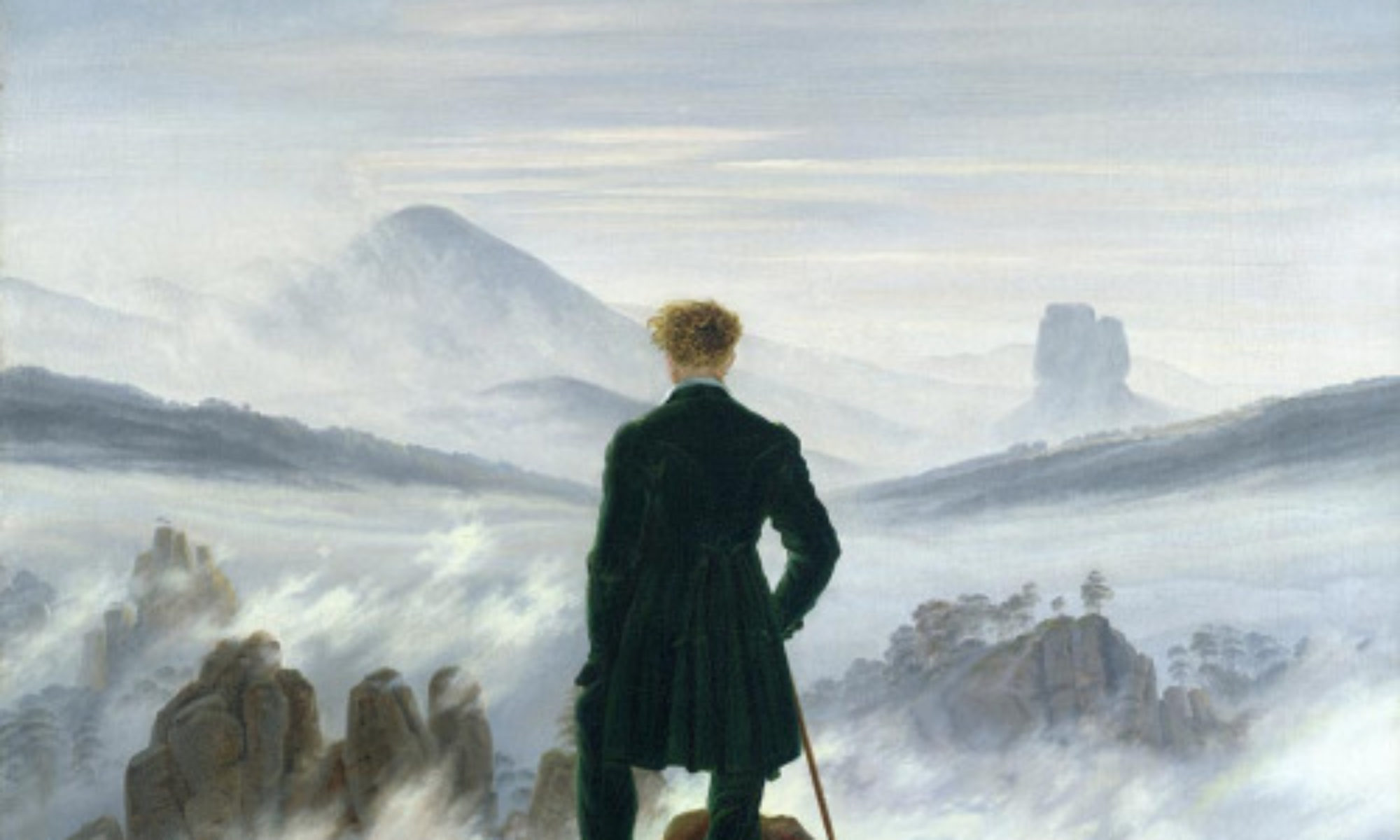
To come to this idea of collecting, collecting is at the very heart of the picturesque ideal. The central concept of picturesque landscape is that it resembles a painting, and it only resembles a painting at certain points of perspective. As you walk through a picturesque landscape, it is intentionally designed to give you prospects—specific places where you can gather a picturesque view. As you progress through the landscape, it’s designed so you go from one picture to the next. It’s like a slideshow. The very act of looking is an act of collecting. You’re creating a picturesque memory for yourself.
There’s a technology called the Claude glass. Claude is a French landscape painter who used a convex mirror to create an image of the landscape, which he would then either directly project upon a piece of paper and trace, almost like a camera obscura, creating a photographically “real” image of the landscape onto a piece of paper; I use the word “real” in quotation marks because it’s not inherently real, it’s just one form of perspective that has been naturalized to us Westerners. Since the Renaissance, we’ve used perspective drawing to create an image of the natural world, so when we do that photographically, it looks real and natural to us, but to folks from non-Western cultures, who don’t have a tradition of landscape painting, a photograph looks weird […] When Native Americans saw profile pictures for the first time, they didn’t accept them. They said, “That’s only half a man.” They only accepted full-face pictures […] The Claude glass was a technology imported from France and used by landscape designers to test the validity of a certain landscape solution. They would stand in front of the landscape, back to it, look at the Claude glass, and because it is a convex mirror, it also emphasizes foreground elements and minimizes background elements. It’s also a darkening mirror; it shades out certain things in the landscape. It is an intentionally intensifying artificial production of landscape, which can then be put on paper and be made into a painting. Even people who were not painters, people whom we would call tourists, would bring their Claude glasses into picturesque places in the late 18th, early 19th century and collect landscapes. They would literally stand with their back to the landscape, looking into their Claude glasses, and say, “Ah! That is picturesque.” In a way, the created landscape, in the mirror or on paper if they could sketch it, was even more real than the thing itself. It mattered more. That was the act of collecting a landscape. We do that today, only we do it with cameras.
INTERVIEWER
It’s like when people go to a concert and watch the entire performance through the screen of their iPhone as they try to record it.
MCKUSICK
Exactly. The whole phenomenon still exists today of snapping landscapes. Usually, there needs to be a figure in the landscape. Tourists are notorious for posing their wives in front of famous monuments and taking a picture. Somehow, that validates the experience. The act of collecting landscapes has certainly existed since the 18th century and already began to be parodied by the early 19th century. There was a whole wonderful set of satirical sketches, or cartoons really, of a character called Dr. Syntax, who would go out into the world and was a bumbling idiot, but still was attempting to collect picturesque landscapes.
The picturesque movement also had a very deep impact on the poetic tradition. There was a whole genre of 18th-century poems called prospect poems—a late example of that is “Tintern Abbey,” which is probably the single most famous prospect poem in literary history. Wordsworth is taking in a prospect a few miles up-river from Tintern Abbey and that’s what the poem is about. The prospect poem, then, lies at the heart of Lyrical Ballads, which is the book that kicked off Romantic poetry for England. The whole notion of the picturesque landscape and the prospect poem really inaugurates the Romantic movement, although the Romantics don’t simply take it over in a naïve way from the 18th century tradition. They sophisticate it, which is good. In its raw form, it’s pretty inauthentic. Wordsworth is already doing something very sophisticated in the prospect form, and Shelley will further internalize it. The “Ode to the West Wind” is a kind of prospect poem that, however, has become deeply psychological to the point where there’s hardly any landscape left to the poem; it’s all an internal landscape. “Mont Blanc” is another example of a prospect poem that presents an entirely internal landscape. Good for Shelley—he took something that was something inauthentic and boring and made it fascinating and complicated and inscrutable.
INTERVIEWER
So, an ecological writer is less authentic if they collect the land.
MCKUSICK
Yes. I think, still, there’s huge amounts of Romantic poetry that derive generically from the prospect poem, but the Romantics have taken that to much deeper psychological depths, demonstrating a much more sophisticated understanding of landscape. My favorite poet in this line is John Clare, who doesn’t do prospect poetry because it is also marked as a bourgeois writing form. John Clare is inhabiting landscapes, so his perspective is not that of a prospect poem, but it is experiential poetry of a dweller in the land. John Clare is a wonderful litmus test to put up against any other poet because John Clare is the most authentic poet in the whole British tradition.
A prospect poem is often stationary, where it goes in a series of slides, whereas in John Clare, it’s a dynamic landscape. You’re walking through it, you’re experiencing it, it’s washing over you, and its inhabitants are talking to you or you’re seeing it through their eyes. You can put a John Clare poem up against any other Romantic poem as a test of authenticity, and some will test out fine and some will not. I’m sorry to say another favorite poet of mine, William Wordsworth, often comes across as seeming inauthentic when you put him up against John Clare because he certainly does have a bourgeois point of view. It’s not that of a dweller, it’s that of a tourist, strolling through the landscape, pausing to take in a prospect, and having a deep mental reaction to that. Wordsworth is profound, but still perhaps less authentic in terms of his relationship to the land, than someone like Clare who was working with the land. […] Wordsworth was reading Gilpin, who writes about the English Lake District. There’s a very direct pipeline of ideas from the picturesque into the Lake District poets; Wordsworth, Coleridge, and Southey were direct inheritors of the picturesque ideal, but they do new things with it.
INTERVIEWER
Do you have any advice for graduate students in the field of Romanticism? What are some things that you wish you knew/were glad that you knew when you were in graduate school or approaching the job market?
MCKUSICK
I have tons of advice, but I want to address this, in part, from the view of ecological criticism. I guess my most fundamental advice to graduate students is to expose yourselves to all different types of literary criticism. No single method is correct or viable or valid on its own, and that certainly applies to ecological literary studies as well as any other “ism”. The last thing you want to do as a graduate student is to say, “Oh, I’m open to all ideas, and I have none of my own.” A grad student does need to stake out their turf and know what “ism” they’re going to be loyal to and really pursue that. But one still has to be capable of intellectual growth. The thing not to do is to be locked into a narrow or ideological reading of literature that blinds you to other dimensions of a text. Ideally, as a literary critic, we want to understand everything that’s there, including the things that are unspoken in a text. As one of my professors liked to put it, “the white space between stanzas are just as important as the stanzas themselves.” The subliminal thinking that is not overt still needs to be understood.
How do you become broadly learned? Hopefully, in a strong English department, there are going to be lots of ideological factions at work. Get to be friends with everyone and learn what everyone is up to and doing. Find which approach works best for you. Hitch your wagon to a star. No one really told me this when I was in grad school, but it really matters who your faculty mentors are because they’re networked into the profession. You want the most prestigious, the most connected, the most famous person, who is also going to be the most busy and the least likely to give you lots of personal time. Hopefully, you can find a golden mean of someone who is A. famous, but B. also a genuinely good person who will give you tons of time and attention and care and feeding and good criticism. It’s great to have arguments with your mentor! You’ll learn more by arguing with them than just agreeing with everything they say and saying, “Oh thank you, great famous professor.” Argue with them. Disagree with them. Test your mettle by going out on a limb and saying something a little dangerous or difficult. Graduate school is a wonderful time to try on new suits of clothes, especially as you’re doing your coursework or coming up toward a dissertation topic. Try to avoid something that is boring or conventional. Try something that is edgy, that puts you into terrain that you’ve never explored before. Often, through the beauty of interdisciplinary study, you can find terrain that no one has explored through that point of view before. Be a little offbeat. Be a little inventive. The world does not need another reading of “Tintern Abbey” or “The Rime of the Ancient Mariner.” The world needs to find texts that are less travelled by.
One thing that has changed in literary study in the last twenty years is the world has become flat. It used to be that only students at the most prestigious universities would have access to the best rare book libraries, the unpublished manuscripts. Now, everything is available through the wonders of Google Books or interlibrary loan. You can get virtually anything that has ever been published. Yes, you still need to go to rare book archives to get at the original, unpublished stuff, but you can do amazing things through the miracles of electronic publication and the whole field of Digital Humanities. Digital Humanities allow you to do all kinds of digital textual analysis and discover things that have never been seen before. I’ve done some of that work myself through things like corpus linguistics, where you can do statistical analyses of style. Things that were never possible have suddenly become achievable […] Don’t assume that your professors know these tools. Grad students might have an edge on the new technologies of textual analysis that are only possible through “big data” approaches such as corpus linguistics and stylometrics. The beauty of it is that you can predict things and find out that, yep, that’s real. It’s a brave new world out there, so make a daring prediction and go and do your textual analysis and find out if it’s true. No previous generation of grad students could do that, so you guys are going to own the world!